

Chemical hazards in food are substances that can cause harm to consumers when present at unsafe levels. These hazards may occur naturally, be introduced through food processing, or result from the use of additives and other chemicals in the food supply. Understanding what constitutes a chemical hazard in food is essential for anyone involved in the food industry, from farmers and processors to kitchen staff and quality assurance teams.
The significance of chemical hazards extends beyond individual health concerns. An estimated 600 million people, nearly 1 in 10 globally, fall ill from contaminated food each year, resulting in 420,000 deaths. This staggering statistic underscores how critical proper management of chemical hazards in food is, not just to prevent illness, but also to protect businesses from reputational and financial risks associated with unsafe food products.
This blog will explore the types of chemical hazards in food, common sources of contamination, and practical measures that food handlers can take to prevent exposure. By the end, you will have a comprehensive understanding of chemical hazards in food and actionable steps to ensure safety in your operations.
What Are Chemical Hazards in Food?
Chemical hazards in food are substances that can cause harm if ingested, inhaled, or absorbed. In the context of culinary safety, they are defined as any chemical agent that can compromise food safety, either through direct contamination or as a result of improper food handling. Understanding chemical hazards is essential for ensuring safe consumption and preventing health risks.
A chemical food safety hazard differs from general contamination. While contamination refers to the presence of unwanted substances in food, a hazard specifically implies a potential threat to human health. For example, traces of cleaning agents on a cutting board represent a chemical hazard because they can directly affect health if consumed, whereas dust settling on the same surface is a contamination risk without immediate harmful effects.
The chemical hazard culinary definition emphasizes substances naturally occurring in food, as well as those introduced during processing. These can include pesticides, heavy metals such as lead or mercury, food additives in excessive amounts, and residues from cleaning chemicals. Each has distinct characteristics, but all share the potential to cause adverse health effects.
Health effects from chemical hazards in food can be acute or chronic. Acute effects appear quickly after exposure and might include nausea, vomiting, or even poisoning. Chronic effects develop over time, often resulting from repeated exposure to low levels of harmful chemicals, leading to issues such as organ damage or cancer. Recognizing both types is critical for food handlers and consumers to minimize risks.
Proper management of chemical hazards in food is a cornerstone of overall food safety. It involves monitoring sources, following regulatory limits, and ensuring safe handling practices throughout production and preparation. By distinguishing between chemical hazards and general contamination, culinary professionals and consumers can take informed steps to protect health without unnecessarily discarding safe food.
Chemical hazards in food are a key consideration in food safety programs worldwide. Understanding their nature, sources, and potential effects helps create safer dining experiences and reduces the likelihood of preventable illnesses.
Common Examples of Chemical Hazards in Food
Chemical hazards in food can come from multiple sources, and understanding their origins helps minimize risks to consumers. These hazards are typically categorized into additives and preservatives, pesticides, natural toxins, environmental contaminants, industrial chemicals, and overprocessing by-products.
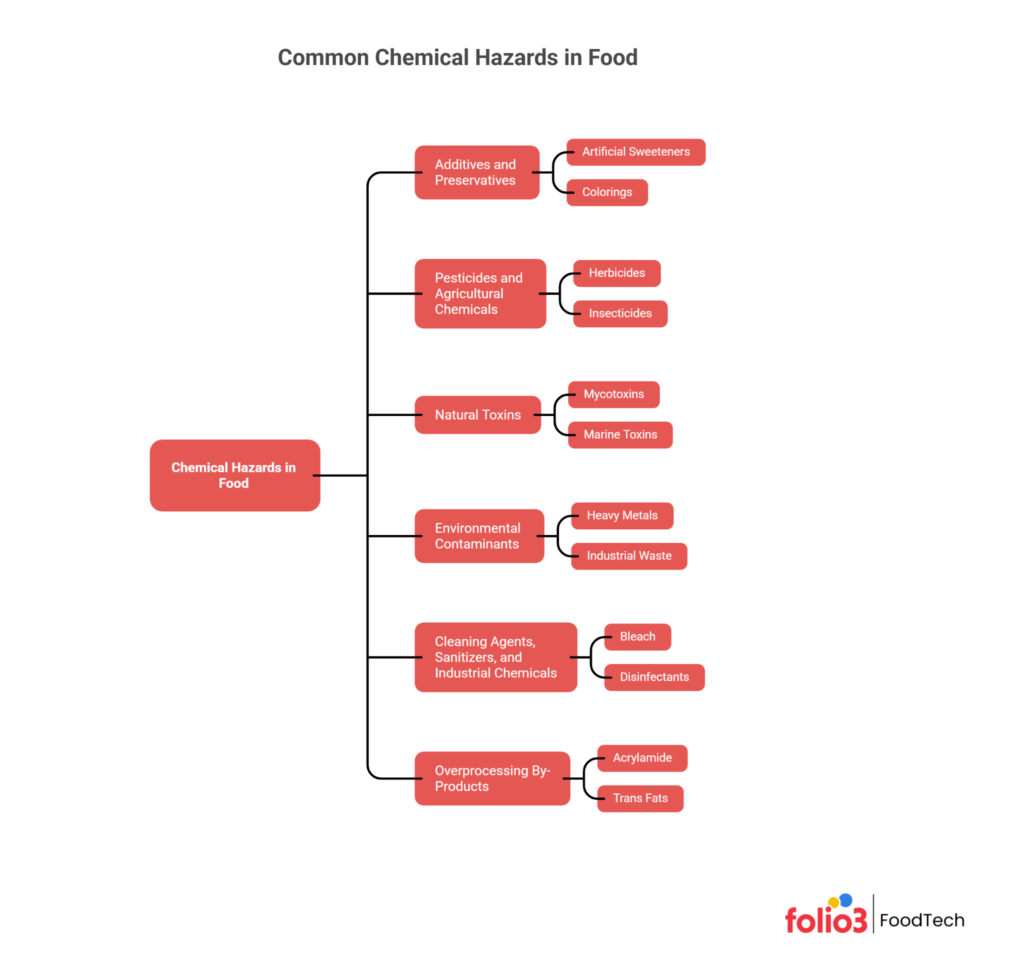
Additives and Preservatives
Food additives and preservatives are commonly used to enhance flavor, appearance, or shelf life. While most are safe at regulated levels, overuse or misuse can create chemical hazards in food. For example, excessive nitrites in processed meats may form carcinogenic nitrosamines. Similarly, some artificial colorings have been linked to allergic reactions or behavioral effects in sensitive individuals. These chemicals enter food during processing and storage, making careful monitoring essential.
Pesticides and Agricultural Chemicals
Pesticides and other agricultural chemicals applied to crops can leave residues that persist through harvesting and packaging. An example of chemical hazard in food is organophosphate residue on fruits and vegetables, which can affect the nervous system with prolonged exposure. Washing, peeling, and following regulatory limits help reduce the risk, but improper use or accidental contamination remains a concern.
Natural Toxins
Some foods naturally contain toxic compounds. Glycoalkaloids in potatoes, for instance, can accumulate in the skin or sprouted areas, while marine toxins like ciguatera in certain fish can cause severe neurological symptoms. These natural chemical hazards in food occur when plant or animal metabolism produces harmful substances as a defense mechanism or due to environmental factors. Awareness of these risks is critical for both consumers and food handlers.
Environmental Contaminants
Heavy metals, including lead, mercury, cadmium, and arsenic, can contaminate soil and water, entering crops, fish, and livestock. Chronic exposure to these environmental chemical hazards examples in food may lead to neurological damage, kidney disease, or cancer. Monitoring environmental sources and testing food products are key strategies for prevention.
Cleaning Agents, Sanitizers, and Industrial Chemicals
Residues from cleaning agents, sanitizers, and other industrial chemicals can become chemical food hazard examples if surfaces, equipment, or utensils are not properly rinsed. For instance, excessive chlorine or quaternary ammonium compounds on food contact surfaces can cause irritation, nausea, or more serious toxicity. Ensuring proper dilution, application, and rinsing protocols is vital for safe food preparation.
Overprocessing By-Products
High-temperature cooking or processing can generate chemical hazards in food, such as acrylamide formed during frying, roasting, or baking starchy foods. These by-products are unintended but potentially harmful, and their presence increases with overprocessing or excessive heat. Controlling cooking temperatures and avoiding burnt or heavily processed foods helps reduce these risks.
By understanding these categories and their pathways into food, food handlers and consumers can take proactive steps to mitigate chemical hazards. Proper storage, regulated use of additives, washing produce, monitoring environmental contaminants, and adhering to safe cooking practices are all critical measures.
Maintaining awareness of chemical hazards in food is a cornerstone of food sanitation and safety. Addressing these risks ensures safer consumption, protects public health, and supports compliance with food safety standards.
Sources of Chemical Hazards in the Food Supply Chain
Chemical hazards in food can enter at multiple points along the supply chain, from raw materials to final consumption. Understanding these sources is essential for controlling risks and ensuring safe products reach consumers.
Raw Materials, Water, and Soil
One of the primary sources of chemical hazards in food is the raw materials themselves. Crops grown in contaminated soil may accumulate heavy metals like lead, cadmium, or arsenic. Similarly, water used for irrigation or food processing can carry pesticides, industrial pollutants, or disinfectant residues. Livestock raised on contaminated feed or water may accumulate residues of veterinary drugs or environmental toxins. Vigilant testing of raw materials and monitoring water quality are critical steps to prevent these chemical hazards from entering the food chain.
Equipment and Food Contact Surfaces
Food contact surfaces and processing equipment are another common source of chemical hazard food. Residues from cleaning agents, lubricants, or sanitizers can inadvertently contaminate food if not properly applied or rinsed. Metals from corroded machinery, such as lead or nickel, may also leach into products during processing. Regular maintenance, appropriate material selection, and strict hygiene protocols are essential to reduce these risks.
Food Ingredients and Processing Methods
Certain food ingredients, additives, and processing methods can introduce chemical hazards in food. Overuse of preservatives, flavor enhancers, or coloring agents may exceed safe limits. High-temperature processing, frying, or roasting can produce harmful by-products like acrylamide in starchy foods. Understanding the sources of these chemical hazards and applying controlled processing techniques helps ensure safe consumption.
Human Handling Errors
Human error during food handling, storage, or preparation is another potential source of chemical hazards. Mislabeling, accidental mixing of chemicals, or failure to rinse cleaning agents properly can contaminate food. Staff training, clear labeling, and strict adherence to hygiene protocols are critical to minimize these risks.
Environmental Contamination
Environmental contamination includes chemical exposure from air, water, or soil surrounding production facilities. Industrial emissions, pesticide drift, or improper waste disposal can all contribute to chemical hazards in food. Monitoring environmental conditions and sourcing from verified suppliers helps prevent contamination before it reaches consumers.
Effective management of chemical hazards in food relies on comprehensive traceability in the food industry and robust food supply chain management. By tracking ingredients, monitoring equipment, and controlling environmental factors, food businesses can identify potential risks and implement measures to prevent contamination, ensuring safe products reach the market.
How Food Handlers Can Identify Chemical Hazards
Understanding what chemical hazards in food are is the first step for any food handler aiming to ensure safe consumption. These hazards, whether naturally occurring, introduced during processing, or present due to environmental contamination, pose risks to human health if not properly managed. Effective identification requires a systematic approach based on science, monitoring, and industry standards.
HACCP-Based Hazard Identification
A structured method for identifying chemical hazards in food is the Hazard Analysis and Critical Control Points (HACCP) system. HACCP helps food handlers analyze each stage of production, from raw materials to final product delivery, to identify potential points where chemical contamination could occur. By mapping the flow of ingredients and processes, staff can pinpoint where additives, preservatives, or processing by-products may pose risks, allowing corrective measures before hazards reach consumers.
Monitoring Ingredients and Environmental Sources
Chemical hazards in food often originate from raw materials, water, soil, or packaging. Regular testing and monitoring of these inputs help identify potential contamination. For instance, testing produce for pesticide residues, analyzing water for heavy metals, and checking ingredient labels for excessive additives are all essential steps. Monitoring the processing environment, including equipment and food contact surfaces, also helps detect residues from cleaning agents or industrial chemicals that could compromise food safety.
Using Scientific Data and Supplier Information
Reliable data and supplier transparency are crucial for identifying chemical hazards. Food handlers should review scientific studies, regulatory guidelines, and safety reports on additives, preservatives, and known environmental contaminants. Additionally, sourcing ingredients from reputable suppliers with verified safety records reduces the risk of introducing chemical hazards in food. Supplier certifications and documentation provide assurance that materials meet accepted safety standards.
Consulting Experts and Standards
Food handlers should leverage the expertise of food safety professionals, toxicologists, and quality assurance specialists. Consulting recognized standards and guidelines ensures that identification methods are accurate and compliant. Regular training and access to updated scientific literature help staff recognize emerging chemical hazards and implement preventive measures efficiently.
Identifying chemical hazards in food is not a one-time activity; it requires continuous monitoring, verification, and adaptation. Incorporating HACCP principles, environmental monitoring, supplier data, and expert guidance supports a proactive approach to food safety. This systematic identification process is a critical component of food safety risk assessment and overall food quality assurance, helping businesses maintain consumer trust and reduce the risk of foodborne chemical illnesses.
Preventive Measures for Chemical Hazards
Preventing chemical hazards in food is a critical responsibility for food handlers and producers. Implementing systematic controls across all stages of production and handling minimizes the risk of contamination and ensures consumer safety.
Core Practices: Labeling, Separation, and Handling
Proper labeling and separation of chemicals from food items is a fundamental preventive measure. Cleaning agents, sanitizers, and industrial chemicals should never be stored near ingredients or finished products. Clear labeling helps staff avoid accidental misuse, while strict handling procedures reduce the risk of contamination during preparation and storage. Implementing these practices consistently is one of the most effective ways to prevent chemical hazards in food.
Supplier Control and Certificates
Ensuring the safety of raw materials begins with supplier management. Food businesses should source ingredients from verified suppliers who provide certificates of analysis and compliance with regulatory limits. Checking for residues of pesticides, additives, or contaminants before use is essential. Supplier control reduces the likelihood of introducing chemical hazards in food and strengthens overall supply chain safety.
Staff Training on Chemicals and Safe Limits
Training food handlers on chemical hazards and safe limits for additives, preservatives, and other substances is critical. Staff should understand the risks associated with chemical exposure and know how to follow safe handling protocols. Regular refresher training ensures that personnel remain aware of new hazards and maintain compliance with industry standards.
Equipment, Packaging, and Storage Controls
Proper maintenance of equipment and careful selection of packaging materials help prevent chemical contamination. Equipment surfaces should be made from food-grade materials, and regular inspection is necessary to avoid corrosion or residue build-up. Packaging must be free of harmful substances that could leach into food, and storage areas should be clean, dry, and temperature-controlled to limit chemical interactions.
Documentation and Monitoring
A documented monitoring system allows for ongoing verification of preventive measures. Keeping records of chemical usage, ingredient testing, staff training, and equipment maintenance provides transparency and accountability. Routine audits help detect gaps in safety practices and ensure continuous improvement in managing chemical hazards.
By combining these practices, food businesses can create a comprehensive system for controlling chemical hazards in food. Understanding how to prevent chemical hazards in food through proper handling, supplier management, staff training, and rigorous monitoring safeguards public health and ensures compliance with food safety standards. Consistent implementation of these measures fosters consumer confidence and minimizes the risk of chemical contamination.
How Folio3 FoodTech Helps Prevent Chemical Hazards in Food
Ensuring food safety requires vigilance against chemical hazards, contamination, and compliance challenges at every stage of production. Folio3 FoodTech’s food safety software is designed to support food handlers and processors in proactively identifying, monitoring, and preventing chemical hazards in food. By integrating real-time monitoring, reporting, and management tools, the software helps ensure safer operations and regulatory compliance.
Key features include:
- Real-Time Monitoring of Ingredients and Raw Materials – Track sources, residues, and compliance with chemical safety regulations.
- HACCP Compliance Tools – Plan and monitor critical control points to prevent chemical contamination.
- Supplier and Certificate Management – Maintain verified supplier information and certificates of analysis for quality assurance.
- Automated Alerts and Notifications – Receive alerts for potential chemical hazards, expired ingredients, or process deviations.
- Audit and Documentation Management – Keep detailed records of inspections, chemical usage, staff training, and equipment maintenance.
- Reporting and Analytics – Generate reports to support food safety risk assessment, traceability, and regulatory compliance.
With Folio3 FoodTech’s software, food handlers and processors gain a comprehensive system to actively manage chemical hazards, maintain safe production practices, and strengthen consumer trust. This proactive approach naturally leads to common questions about managing chemical hazards.
FAQs
What Are Chemical Hazards in Food?
Chemical hazards in food are substances that can cause harm if consumed, inhaled, or absorbed. These include naturally occurring toxins, pesticides, heavy metals, food additives in unsafe amounts, and residues from cleaning agents or processing chemicals. They differ from general contamination because they pose a direct risk to human health. Understanding these hazards helps food handlers prevent adverse effects and maintain safe food practices.
What Are the Common Types of Chemical Hazards in Food?
The most common chemical hazards in food include additives and preservatives used beyond safe limits, pesticides and agricultural chemicals present on crops, naturally occurring toxins such as glycoalkaloids in potatoes or marine toxins in certain fish, environmental contaminants like heavy metals, residues from cleaning agents or industrial chemicals on food contact surfaces, and by-products of overprocessing, such as acrylamide formed during frying or baking.
How Do Chemical Hazards Get Into Food?
Chemical hazards can enter food at multiple stages of the supply chain. Raw materials may be contaminated with pesticides, heavy metals, or natural toxins, while water, soil, or air used during farming and processing can introduce additional hazards. Equipment and packaging materials can also transfer chemicals if not properly maintained. Human errors, such as improper cleaning or misuse of chemicals, contribute to contamination, and overprocessing foods can generate harmful by-products that pose health risks.
What Are the Health Risks of Consuming Foods With Chemical Hazards?
The health risks depend on the type and level of chemical exposure. Acute exposure may lead to nausea, vomiting, or poisoning, while chronic exposure, even at low levels, can result in long-term effects such as organ damage, neurological disorders, or cancer. Certain populations, including children, pregnant women, and individuals with underlying health conditions, are particularly vulnerable to these hazards.
How Can Chemical Hazards in Food Be Detected?
Detection of chemical hazards relies on laboratory testing, environmental monitoring, and supplier verification. Analytical techniques are used to identify residues of pesticides, additives, and heavy metals. Regular inspections of processing equipment, storage areas, and food contact surfaces help identify potential sources of contamination. Reviewing supplier certifications and compliance data provides additional assurance that raw materials meet safety standards.
How to Prevent Chemical Hazards in Food?
Preventing chemical hazards in food involves multiple proactive measures. Food handlers must ensure proper labeling and separation of chemicals from ingredients and finished products, verify supplier compliance and certificates, and provide staff training on safe handling and acceptable limits of additives or cleaning agents. Maintaining equipment, selecting safe packaging, and controlling storage conditions further reduce risks. Documentation and regular monitoring of chemical use and inspections ensure that preventive practices are effective and consistent.


