









Keep Every Batch Consistent & Compliant With Food Manufacturing ERP

Food manufacturing ERP software for batch consistency, recipe control, and compliance traceability. Runs on Microsoft Dynamics 365, NetSuite, or other ERP, connecting every stage from raw ingredient to finished SKU.

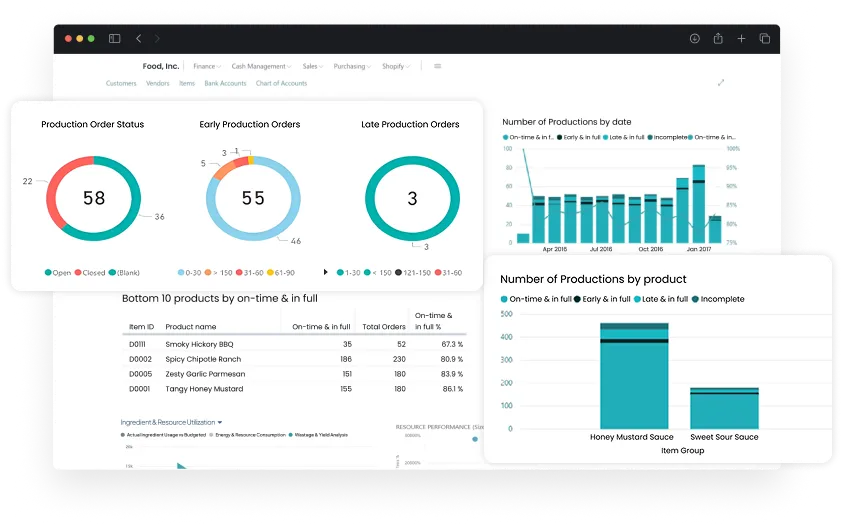
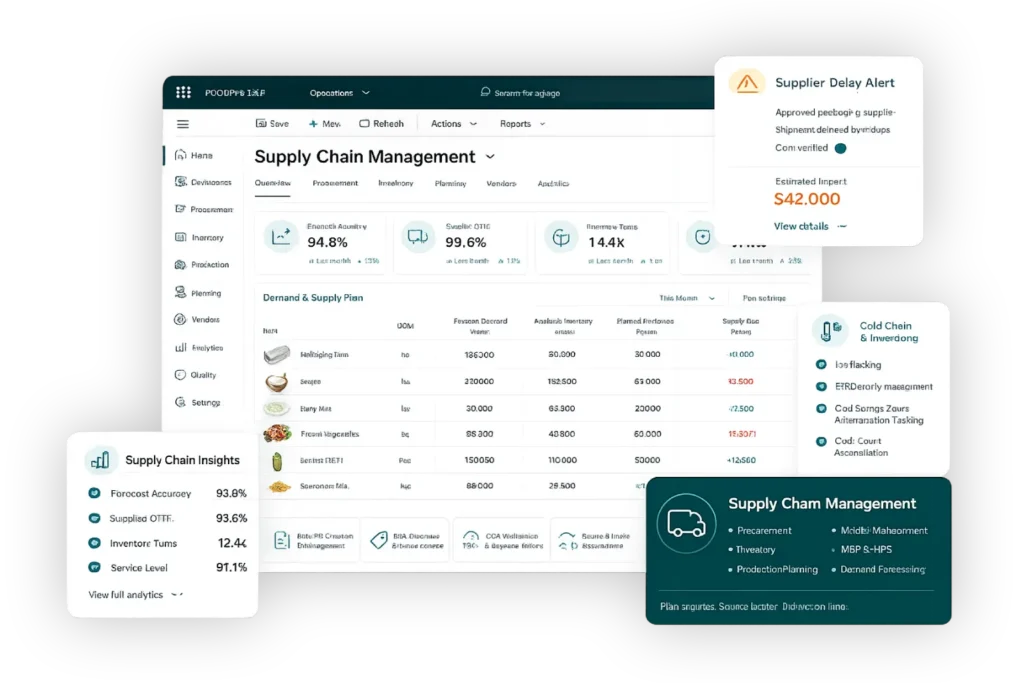
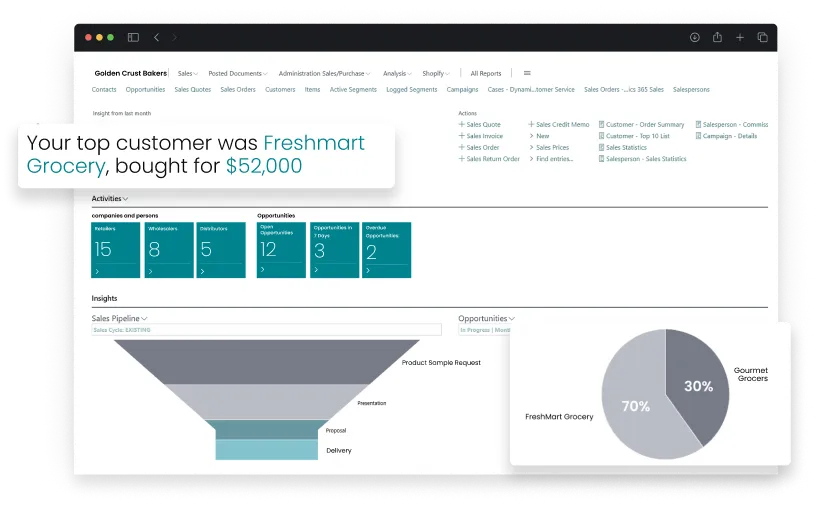
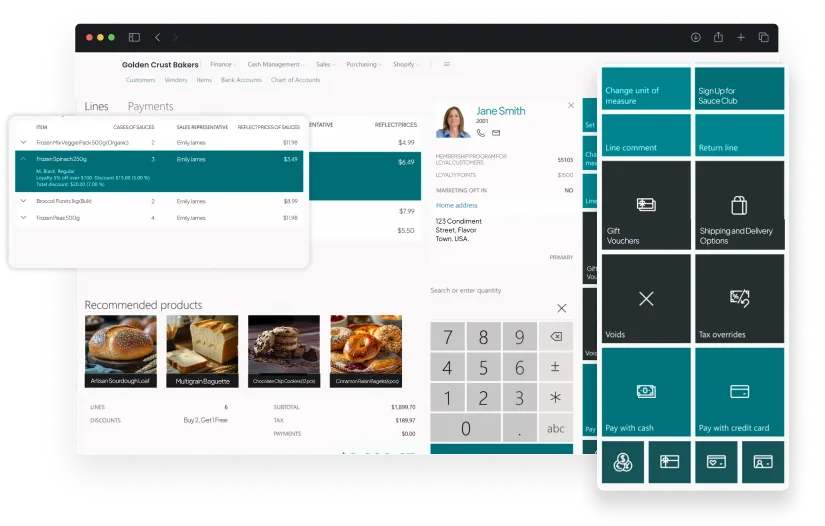
Food Manufacturing ERP dashboard screen displaying how to enhance manufacturing operations

Trusted Food & Beverage Manufacturing ERP Software — Serving 500+ Food Businesses Since 2004

Let Nothing Slow Down Your Food Manufacturing Workflow

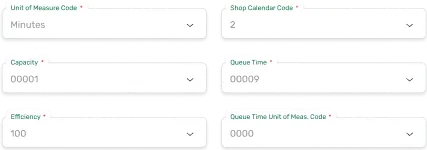
A food manufacturing ERP can help you maintain smooth production by tracking raw materials in real-time, automating recipe workflows, and providing complete production control.

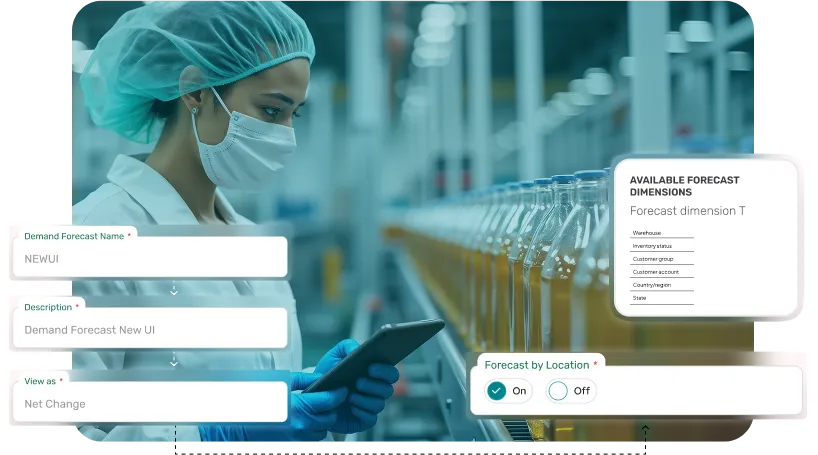
Inaccurate Demand Forecasting Causes Stockouts Or Surplus

Challenge

Fluctuating demand causes misalignment in batch production, which can lead to stalled processing lines due to missing ingredients or spoilage from overproduced inventory.

Solutions
Challenge

Inconsistent mixing and incorrect ingredient ratios during processing result in rejected batches, production slowdowns, rework, and increased waste.

Solutions
Challenge

Late ingredient deliveries or inconsistent supply can halt production, requiring recipe adjustments, shorter runs, or reformulation to meet manufacturing schedules.

Solutions
Challenge

Breakdowns in ovens, pasteurizers, or filling machines interrupt production cycles, delaying orders and risking spoilage of in-process food products.

Solutions
Challenge

Frequent recipe changes, allergen segregation, and multiple packaging formats require constant equipment adjustments, slowing production speed and efficiency.

Solutions
image of demand seasonality products tracking

Food Manufacturing Software Features Built for Every Production Stage

Unlike general food process manufacturing software, these capabilities are purpose-built for the specific realities of food production. Our ERP software for food manufacturing handles lots, allergens, catch weights, and perishable inventory natively, not as bolt-on modules. The result: software for food manufacturing that tracks every ingredient, sequence, and batch from receipt to shipment.

image of recipe based product design

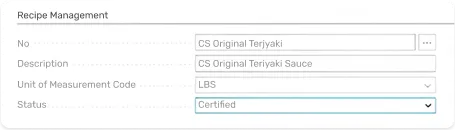
Recipe-Based Product Design

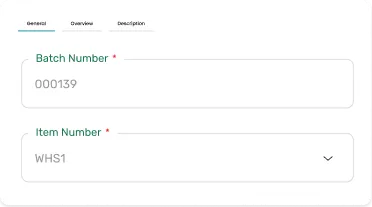
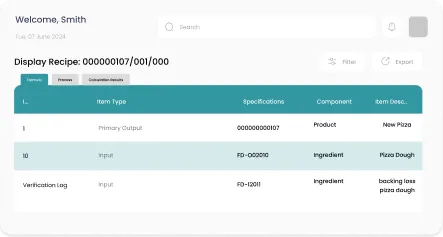
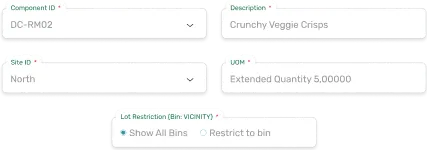
Maintain precise ingredient proportions, processing methods, and compliance with food safety standards.

image of food batch management

Food Batch Management

Control batch yields, processing times, and raw material sequencing to ensure consistency and reduce waste.

image of activity based costing

Daily Production Planning

Schedule batch runs based on ingredient availability, order volume, and equipment capacity.

image of Yield Tracking

Yield Tracking

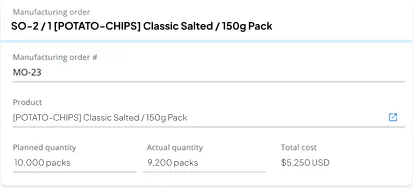
Monitor actual production output against expected yields to control waste and improve efficiency.

Image of Co-Product & By Product Management

Co-Product & By Product Management

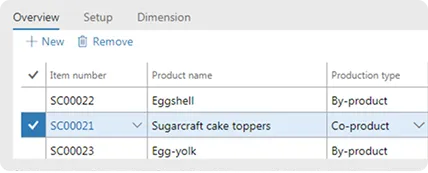
Track, allocate, and repurpose secondary outputs to minimize waste & maximize raw material use.

image of Catch Weight Management

Catch Weight Management

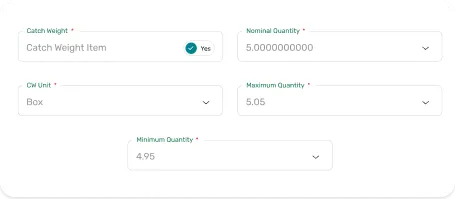
Record and manage variable-weight items for accurate pricing, inventory, and order processing.

image of blending materials

Blending Materials

Control mixing times, temperatures, and ingredient ratios to maintain texture, taste, and shelf stability.

image of materials by SKUs

Bill of Materials by SKUs

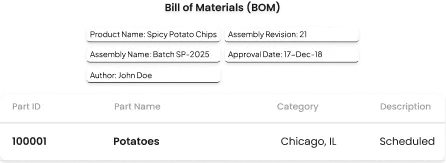
Specify exact material weights, processing steps, and packaging formats to reduce errors and rework.

image of activity based costing

Activity-Based Costing

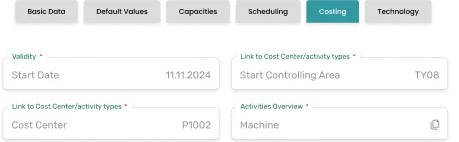
Track labor, machine time, ingredient usage, and processing expenses to control margins.

image of basic capacity planning

Basic Capacity Planning

Allocate equipment, labor, and raw materials efficiently to prevent bottlenecks and maximize output.

image of Lot traceability

Lot Traceability

Track raw materials and finished goods across production stages to meet FDA & FSMA requirements.

image of production orders

Production Orders

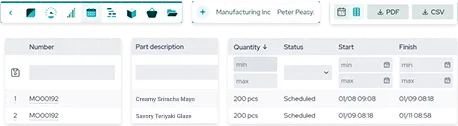
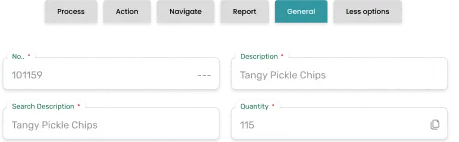
Generate detailed processing instructions, monitor real-time progress, and reduce manual errors.

Complete Food and Beverage Manufacturing ERP Software, Every Module in One System

From procurement and batch production through quality control and distribution, this is food and beverage manufacturing software that covers your entire operation. Whether you need ERP for food and beverage manufacturing with full compliance tracking or food and beverage manufacturing ERP that connects to your existing finance stack, every module below runs on Microsoft Dynamics 365 or NetSuite.

Supply Chain Management

Digitize supplier contracts, ingredient sourcing, and demand planning across your food manufacturing supply chain in one connected system.

Sales and Order Management

Automate food order capture, retail pricing, and allergen controls to protect delivery commitments and order-level profitability.

image showcasing activities in inventory management

Financial Management

Consolidate batch-level costing, multi-entity financials, and audit-ready reporting for food manufacturing operations.

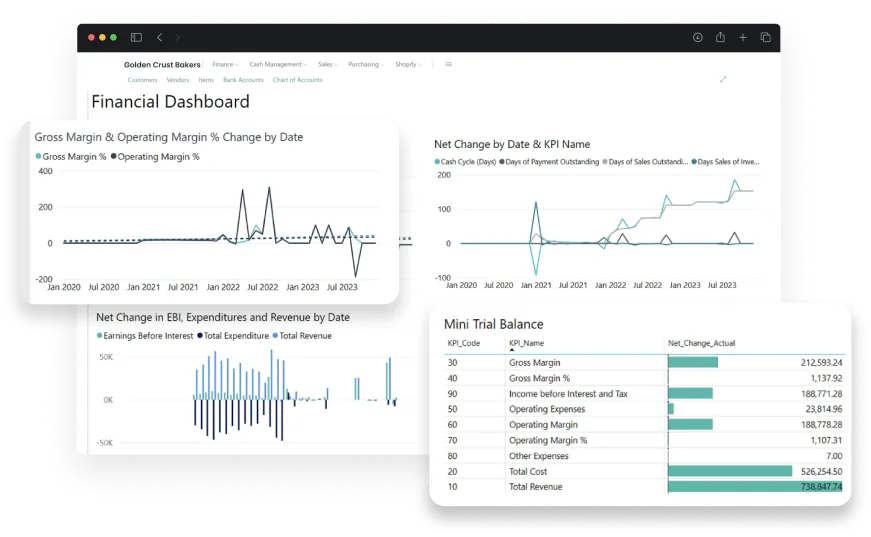
dashboard screen of financial management

Distribution Management

Control lot allocation, cold chain, and outbound fulfillment for food manufacturers shipping across multiple distribution channels.

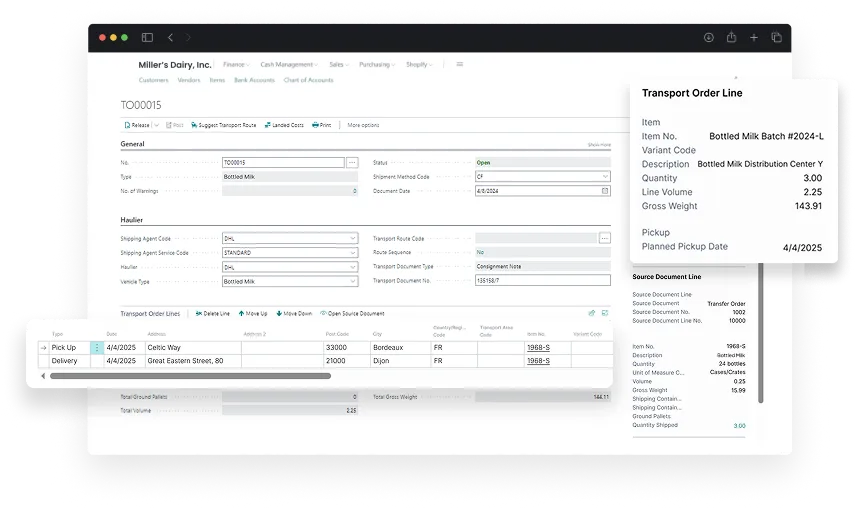
Dashboard screen of activities in Distribution Management

Asset / Plant Maintenance

Schedule preventive and predictive maintenance across food production assets to cut unplanned downtime and protect output.

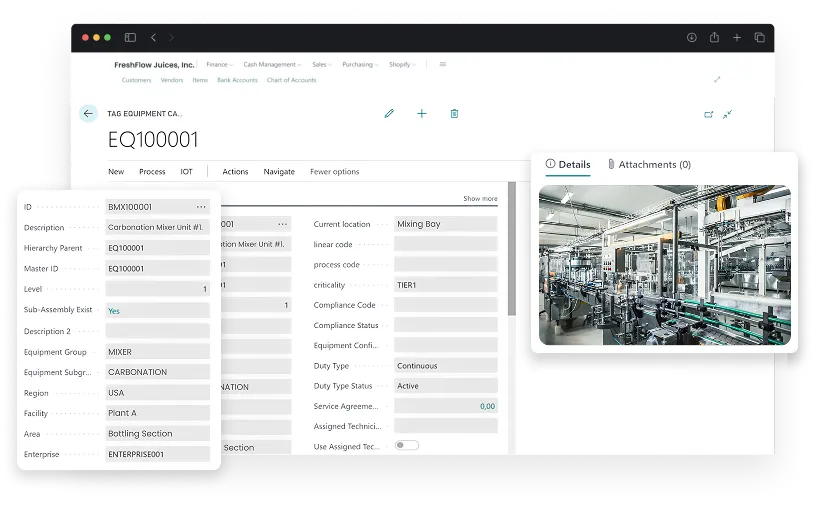
dashboard screen of asset/ plant maintenance

E-commerce and Customer Portal

Connect B2B and D2C food commerce channels to live inventory, lot data, and order workflows in one integrated system.

dashboard screen of activities in ecommerce and customer portal

Food Safety Compliance in ERP Food Manufacturing, FDA, FSMA 204, BRC, SQF Built In

Get food production software that ensures compliance with food safety regulations and certifications while maintaining quality control and secure data management throughout production.

Compliance Management

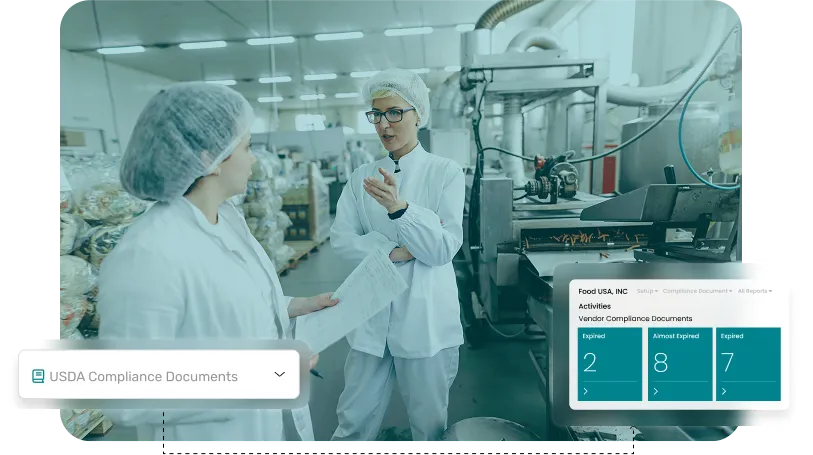
This erp software food manufacturing teams rely on automates regulatory compliance with built-in FDA, USDA, FSMA, BRC, and SQF controls. It is designed as erp for food manufacturing industry operations that face mandatory FSMA 204 requirements, with Key Data Element capture at every Critical Tracking Event and an exportable electronic record ready within 24 hours of an FDA request.

Use Cases
Compliance management image to simplify food safety regulations

Quality Management

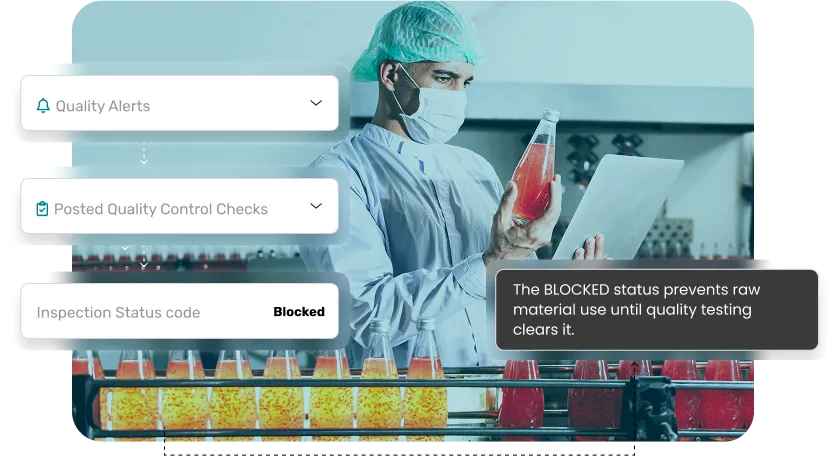
Maintain product integrity with in-line quality checks, HACCP enforcement, microbial testing, and automated non-conformance tracking using food and beverage production software.

Use Cases
Image of Quality management conducting real time quality monitoring

Supplier Management

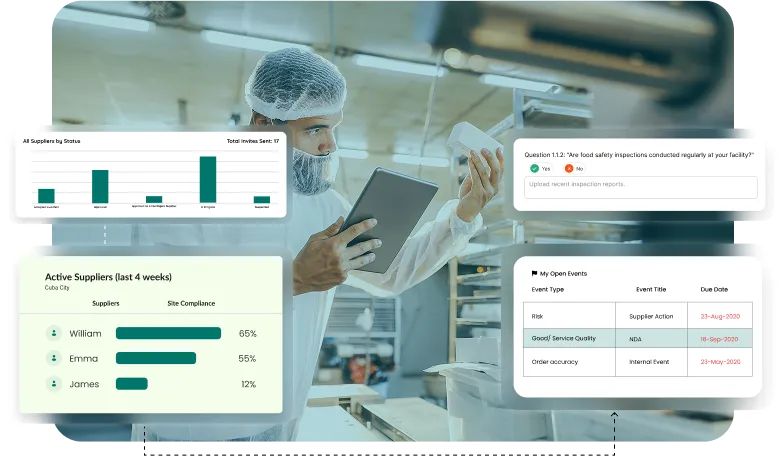
Strengthen supply chain reliability by monitoring ingredient COAs, verifying supplier compliance, and managing approved vendor lists to prevent contamination risks.

Use Cases
image showcasing Supplier Management tools for conducting supplier risk assesments

Food Recall Management

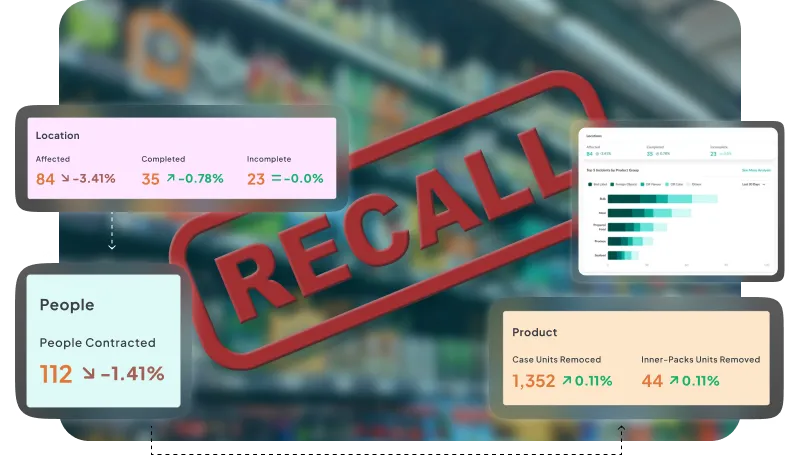
Minimize recall impact with instant lot tracing, automated withdrawal workflows, and rapid identification of affected SKUs to protect brand reputation and consumer safety.

Use Cases
image showcasing how Food Recall Management for managing product recalls

Food Traceability Management

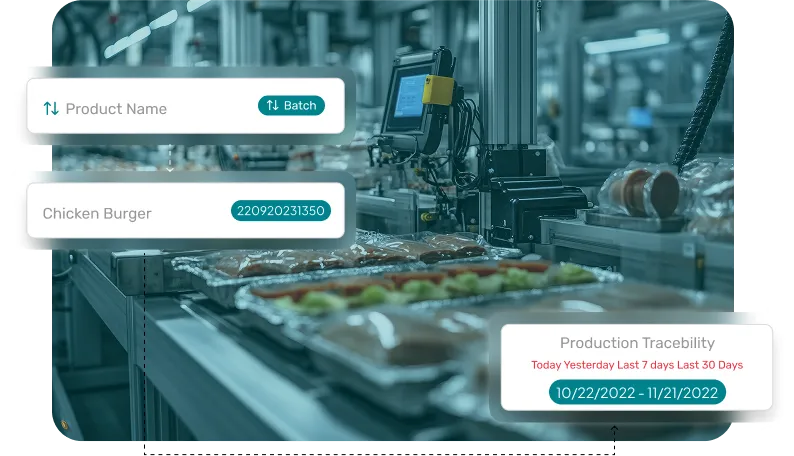
Ensure full traceability from sourcing to consumption with real-time tracking. Improve recall readiness, maintain compliance, and gain complete visibility across the supply chain to enhance food safety and transparency.

Use Cases

screen of Food Traceability

How Folio3 FoodTech Compares to Factory-Floor Specialists

Factory-floor MES tools stop at the plant gate. Folio3 FoodTech's food manufacturing ERP connects your production floor to finance, compliance, and the entire enterprise in one system.

Capability Folio3 FoodTech Factory-Floor MES Machine Software
Recipe & batch management Yes Partial No
BOM with allergen & catch weight support Yes No No
Fully integrated ERP platform Yes No No
FSMA 204, BRC, SQF & HACCP compliance Yes No No
Lot traceability & recall Yes Partial No
Finance, costing & invoicing Yes No No
Retail EDI & customer portal Yes Limited Limited
AI quality & anomaly detection Yes No Partial
Multi-site management Yes Partial No

ReadyReady to break your data silos? See how Folio3 connects your production floor, finance, and compliance in one system.

Book a Discovery Call

What's Shaping the Future of Food Manufacturing ERP

Industry-Specific Food ERP For Specialized Operations

Get food ERP software capabilities configured around the production, inventory, quality, and distribution processes unique to your industry.

Beverages

 Keep every blend, batch, and production run consistent without sacrificing speed or quality compliance.

Formula Management

Manage recipes, blends, and product specifications consistently.

Production Planning

Balance demand, inventory, and manufacturing capacity efficiently.

Inventory Management

Track ingredients, packaging, and finished goods inventory.

Financial Visibility

Monitor margins, costs, and product profitability.

Supply Chain Management

Coordinate procurement, production, and distribution activities.

AI-Powered Insights

Identify operational trends and improvement opportunities faster.

Coffee

Trace every green lot from origin through roasting, inventory, and multi-channel distribution seamlessly.

Roast Management

Standardize roast profiles and maintain batch consistency.

Cropster Integration

Sync roast data automatically without manual data entry.

Inventory Visibility

Track green beans, roasted inventory, and packaging materials.

Demand Forecasting

Align purchasing and roasting with future demand.

Profitability Reporting

Analyze margins by roast, product, and customer.

Ecommerce Integration

Connect online orders, inventory, and fulfillment workflows.

Dairy

Connect farm intake, pasteurization, cold chain, and distribution under one fully traceable system.

Production Management

Manage processing, packaging, and production workflows efficiently.

Inventory Control

Track raw materials and finished products accurately.

Demand Planning

Align production schedules with customer requirements.

Financial Management

Monitor operational costs and business performance.

Supply Chain Visibility

Connect procurement, production, and distribution processes.

AI-Powered Insights

Improve planning accuracy and operational decision-making.

Fresh Produce

Keep perishable inventory moving with farm-to-shelf traceability, FEFO dispatch, and rapid recall capability.

Inventory Management

Track inventory movement across facilities and locations.

Demand Forecasting

Improve purchasing and inventory planning decisions.

Warehouse Management

Optimize storage, picking, and fulfillment activities.

Financial Visibility

Analyze margins across products and customers.

Supply Chain Coordination

Connect sourcing, warehousing, and distribution operations.

Packing Line & Grade Management

Manage grade specifications, pack formats, and size sorting on the packing line

Frozen Foods

Optimize cold store operations, blast freeze scheduling, and retailer compliance across multi-SKU frozen lines.

Blast Freeze Scheduling & Logging

Schedule blast freeze cycles and log core temperature targets per production batch

Production Management

Coordinate manufacturing and packaging operations efficiently.

Inventory Control

Track frozen inventory across warehouses and locations.

Financial Reporting

Measure profitability across products and channels.

Distribution Management

Coordinate warehouse operations and outbound logistics.

Demand-Driven Purchasing

Sync retailer POS data to trigger raw material purchasing and production scheduling automatically

Meat

Track every cut, control every checkpoint, and maintain full traceability across meat processing operations.

Carcass Yield & Cut Sheet Management

Track primal, sub-primal, and retail cut yields against expected targets per animal

HACCP & FSIS Compliance Logging

Maintain HACCP plans, FSIS documentation, and daily SOP records within every workflow

Catch Weight at Every Transaction

Capture actual weight at receiving, fabrication, picking, and customer shipment automatically

By-Product & Trim Costing

Track hide, offal, tallow, and trim values within full batch cost calculations

Kill Floor Scheduling

Plan slaughter capacity against live animal intake, orders, and fabrication line availability

Financial Visibility

Connect production performance directly to profitability.

Sauces & Dressings

Maintain formulation consistency and allergen compliance across high-SKU sauce and dressing production lines with our food processing ERP software.

Formula Management

Control recipes, revisions, and ingredient substitutions.

Batch Production

Manage manufacturing processes and product consistency.

Inventory Visibility

Track ingredients, packaging, and finished goods.

Cost Management

Analyze production costs and profitability trends.

Supply Chain Management

Coordinate sourcing, manufacturing, and fulfillment.

AI-Powered Planning

Improve forecasting and production efficiency.

Seafood

Control catch weight, cold chain integrity, and species traceability from vessel landing to customer delivery.

Catch Weight & Species Management

Record species, catch area, and actual weight at every transaction point automatically

Vessel & Lot Traceability

Trace any product back to the specific vessel, fishing trip, and landing date

Cold Chain Integrity Monitoring

Track temperature and humidity from vessel landing through processing and customer delivery

MSC & ASC Certification Tracking

Maintain chain-of-custody documentation and sustainability certifications per lot and shipment

Freshness Countdown & FEFO Control

Enforce freshness-based picking priorities and trigger markdown rules as shelf life reduces

Catch Weight Invoicing

Convert live weight to net weight for billing without manual reconciliation at dispatch

Snacks

Handle high-speed lines, hundreds of SKU variants, and demand spikes without losing inventory control.

High-Speed Line Monitoring

Track throughput, micro-stoppages, and OEE across high-speed snack packaging lines

SKU & Flavor Variant Management

Manage hundreds of flavor, size, and format combinations.

Catch Weight Pack Management

Handle variable-weight packs and auto-adjust pricing and invoicing per actual weight

Promotional Demand Planning

Model demand uplift for trade promotions and align production to campaign timelines

Contract & Private Label Packing

Manage third-party and private label production with separate costing and compliance records

Margin Analysis by SKU & Channel

Track profitability per snack line after ingredient, labor, and packaging costs

ERP Integrations That Connect Every Tool in Your Tech Stack

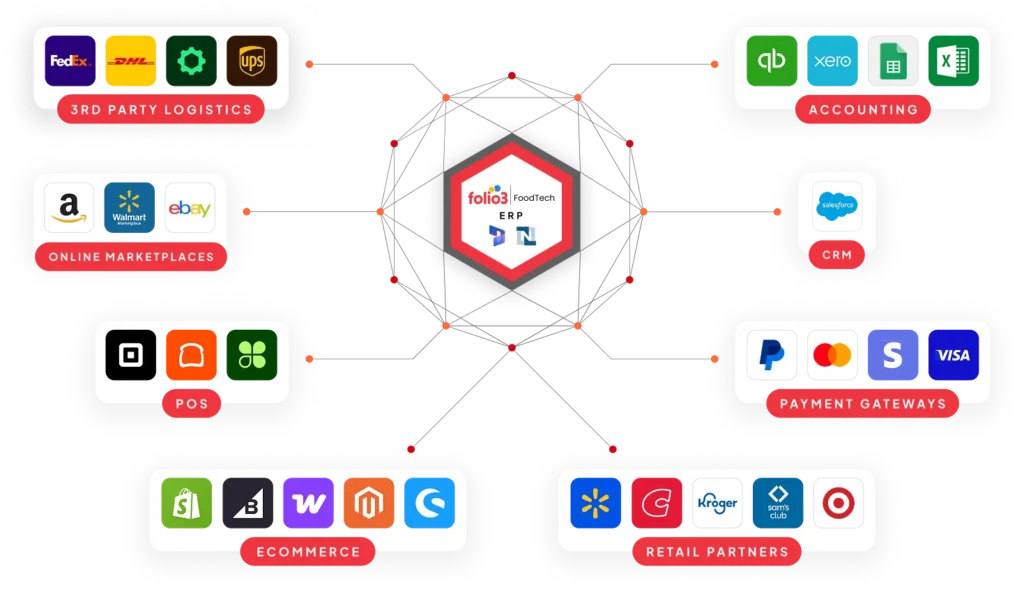
Every platform your food business runs on, from retail EDI partners and 3PL providers to eCommerce storefronts and payment gateways, is connected directly into your ERP, so data never has to be moved manually.

Our Proven Process Of ERP Implementation

Our ERP implementation process is designed to integrate seamlessly into your food manufacturing operations, delivering immediate results.

Discovery

We start by understanding your food production challenges, from ingredient sourcing to batch consistency, to shape an ERP that fits your needs.

ERP Project Planning

We craft a customized project plan, focusing on key areas like inventory control and regulatory compliance, ensuring minimal disruption.

ERP Development

We configure the ERP to simplify your food processes, from raw materials to finished goods, aligning with industry standards.

Quality Assurance

We test ERP features for precision, compliance, and seamless integration with your current systems, ensuring top-tier performance.

Integration

We connect food processing ERP with existing tools, enabling real-time data sharing and improving coordination throughout food production.

Data Migration

We securely migrate critical data—recipes, supplier info, batch records—ensuring everything flows smoothly into your new food manufacturing ERP system.

Deployment

We launch food manufacturing ERP software in your facility and fine-tune it to optimize production, traceability, and quality control from day one.

Training & Support

We provide hands-on training and ongoing support, ensuring your team maximizes ERP benefits and keeps production running efficiently.

Delivering Impact Across Food Industry

Deliciously Ella Logo

Automated Business Operations with Seamless Amazon Integration.

70%

Reduction in Manual Order Processing

3%

European Marketplaces Integrated

89%

Fewer Data Entry Errors

Big Poppa Smokers Logo

Big Poppa Smokers Saves Time and Reduces Errors with Full Integration of Magento and NetSuite.

25+

Hours Saved Per Week

10+

Key Processes Integrated

30%

Operational Cost Reduced

Fresh Fruits Company logo

ERP Implementation Boosts Efficiency and Drives Growth for Fresh Fruits Farms

100%

Achieved Data Sync

30%

Payment Process Enhanced

15%

Sales Boosted

BioPak logo

NetSuite SuiteCommerce Integration Enhances Operations and Boosts Customer Experience for BioPak.

80%

Faster load time

25%

Increase in customer satisfaction

40%

Less Abandoned Carts

Brothers International Food Holdings

NetSuite Amazon Connector Automated various critical processes to save time and reduce errors.

21%

Out-of-Stock Incidents Reduced

99%

Inventory Synchronization Accuracy

39%

Operational Efficiency Improved

In the Words of Our Clients

Read what our clients say about their experiences and the difference our solutions have made for them.

Frequently Asked Questions

What is ERP in food manufacturing?

ERP software for food manufacturing industry integrates all core functions, such as production, inventory management, and supply chain, into one system. It allows manufacturers to monitor processes in real-time, ensure batch consistency, maintain quality, and meet regulatory requirements, all while improving operational efficiency.

ERP for food processing industry tackles challenges such as traceability, compliance with food safety regulations, inventory management, and production efficiency.

ERP solutions track ingredients and finished products in real-time, enabling forward and backward traceability to quickly identify and address quality issues.

Food production development software is designed to handle complex recipe formulations and adjustments with precision. It allows food manufacturers to create, store, and modify recipes based on specific ingredient quantities, processing steps, and quality standards.

ERP software for food processing industry helps maintain compliance by managing documentation, automating quality checks, and ensuring adherence to industry standards and regulations.

Modern ERP solutions are designed to integrate with existing production equipment, enabling seamless data exchange and improved operational efficiency.

ERP systems provide real-time visibility into inventory levels, optimize procurement processes, and enhance supply chain coordination to reduce waste and improve efficiency.

Yes, ERP solutions can manage operations across multiple locations, providing centralized control and standardization of processes.

ERP systems protect sensitive business information with robust security protocols, including user authentication, data encryption, and regular audits.

Food manufacturing ERP software is designed to scale with business growth, accommodating increased production volumes and expanding operational requirements.

Comprehensive support includes training, troubleshooting, regular updates, and ongoing assistance to ensure the ERP system continues to meet business needs.

General ERP systems are built for manufacturing broadly. They assume simple bills of materials, items that do not change weight, and shelf life that does not expire. Food manufacturing software is built for how food is actually produced: recipes with variable yields, lots with expiry dates, allergens that propagate through every BOM level, and catch weights that differ batch to batch. These are not add-on features in a purpose-built system. They are the core data model. That distinction determines whether your ERP works for your operation or fights against it.

The best food and beverage manufacturing software for a mid-market company depends on three factors: your existing finance platform, your compliance obligations (FSMA 204, BRC, SQF, HACCP), and whether you need a single-plant or multi-site system. Folio3 deploys food and beverage manufacturing ERP software on both Microsoft Dynamics 365 Business Central and Oracle NetSuite, which means you are not replacing your accounting system. You are extending it with food-specific production, quality, and traceability capabilities. Most mid-market implementations go live in 8 to 16 weeks.

ERP for food manufacturing industry operations requires capabilities that generic systems do not provide out of the box: lot-based traceability from raw ingredient to finished SKU, recipe and formula management with version control, allergen tracking across all BOM levels, catch weight handling for variable-weight products, shelf-life and expiry management, HACCP enforcement, and FSMA 204 compliance documentation. These are not optional extensions. They are the minimum feature set for any food manufacturer subject to FDA, USDA, or international food safety standards.

Is your food ERP available as cloud, on-premise, or hybrid?

We support all three. Most food manufacturers choose cloud for scalability and lower infrastructure cost. Regulated operations with data sovereignty requirements use hybrid, keeping production and compliance data on-premise while financials run in the cloud. We configure the architecture to your regulatory exposure, not a default licensing model.

We use documented REST APIs and pre-built connectors for retail EDI partners (Walmart, Kroger, Costco), eCommerce platforms (Shopify, Amazon), shipping carriers, accounting tools, and CRM systems. We have built 50+ food-specific integrations over 20 years. Your ERP becomes the single source of truth, with data flowing automatically instead of your team reconciling across multiple systems.

Yes. Co-products and by-products are tracked as separate inventory items with their own lot codes, cost allocations, and quality parameters. Raw material costs are allocated proportionally between outputs using weight-based, market value-based, or fixed ratio methods. This gives you accurate per-product margin visibility rather than collapsing all costs onto the primary SKU.

We follow a five-stage process: extract, cleanse, map, validate, and load. Item masters, BOMs, supplier records, open orders, and lot traceability data are all migrated to preserve audit trail continuity. We validate on a staging environment before go-live. Typical migrations for mid-size food manufacturers take 4 to 8 weeks.

Single-site mid-market implementations run 12 to 20 weeks from kickoff to go-live. Multi-site or enterprise implementations with food EDI integration, IoT, and multi-entity consolidation run 6 to 12 months. We phase rollouts where it makes sense, starting with core modules (inventory, production, financials) and adding demand planning and advanced scheduling in subsequent phases.

Cold storage locations are tracked as their own inventory zones with temperature and shelf life data tied to the lot itself, not just the SKU. That data carries through from processing into warehousing and distribution, so a temperature excursion at any stage is visible against the specific lots affected, not the whole facility

CXO Questions

Can the ERP scale when we add facilities or acquire another company?

Both Microsoft Dynamics 365 and Oracle NetSuite are built for multi-site, multi-entity, and multi-currency operations. New facilities are added as sites within your existing instance. Acquired companies are onboarded with inter-company transactions, consolidated financials, and standardized reporting, while each site keeps its own operational workflows.

We provide dedicated post-go-live support covering bug resolution, configuration adjustments, training refreshers, and system optimization. Standard support covers business-hours help desk and issue resolution. Premium support adds proactive monitoring, quarterly business reviews, and priority escalation. Ongoing enhancements cover new product lines, retail EDI partner additions, and newly acquired facilities.

Production-level environmental metrics, including water usage per batch, energy per production line, waste volumes, and packaging material usage, roll up into sustainability dashboards inside the ERP. For manufacturers supplying retailers with Scope 3 and packaging recyclability mandates, this replaces spreadsheet estimates with verified, system-generated data you can submit to buyer questionnaires directly.

Recipes can be built with variable-weight components instead of fixed quantities, so a batch that yields more or less than planned still costs and reconciles correctly. Catch weight is captured at the same production transaction that records output, so the number used for invoicing is what the scale actually recorded, not a standard unit assumption

Manufacturers running production on spreadsheets or a generic accounting system are usually reconciling production, inventory, and compliance data by hand, which is slow and error-prone at scale. We've moved clients off that exact setup, with measurable gains in processing time and error reduction along the way, not just a modernization story with no numbers behind it.

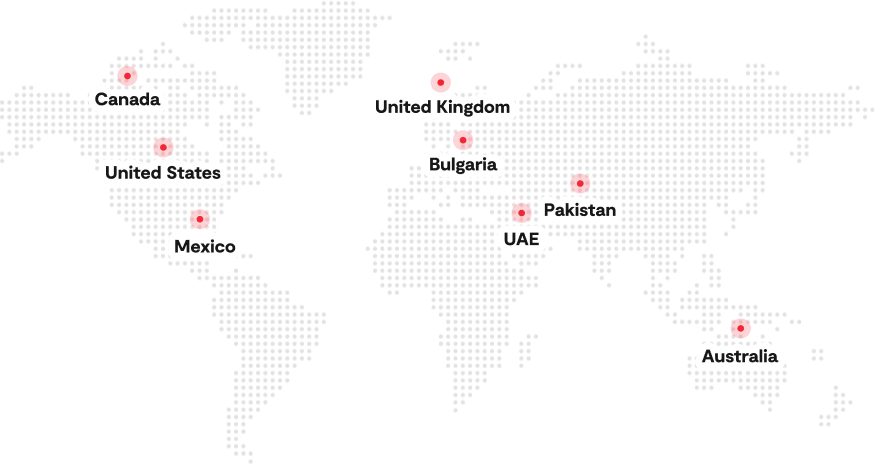
Serving the FoodTech Industry Globally Since 2004

Get in Touch

Drop us a line and we'll connect you to the right person.