
Food & Beverage ERP Implementation Services
Trusted by Leading Food and Beverage Brands
New requirements surface after signing, pushing costs up and delaying go-live. Budgets and timelines become harder to predict.
Missing or inconsistent item, recipe, and lot records lead to inaccurate inventory, unreliable reports, and costly errors after launch.
A standard setup can miss food-specific needs, from catch weight and co-products to shelf life and the way each plant runs production.
Poorly timed cutovers and limited training leave employees struggling with the new system, falling back on spreadsheets, and disrupting daily operations.

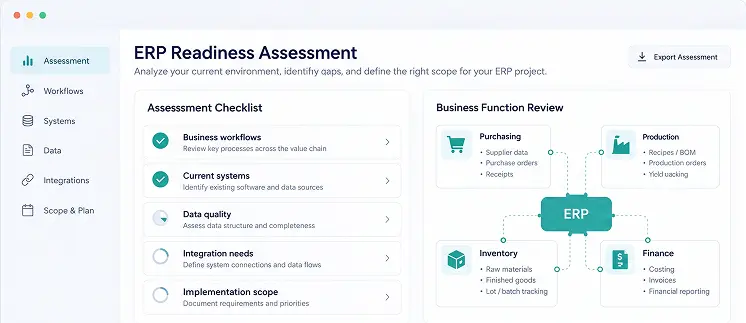
We map how your business runs today, find the gaps, decide what goes live first, and hand you a fixed scope, cost, and timeline before you commit.
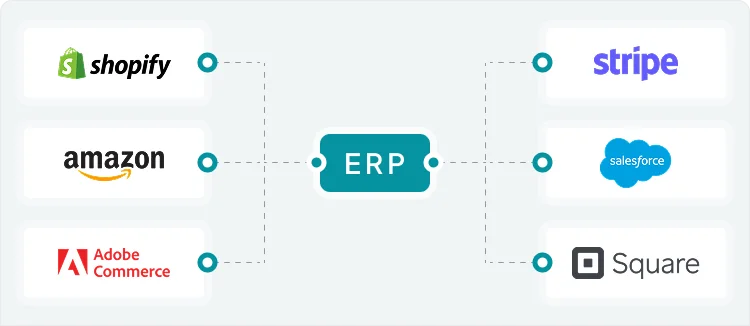
Connect your ERP to ecommerce, POS, 3PLs, and retailer EDI using prebuilt connectors or custom APIs, so orders, inventory, and invoices flow without manual re-entry.
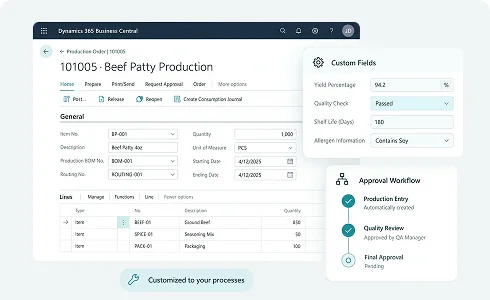
We configure standard ERP features first, from workflows and approvals to reports. Custom development fills genuine gaps without making future updates harder for your team.
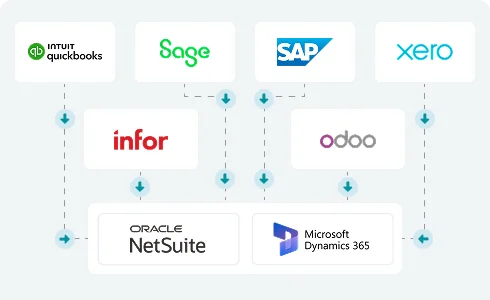
Moving from spreadsheets, QuickBooks, Sage, SAP, or another legacy system? We transfer and validate item records, recipes, inventory lots, balances, and customer price lists.
With 35+ prebuilt ERP connectors, we connect ecommerce, POS, warehouse, logistics, and retailer EDI systems to keep orders and business data moving reliably between systems.
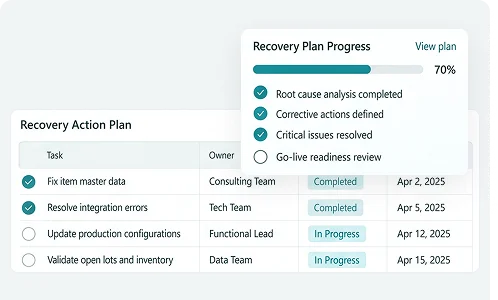
We plan cutover around your operating calendar, complete final data checks, coordinate launch, and stay with your team 24/7 as the new ERP goes live.
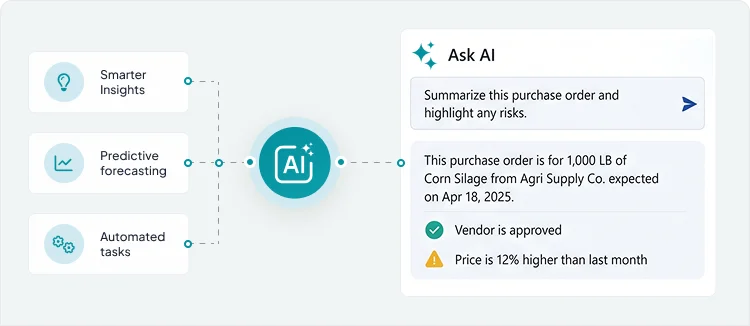
We assess your ERP, data, and workflows to identify useful AI opportunities, then help integrate the right capabilities into your existing business systems.
Free Discovery Call
Step 1
We define scope, modules, budget, timeline, decision-makers, and escalation paths, then map current workflows, identify ERP gaps, and document requirements formally before implementation begins.
Step 2
We configure your ERP in a test environment using approved requirements, setting up items, recipes, customers, roles, workflows, reports, and integrations to fit your operations.
Step 3
We run unit, integration, and end-to-end tests to check system connections and workflows. Key users test real scenarios and formally approve the solution before launch.
Step 4
We coordinate the cutover, support your team during launch, and resolve issues as operations transition to the new ERP. Ongoing support covers maintenance, updates, security, and system improvements.
For growing food businesses moving beyond spreadsheets or basic accounting software. Use Business Central Rapid Start or NetSuite SuiteSuccess where standard workflows fit your purchasing, inventory, production, and finance needs.
For manufacturers that need to keep plants running during implementation. Roll out by facility or business function, validating production, inventory, and order workflows before moving into each next phase.
For multi-plant manufacturers with complex production, finance, warehousing, and supply chains. Implement core operations and required integrations under one coordinated plan across locations and business entities.

For small and midsize food manufacturers moving beyond spreadsheets, we implement Business Central across finance, purchasing, inventory, production, and sales, with Microsoft tools and Power BI reporting helping teams share information and track performance daily.

For larger manufacturers managing multiple plants and complex production, we implement Dynamics 365 Finance and Supply Chain Management to coordinate finance, planning, warehouse operations, product formulas, co-products, and high-volume supply chains across locations and teams.

For food brands and distributors expanding across entities, locations, or sales channels, we implement NetSuite with food-specific production, lot and expiry tracking, warehouse, ecommerce, and financial workflows in one cloud ERP to support future growth.
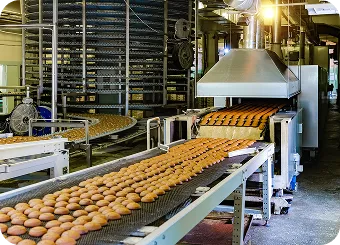
We plan each phase of ERP implementation around your business requirements and operating calendar, with clear checkpoints to review progress, resolve issues, and confirm readiness before moving ahead.
Automated workflows and fewer errors cut operating costs by up to 30%, freeing budget for growth and innovation.
Orders move from entry to invoice without delays, with processing up to 55% faster, so cash reaches your account sooner.
Leaders see production, inventory, and profitability in real time, cutting reporting delays by up to 50% and surfacing problems early.
Accurate orders and on-time shipments strengthen retailer relationships, with order errors down up to 89% and fewer costly chargebacks.
Add plants, product lines, sales channels, or acquisitions on the same system, scaling volume without rebuilding processes or adding staff.
Bakery businesses manage recipe-based production, ingredient substitutions, batch scaling, production schedules, freshness, and multi-channel orders.
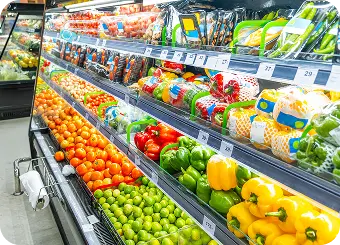
Fresh produce businesses need connected purchasing, receiving, grading, shelf life inventory, warehouse rotation, and distribution visibility.
Confectionery businesses balance recipe-driven production, ingredient consistency, packaging variants, shelf life, and seasonal demand swings.
Coffee businesses manage sourcing, roasting, blending, packaging, inventory, quality consistency, and wholesale or ecommerce orders.
Seafood companies manage variable catch volumes, short shelf life, cold storage, strict traceability, and fast fulfillment cycles.
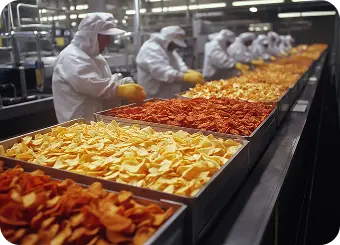
Snack manufacturers handle high-volume production, packaging variations, ingredient planning, shelf life, promotions, & multi-channel distribution.
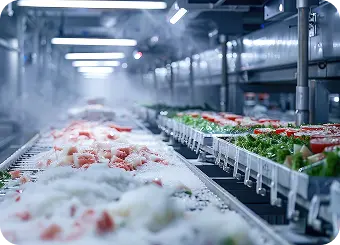
Frozen food businesses manage production, packaging, cold storage, shelf life, warehouse movement, and temperature-sensitive distribution.
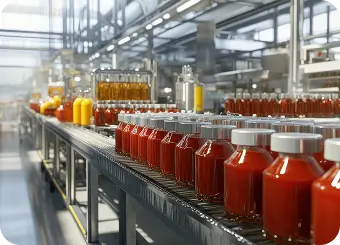
Sauce and dressing manufacturers manage formulas, ingredient sourcing, batch production, allergen controls, packaging formats, and shelf life.
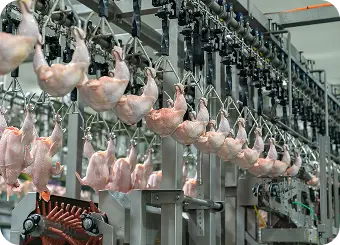
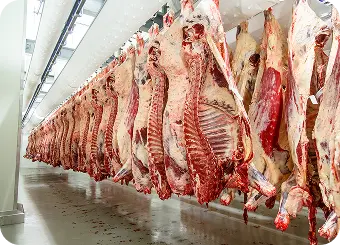
Meat processors need lot tracking from receiving through cutting, processing, packaging, cold storage, and customer delivery.
Disconnected financial, inventory, and operational systems made it harder to manage growth. Folio3 implemented NetSuite, unified business data, and added custom purchasing and lot tracking capabilities to support day-to-day operations.
Manual transaction entry and reconciliation consumed time. Folio3 developed an integration to transfer Square POS transactions into NetSuite, improving the flow of sales data into accounting and reporting.
Managing Amazon UK, France, and Germany created manual work across orders, inventory, customer records, payments, and shipping. Folio3 connected Amazon Seller Central with NetSuite to automate data exchange across the three markets.
Snake River Farms’ Magento store struggled with performance issues and unreliable data synchronization with Microsoft Dynamics AX. Folio3 upgraded the ecommerce platform and integrated it with Dynamics AX to improve order processing, inventory accuracy, and the online customer experience. Website load time was reduced by 47%
ERP IMPLEMENTATION TIMELINE
ERP IMPLEMENTATION COST
Our industry advisors bring firsthand food industry knowledge to our ERP services, connecting real operational challenges with practical technology solutions.