









Netsuite

NetSuite for Food and Beverage Businesses

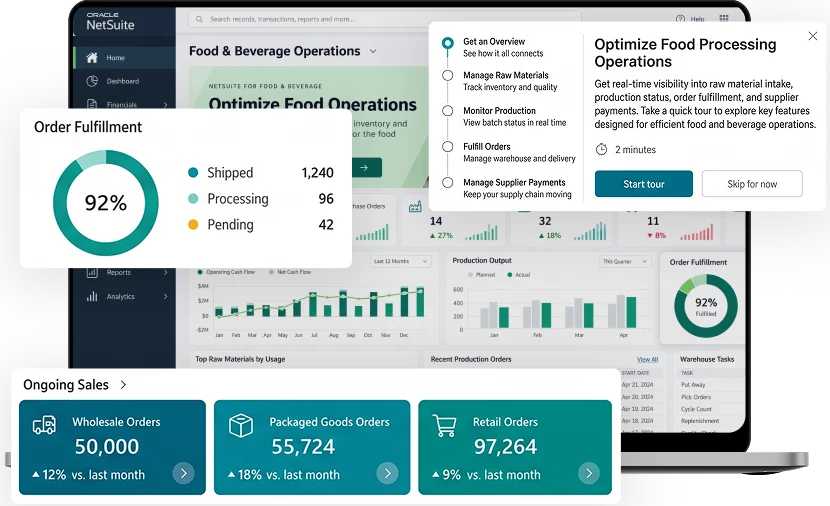
Food manufacturers, processors, distributors, and brands need a cloud ERP that connects finance, inventory, purchasing, orders, warehouse operations, ecommerce, and reporting in one platform. Oracle NetSuite for food and beverage brings these operations together so your teams work from the same data instead of separate systems.

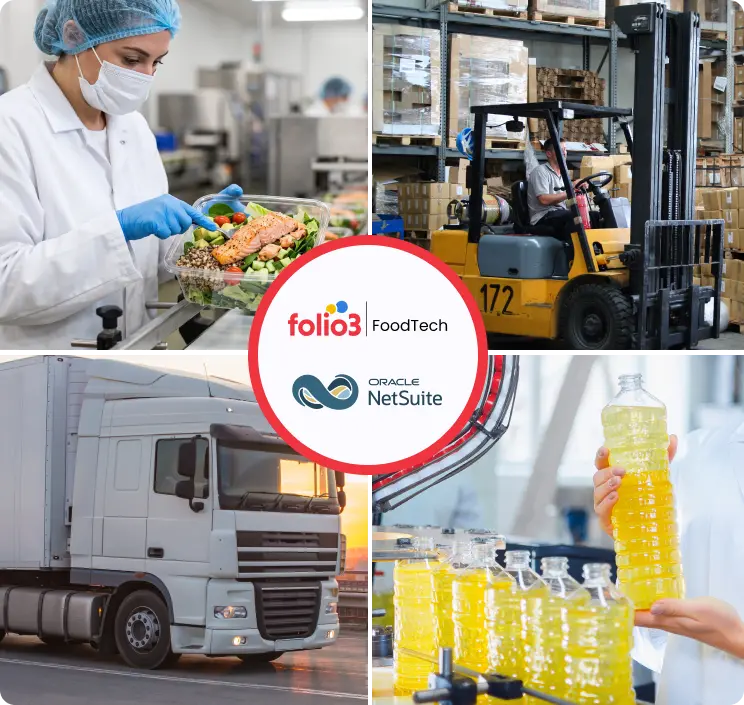
Folio3 FoodTech helps food and beverage companies configure, implement, integrate, and optimize NetSuite around how their business actually operates.

NetSuite for Food and Beverage Businesse

Award-Winning NetSuite Partnership

For 20+ years, our award-winning NetSuite solutions have driven food and beverage companies to peak operational efficiency.

What Is NetSuite for Food and Beverage

NetSuite for food and beverage is a cloud ERP platform that connects financial management, inventory, procurement, order management, warehouse operations, ecommerce, and reporting for food businesses. It gives food manufacturers, processors, distributors, and brands a single system to manage operations, track costs, fulfill orders, and make decisions based on real-time data.

NetSuite ERP software for food and beverage runs entirely in the cloud, which means businesses can manage multiple locations, warehouses, and sales channels without maintaining on-premises infrastructure. Folio3 FoodTech implements and supports NetSuite for food companies, configuring the platform around each company’s purchasing, inventory, order, warehouse, financial, and reporting workflows.

NetSuite for Food and Beverage

Why NetSuite for Food and Beverage Businesses

Most food businesses do not start with disconnected systems on purpose; they grow into them. A warehouse runs one tool, finance runs another, purchasing lives in spreadsheets, and ecommerce sits on its own platform. By the time order volumes pick up or a second location opens, the gaps are hard to close without rethinking the foundation. That’s where NetSuite fits for a food business to overcome these challenges.

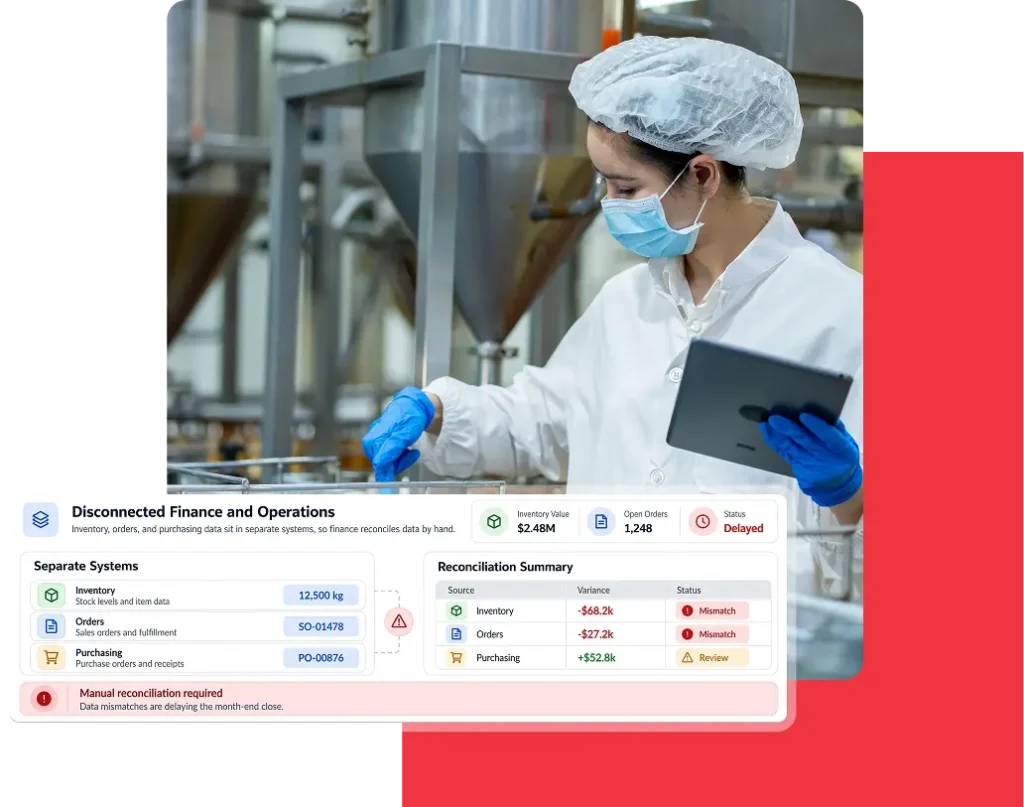
Disconnected Finance and Operations

Inventory, order, and purchasing data live in separate systems. Finance teams reconcile it by hand, so the numbers behind every close are late and hard to trust.
Stock sits in multiple warehouses with no single view of what is available. Teams oversell, overbuy, or miss replenishment because no one sees the full picture.
Purchase orders and approvals move through emails and spreadsheets. Without a link to inventory levels, buyers order too late or too much, and receiving gaps go unnoticed.
Orders arrive from wholesale, ecommerce, and direct channels, but allocation, fulfillment, and invoicing run separately. It slows delivery, creates invoicing errors, and leaves customers chasing status updates.
Receiving, put-away, picking, and shipping are tracked on paper or in separate tools. Without real-time tracking, errors reach customers before anyone can catch them.
Online orders, inventory, and customer data do not sync with the core business system. Teams re-enter orders by hand, and stock mismatches lead to overselling and canceled orders.
Multi-location businesses often report by entity, with separate books and separate currencies. Pulling the numbers together takes days, which delays the close and slows decisions.
Leadership reports are built by hand from several sources. By the time they are compiled, the data is outdated, and decisions rest on last week’s picture.
Disconnected Finance and Operations

Connect Core Food Operations With NetSuite ERP

NetSuite ERP software for food and beverage connects the operational areas food businesses manage every day. Each area shares the same data foundation, so a change in inventory reflects immediately in finance, purchasing, and order fulfillment.

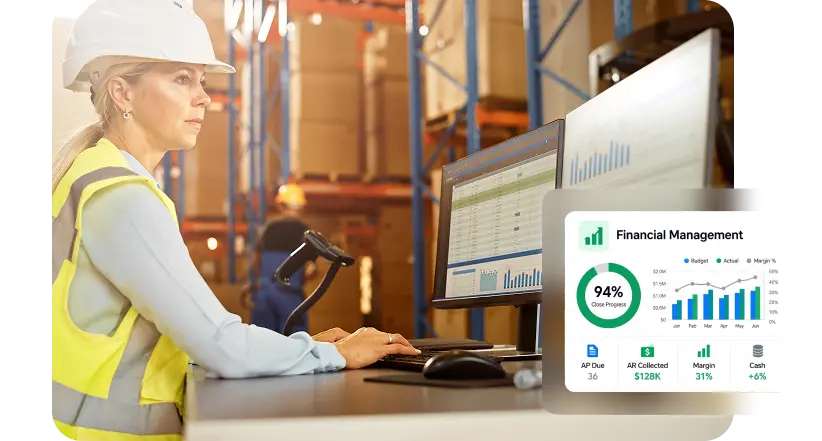
Financial Management

Accounts payable, accounts receivable, cash flow, budgeting, financial close, cost tracking, and reporting all run inside NetSuite. Finance teams get real-time visibility into costs, revenue, margins, and cash position without waiting for manual consolidation from other departments.

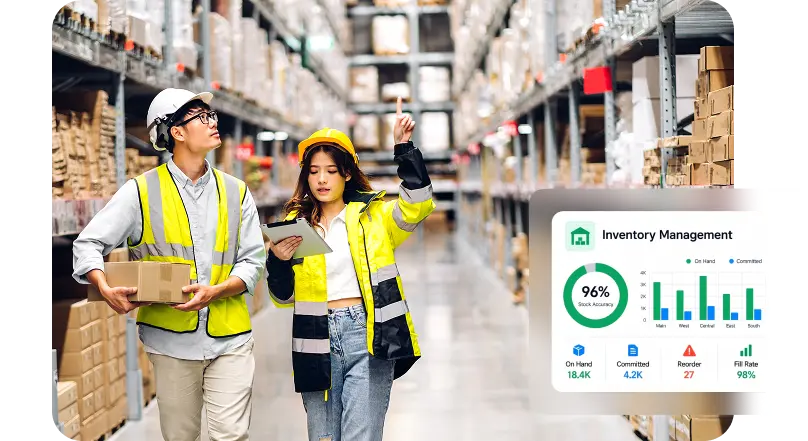
Inventory Management

Inventory Management

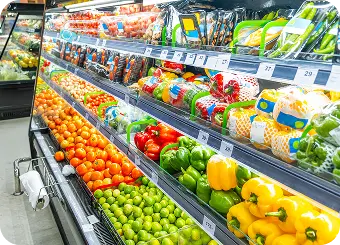
NetSuite tracks inventory across locations, lots, and stages. Stock availability, reorder points, replenishment rules, and inventory control connect directly to purchasing, orders, and warehouse operations so teams know what is on hand, what is committed, and what needs restocking.

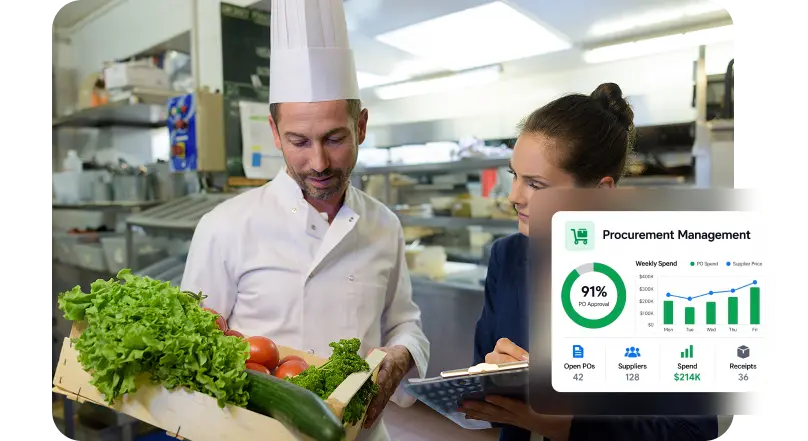
Procurement Management

Procurement Management

Supplier records, purchase orders, approval workflows, receiving, pricing agreements, and spend visibility sit inside NetSuite. Procurement stays connected to inventory levels and production needs so purchasing decisions are based on actual demand.

Procurement Management (1)

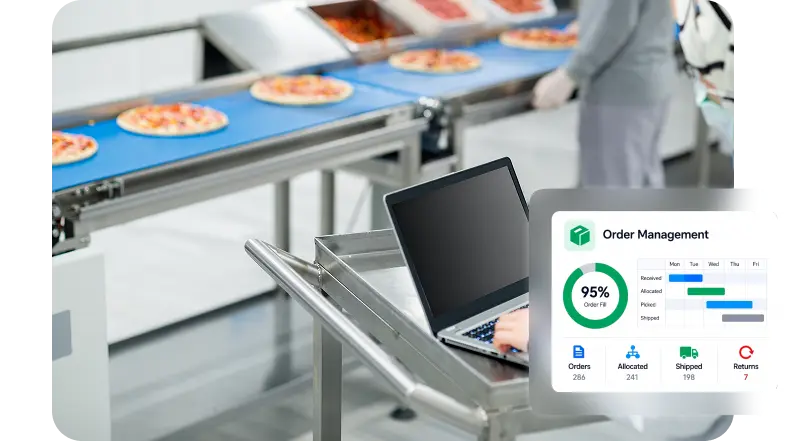
Order Management

Orders from wholesale, ecommerce, and direct channels flow into NetSuite for allocation, fulfillment, shipping, and invoicing. Order visibility from capture through delivery means fewer errors, faster processing, and clearer customer communication.

Order Management

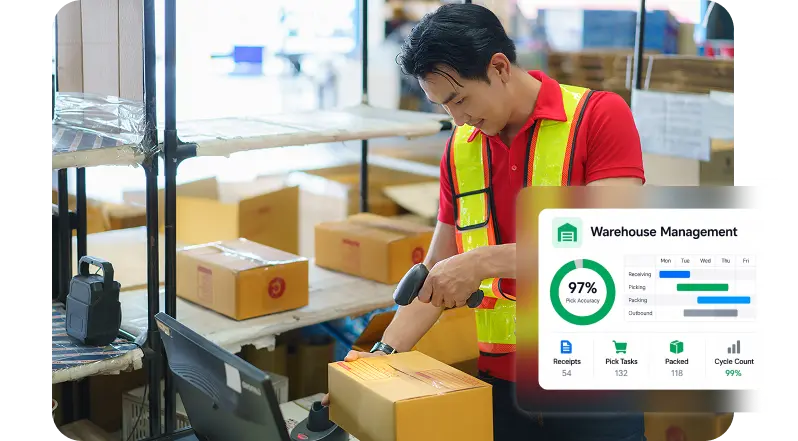
Warehouse Management

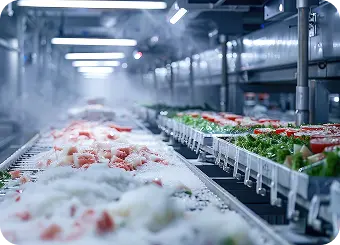
Receiving, put-away, barcode scanning, picking, packing, cycle counting, and outbound fulfillment run through NetSuite WMS. Warehouse teams work from real-time instructions instead of printed pick sheets and manual counts.

Warehouse Management (1)

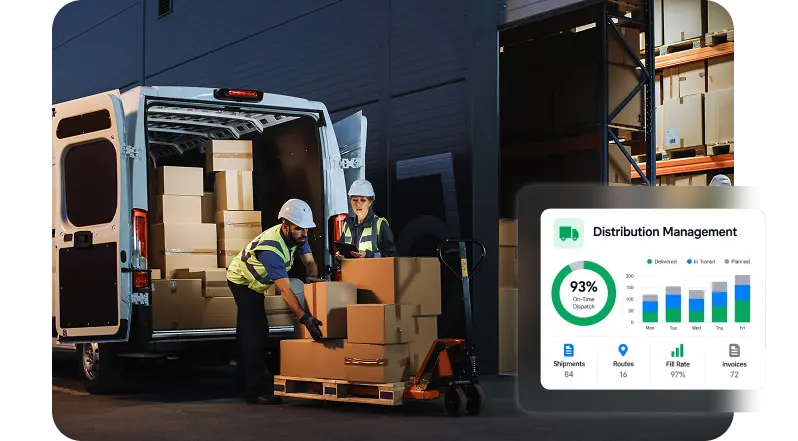
Distribution Management

Inventory allocation, order fulfillment, warehouse movement, and shipping coordination connect inside NetSuite so distributors can manage the full process from purchase order through delivery and customer invoicing.

Distribution Management (1)

Manufacturing Management

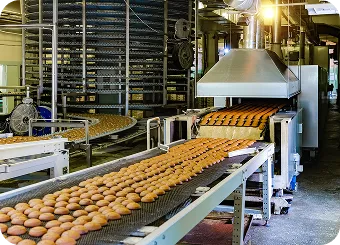
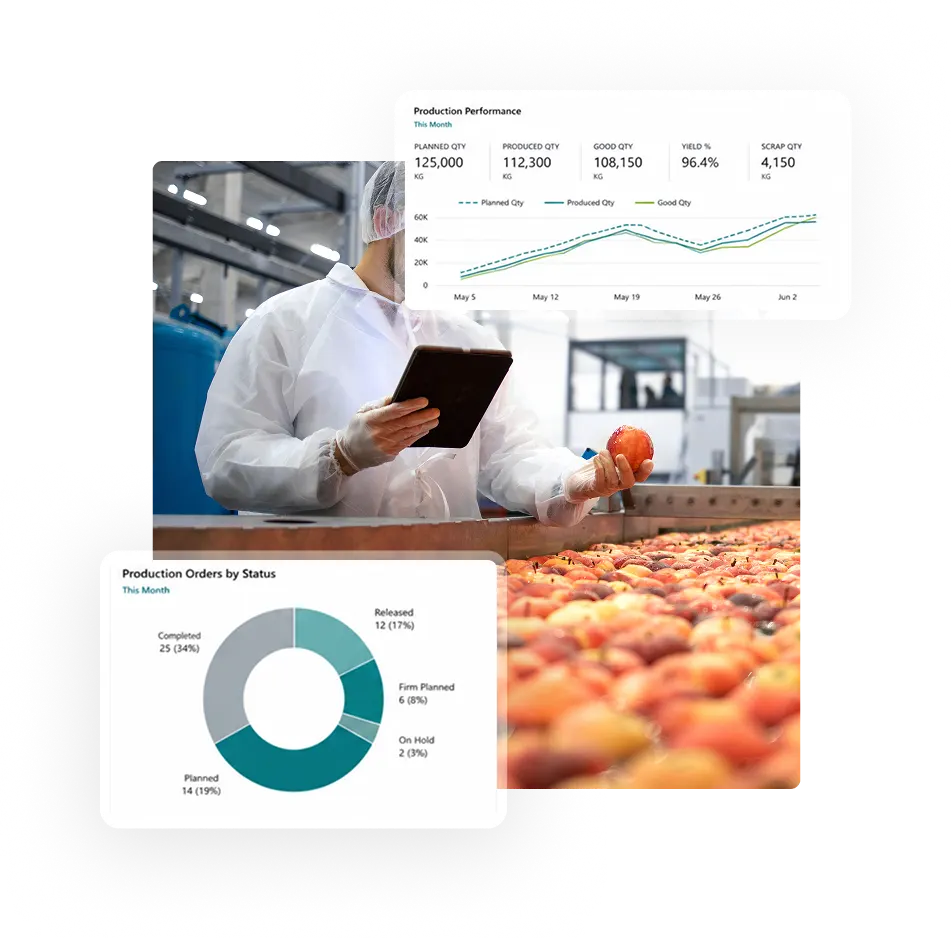
NetSuite supports materials management, production orders, inventory consumption, and production visibility for food manufacturers. Production data connects to financial and inventory records so manufacturing costs, output, and materials usage are tracked without manual data entry.

Food Manufacturing

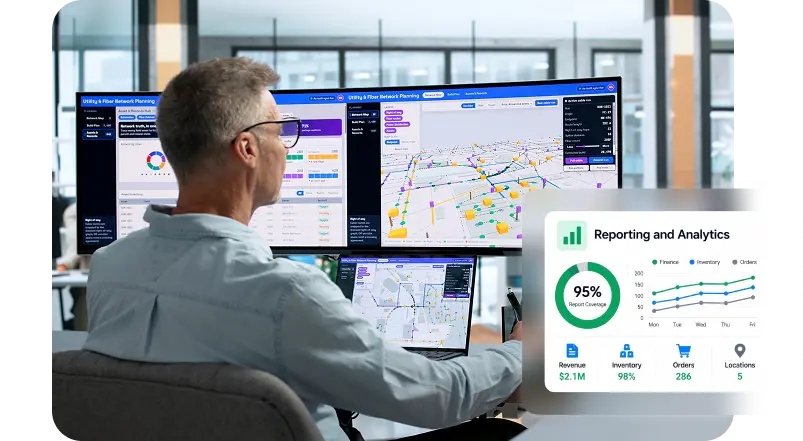
Reporting and Analytics

Dashboards, financial reports, inventory reports, order reports, and operational KPIs are built into NetSuite. Management gets visibility into business performance across locations, channels, and departments without pulling data into spreadsheets.

Reporting and Analytics

Manage Multi-Location Food Operations With NetSuite

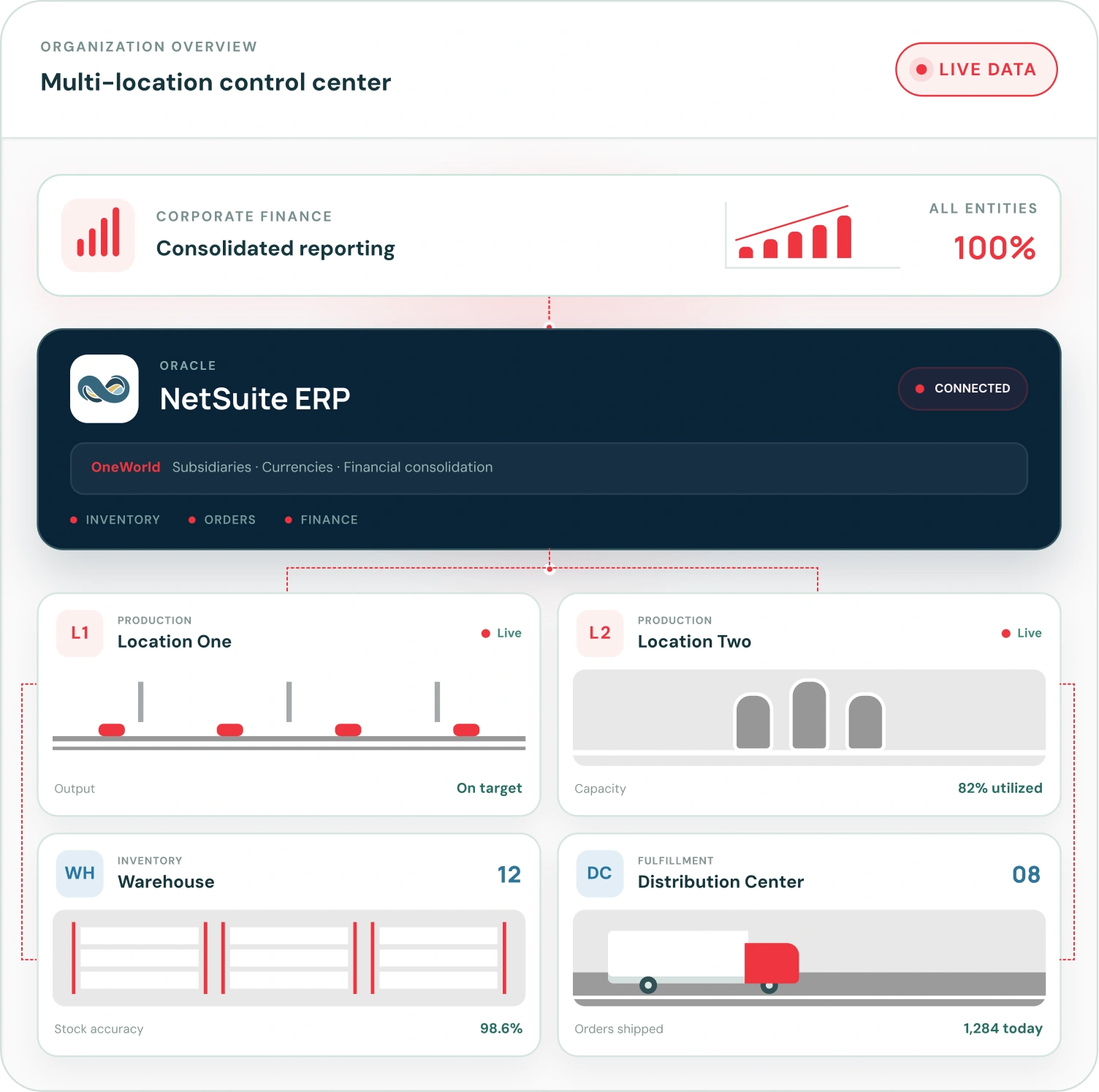
Managing a food business across multiple facilities becomes difficult when each location works with separate inventory records, order data, and financial reports. NetSuite connects these operations within one ERP environment, giving teams visibility across facilities while maintaining control over individual locations and business entities.

Production Locations

Track production activity, inventory movement, purchasing, and operating costs across facilities while maintaining visibility into individual site performance.

Warehouses

Monitor stock availability, inventory transfers, and product movement between warehouses to support better inventory allocation and planning.

Distribution Centers

Connect customer orders with inventory availability, fulfillment activity, and shipment information across distribution locations.

Subsidiaries and Business Units

Manage separate legal entities and operational structures while maintaining consistent financial records and reporting across the organization.

Corporate Finance

Monitor financial performance across entities, compare operating results, and reduce manual reporting and consolidation efforts.

New Project
Manage Multiple Entities With NetSuite OneWorld

NetSuite OneWorld supports subsidiary management, multiple currencies, and consolidated financial reporting. For food and beverage companies operating across regions, it provides visibility into individual entities and overall group performance, while connected NetSuite ERP capabilities support inventory, orders, and operations across locations.

Business visibility
0 °

NetSuite for Food Manufacturers, Processors, Distributors and Brands

NetSuite for food and beverage supports different business models, each with its own operational priorities. Here is how the platform applies across the industry.

Connect Ecommerce Orders, Inventory and Fulfillment With NetSuite

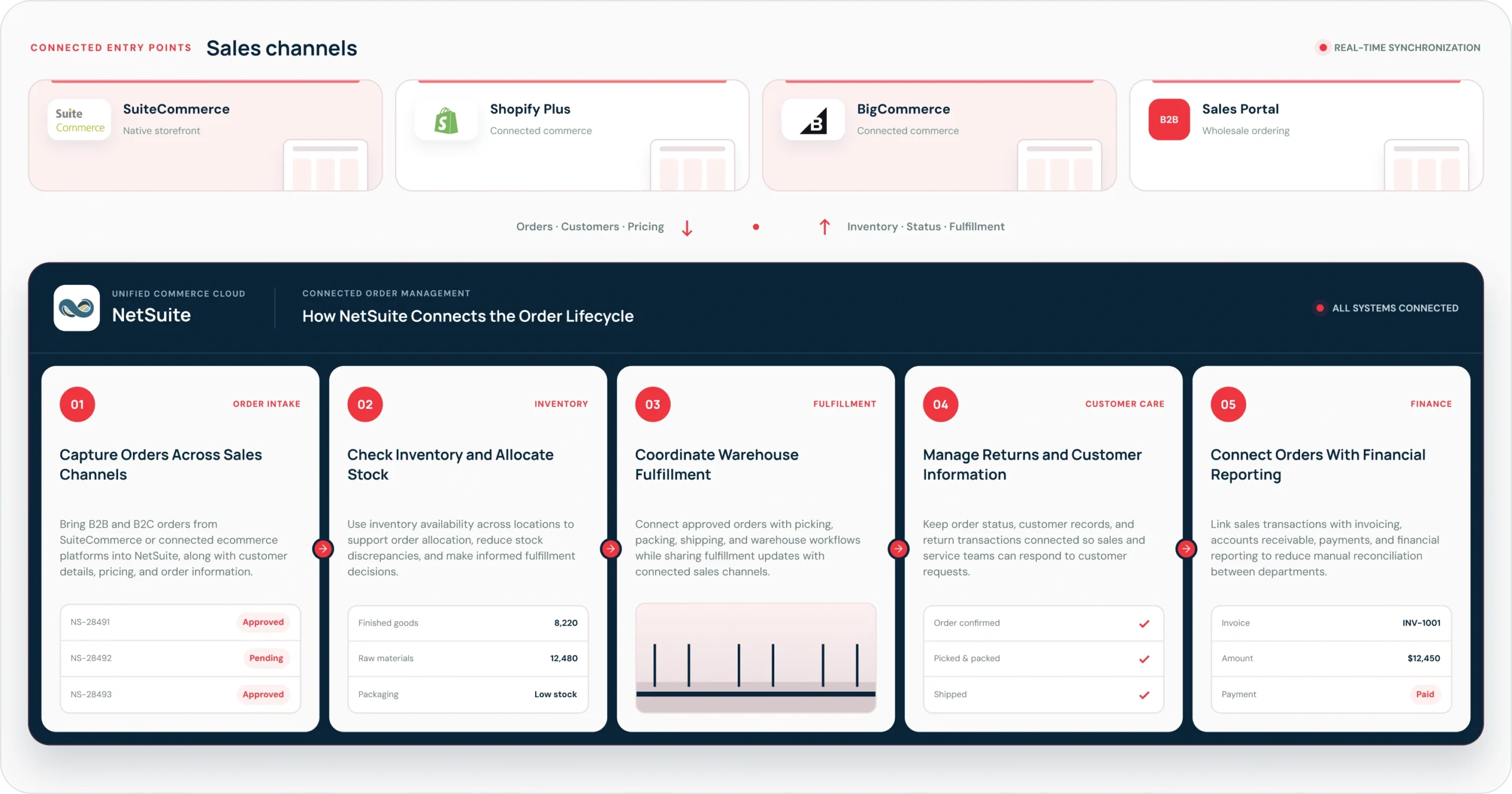
Food businesses sell through wholesale portals, direct consumer storefronts, marketplaces, and sales teams. When ecommerce, inventory, fulfillment, and finance operate separately, order processing becomes harder to manage. NetSuite connects these activities so customer orders can move from purchase to delivery with consistent operational and financial data.

Capture Orders Across Sales Channels

Bring B2B and B2C orders from SuiteCommerce or connected ecommerce platforms into NetSuite, along with customer details, pricing, and order information.

Check Inventory and Allocate Stock

Use inventory availability across locations to support order allocation, reduce stock discrepancies, and make informed fulfillment decisions.

Coordinate Warehouse Fulfillment

Connect approved orders with picking, packing, shipping, and warehouse workflows while sharing fulfillment updates with connected sales channels.

Manage Returns and Customer Information

Keep order status, customer records, and return transactions connected so sales and service teams can respond to customer requests.

Connect Orders With Financial Reporting

Link sales transactions with invoicing, accounts receivable, payments, and financial reporting to reduce manual reconciliation between departments.

Connected order lifecycle
Connect SuiteCommerce or External Ecommerce Platforms

NetSuite SuiteCommerce provides an integrated ecommerce option within the NetSuite ecosystem. Food businesses using Shopify Plus, BigCommerce, or other storefronts can also integrate those platforms with NetSuite to exchange orders, inventory, customer information, and fulfillment updates.

Integrate NetSuite With Your FoodTech Systems

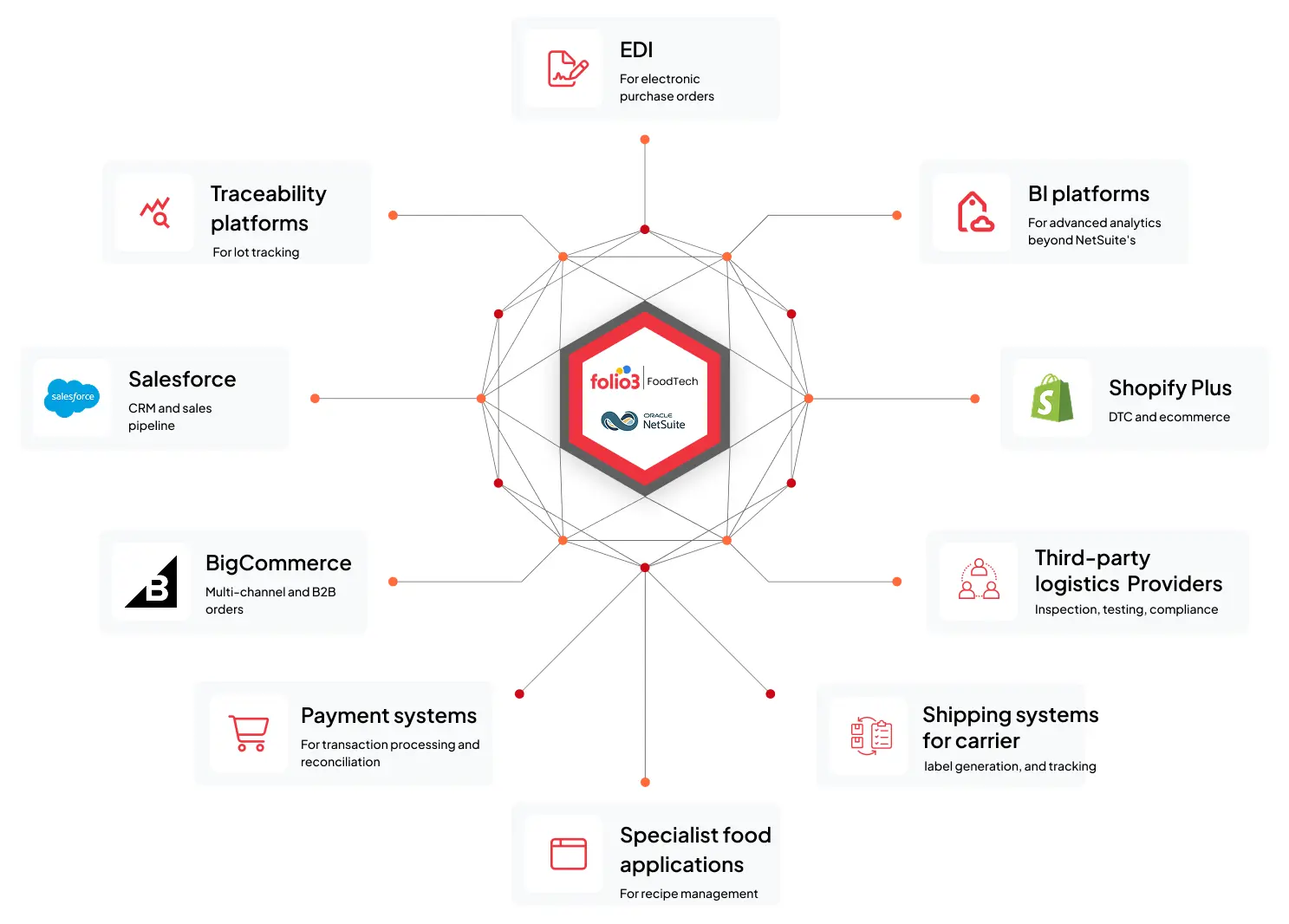
Most food businesses use more than one system. NetSuite does not need to replace every tool in the stack. It works as the cloud ERP and business data foundation while specialist systems handle what they do best.

Connected platforms include:

  • Shopify Plus for DTC and ecommerce order, product, and inventory data
  • BigCommerce for multi-channel ecommerce and B2B order management
  • Salesforce for CRM, customer data, and sales pipeline management
  • EDI for electronic purchase orders, invoices, and advance ship notices with trading partners
  • Third-party logistics providers for outsourced warehousing and fulfillment
  • Shipping systems for carrier selection, label generation, and tracking
  • Traceability platforms for lot tracking, recall management, and compliance
  • Payment systems for transaction processing and reconciliation
  • BI platforms for advanced analytics beyond NetSuite’s built-in reporting
  • Specialist food applications for recipe management, quality, labeling, and compliance
Integrate NetSuite With Your FoodTech Systems

Data that typically moves between systems

Inventory levels, customer orders, supplier records, warehouse transactions, payment data, shipping information, product details, and financial transactions. Folio3 FoodTech builds and supports NetSuite integrations so data flows between the ERP and the rest of your technology stack without manual transfers or duplicate entry.

When Does NetSuite Make Sense for a Food and Beverage Business

NetSuite is not the right fit for every food company at every stage. It makes the most sense when a business has outgrown disconnected tools and needs a connected cloud ERP that can scale.

NetSuite for food and beverage is worth evaluating when:

Finance and operations run on separate systems with manual data transfers

Warehouse processes need stronger control and real-time execution support

Inventory visibility is difficult across multiple locations or warehouses

Multi-location reporting takes days of manual consolidation

Order volumes are growing, and processing is becoming a bottleneck

Financial close requires pulling data from multiple disconnected sources

Ecommerce and wholesale channels use separate data that does not sync

Management relies on spreadsheet-based reporting for business decisions

The right configuration depends on business model, operational complexity, number of locations, channel mix, integration requirements, and growth plans.

Netsuite for food and beverage

Add AI to NetSuite for Smarter Food Business Control

NetSuite gives food businesses a cloud ERP base for finance, inventory, orders, warehouse, ecommerce, and reporting. Folio3 can help extend that base with NetSuite AI capabilities such as Ask Oracle, SuiteAnalytics, and food-specific AI models that support forecasting, reporting, approvals, and operational decision-making.

NetSuite ERP Services for Food and Beverage Companies

Folio3 FoodTech supports food businesses through every stage of a NetSuite project, from initial evaluation through long-term optimization.

NetSuite Assessment and Consulting

Evaluate current systems, business processes, and requirements before committing to NetSuite. This is the starting point for food businesses that want a structured approach to cloud ERP selection and readiness.

NetSuite Implementation

Configure, deploy, and launch NetSuite for food and beverage operations. NetSuite implementation for food and beverage covers system setup, data migration, process configuration, user training, and go-live support tailored to food business workflows.

NetSuite Migration

Move from a legacy ERP, a competing platform, or older NetSuite configurations to the current NetSuite environment. Migration covers data, processes, integrations, and user transition with minimal disruption to daily operations.

NetSuite Customization

Adapt NetSuite to match how your food business operates. It includes custom workflows, saved searches, dashboards, forms, roles, and process-specific configurations aligned with inventory, purchasing, orders, warehouse, and finance requirements.

NetSuite Integration

Connect NetSuite with Shopify Plus, BigCommerce, Salesforce, EDI, shipping, 3PL, payment, traceability, and analytics systems. Integration ensures data flows between NetSuite and the rest of your technology stack without manual transfers.

NetSuite Support and Optimization

Keep NetSuite running, updated, and aligned with changing business needs. Ongoing support includes issue resolution, performance monitoring, configuration updates, user support, and system optimization as the business grows.

Why Choose Folio3 for NetSuite in FoodTech

Netsuite

Folio3 FoodTech works with food manufacturers, processors, distributors, and brands to implement, integrate, and support NetSuite across real food and beverage operations.

Our NetSuite Portfolio for Food and Beverage Businesses

With 20+ years in food and beverage ERP, Folio3 FoodTech has delivered 200+ Oracle NetSuite projects for food businesses. These case studies show how connected finance, production, inventory, and supply chain data support real operations. Each one shows the outcome, not just the scope.

In the Words of Our Clients

Read what our clients say about their experiences and the difference our solutions have made for them.

NetSuite for Food and Beverage FAQs

Why use NetSuite for a food and beverage business?

Food businesses choose NetSuite because it connects finance, inventory, purchasing, orders, warehouse, and ecommerce in one cloud platform. It replaces disconnected systems and manual processes with real-time visibility across locations, channels, and departments.
Yes. NetSuite food manufacturing supports materials management, production orders, inventory consumption, production visibility, and cost tracking. Manufacturing data connects directly to financial and inventory records so costs, output, and materials are tracked without manual entry.
Yes. NetSuite for food companies tracks inventory across locations, warehouses, and stages. Stock availability, lot information, reorder points, and replenishment rules are visible across the business so teams can manage inventory from one system.
Yes. NetSuite for food and beverage distributors connects purchasing, multi-warehouse inventory, order allocation, fulfillment, shipping, invoicing, and delivery visibility so distributors can manage the full process from a single platform.
Yes. NetSuite solutions for food and beverage integrate with Shopify Plus and BigCommerce so ecommerce orders, inventory, product data, and customer information sync between the storefront and the ERP in real time.
Yes. NetSuite for food business integrates with Salesforce for CRM, EDI for trading partner documents, 3PL for outsourced fulfillment, shipping systems, payment platforms, traceability tools, and analytics systems. Folio3 FoodTech builds and supports these integrations.
NetSuite implementation for food and beverage starts with a business process review and requirements analysis. From there, the project moves through system design, configuration, data migration, integration setup, user training, and go-live. Folio3 FoodTech manages each phase around food business workflows.

Connect Your Food Business With NetSuite Cloud ERP

Food businesses run better when finance, inventory, purchasing, orders, warehouse, ecommerce, and reporting are connected in one cloud platform. NetSuite brings these operations together so your teams work from the same data across every location and channel.

Folio3 FoodTech helps food manufacturers, processors, distributors, and brands implement, integrate, and support NetSuite so the business can grow without outgrowing the system.

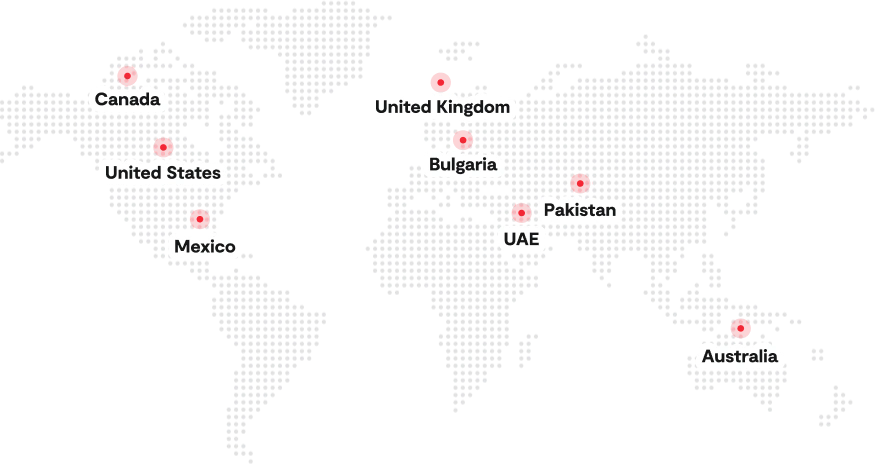
Serving the FoodTech Industry Globally Since 2004

Get in Touch

Drop us a line and we'll connect you to the right person.