

In modern Meat processing operations, efficiency is measured not only by the value of primary cuts but also by how effectively secondary outputs are managed. Meat byproducts refer to the portions of an animal that are not sold as traditional retail cuts yet remain commercially valuable. These include organs, fats, bones, blood, hides, and other materials that can be repurposed for food, feed, pharmaceuticals, biofuel, and industrial applications. Rather than being treated as waste, meat byproducts represent a structured and essential component of the protein supply chain.
The Food and Agriculture Organization reports that in developed meat industries, nearly all parts of slaughtered animals are utilized either for food, feed, or industrial applications. This level of utilization reflects both operational discipline and economic necessity. When properly managed, meat byproducts contribute significantly to margin recovery by generating additional revenue streams beyond primary carcass sales. Conversely, poor handling or underutilization can increase disposal costs and reduce overall plant profitability.
Beyond economics, effective management of meat byproducts supports sustainability goals. Maximizing full animal utilization reduces environmental burden, improves resource efficiency, and strengthens supply chain resilience. As market pressure grows around cost control and responsible production, byproduct optimization has become a strategic priority rather than an afterthought.
This article examines the categories, uses, and value-added opportunities associated with meat byproducts, along with practical approaches to reducing waste and integrating systems that improve traceability, preservation, and financial performance.
What Are Meat Byproducts? Definitions and Industry Classification
Understanding meat byproducts begins with recognizing their role inside structured meat processing operations. Meat byproducts are materials derived from slaughtered animals that are not classified as primary retail cuts but retain commercial value. These outputs include organs, fat, blood, bones, hides, and connective tissues. Rather than being discarded, meat byproducts are collected, graded, and directed into specialized markets where they generate additional revenue streams and reduce disposal waste. In modern facilities, meat byproducts are considered secondary production streams that support overall carcass profitability.
What Is Meat By Product?
When asking what is meat by product, the distinction lies in classification rather than quality. A primary cut, such as loin or rib, is typically sold directly to consumers or foodservice buyers. In contrast, meat byproducts include components that require further processing, refinement, or transformation before reaching end markets. These materials may not be marketed as fresh retail cuts, but they remain economically significant. Within structured systems, meat by products are documented, separated, and tracked to ensure traceability and compliance across handling stages.
Edible vs Inedible Byproducts
Meat byproducts are broadly categorized as edible or inedible. Edible byproducts include liver, heart, tongue, and certain fats that enter food or export channels. Inedible streams include bones, blood, hides, and rendering materials used in feed, pharmaceuticals, or industrial applications. The distinction determines handling protocols, preservation methods, and regulatory oversight. Both categories contribute to the overall value chain.
Regulatory and Market Classification
Regulators and market bodies classify meat byproducts according to safety standards, processing requirements, and final use applications. Segmentation ensures that edible streams meet consumption guidelines, while industrial streams follow rendering and conversion standards. Proper classification supports compliance, traceability, and efficient allocation of secondary materials across diverse domestic and global markets.
Categories of Meat Byproducts in Beef and Red Meat Processing
In beef plants and other red meat facilities, meat byproducts represent a structured and diversified output stream. While primary cuts generate direct retail revenue, meat byproducts contribute significant value through specialized food, industrial, and export markets. Within red meat processing, these materials are categorized carefully to ensure proper handling, compliance, and downstream utilization.
Edible Byproducts in Red Meat Processing
Edible meat byproducts include organs and certain fats that enter domestic or international food markets. Liver, heart, tongue, tripe, and other organ meats are sold fresh, frozen, or further processed depending on demand. These items often hold strong export value in regions where organ consumption is culturally significant.
Fat recovered during fabrication may be refined into tallow for culinary applications or processed into ingredients used in specialty food formulations. Gelatin and collagen derived from connective tissues also originate from meat byproducts and are widely used in food, pharmaceutical, and nutraceutical sectors. In many markets, these beef byproducts are not secondary in value but serve as essential components of high-demand products.
Industrial and Rendering Streams
Not all meat byproducts are directed toward food channels. Industrial streams include bones, blood, and hides that move into rendering and manufacturing pathways. Bone meal is produced from processed skeletal material and used in agriculture and feed production. Blood plasma is collected and refined for feed additives and industrial uses.
These meat byproducts are converted through rendering processes that stabilize material and reduce waste. Proper segregation ensures that cow by products entering industrial streams meet safety and quality requirements while maximizing recovery efficiency.
Beef-Specific Byproduct Utilization
In beef facilities, beef by products are often segmented based on final market destination. Hides are directed toward leather manufacturing, while refined fats may enter biodiesel production or specialty industrial applications. Some beef byproducts also contribute to pet nutrition and processed ingredient markets.
Export markets play a substantial role in beef byproducts valuation. Demand varies by region, and processors adjust allocation strategies accordingly. Effective management of meat byproducts ensures that every recoverable component is directed toward the highest-value channel, reinforcing both operational efficiency and profitability across red meat processing systems.
Turning Meat Byproducts into Value-Added Products
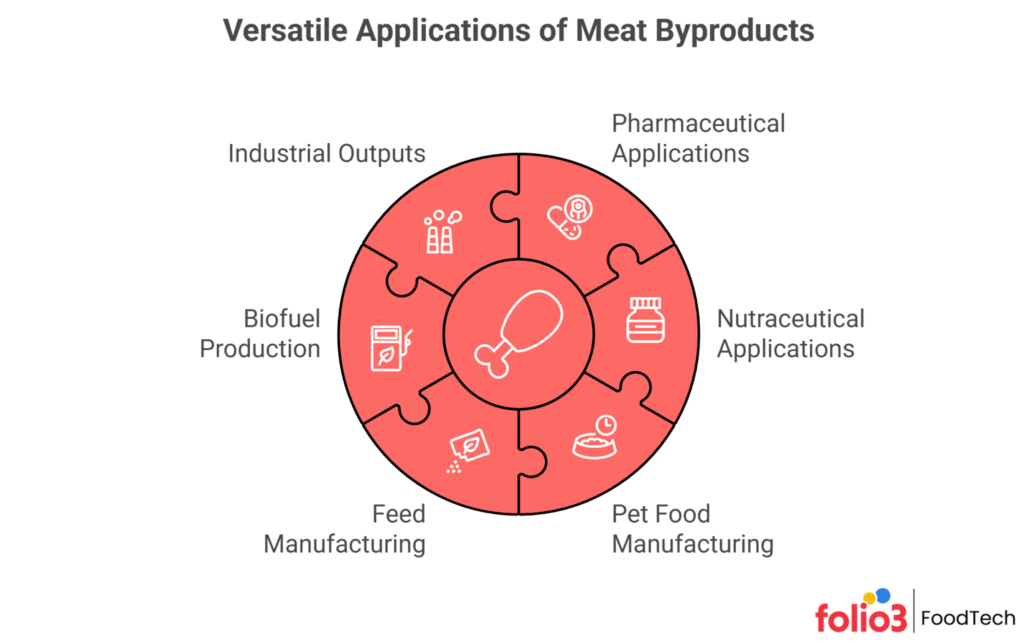
The financial impact of meat byproducts depends largely on how effectively they are converted into higher value outputs. Rather than treating secondary streams as residual materials, modern facilities focus on structured monetization strategies that transform meat byproducts into specialty ingredients and industrial inputs. By investing in refinement and downstream processing, plants increase revenue recovery and stabilize margins across production cycles.
Pharmaceutical and Nutraceutical Applications
Certain meat byproducts serve as foundational materials in pharmaceutical and nutraceutical manufacturing. Collagen extracted from connective tissues is processed into capsules, gelatin shells, and supplement powders used in joint health, skin health, and protein formulations. Gelatin derived from bones and hides also supports capsule manufacturing for various medical applications.
These refined ingredients move far beyond their origin as slaughter outputs. Through purification and standardized processing, meat byproducts become high-value inputs for specialty sectors where consistency and quality control are critical. This conversion demonstrates how secondary materials can outperform traditional cuts in terms of margin per unit weight.
Pet Food and Feed Manufacturing
Another major destination for meat byproducts is the pet food and feed sector. Protein meals, rendered fats, and blood derivatives are incorporated into balanced formulations for companion animals and livestock feed. Pet protein meals derived from meat byproducts contribute to nutrient-dense formulations, ensuring minimal waste while meeting strict quality standards.
In some facilities, byproducts are further processed into specialty ingredients used within processed beef products and blended formulations. These applications extend the lifecycle of each meat product component and create diversified income streams for processors.
Biofuel and Industrial Outputs
Industrial conversion represents an additional value pathway. Rendered fats can be refined into biodiesel, while specialty fats serve in cosmetic and chemical manufacturing. Bones may contribute to mineral supplements or agricultural amendments.
A structured market monetization strategy ensures that meat byproducts are allocated based on demand signals, pricing trends, and export opportunities. By aligning byproduct recovery with market segmentation, processors strengthen financial performance and reduce reliance on primary cut pricing alone. Effective transformation of meat byproducts into value-added outputs supports operational resilience and long-term profitability.
Waste Reduction and Yield Optimization in Processing Plants
Effective management of meat byproducts plays a central role in reducing waste and improving total carcass utilization. In modern facilities, waste is not viewed simply as discarded material but as a recoverable resource that must be measured and redirected. By applying structured waste hierarchies, processors prioritize recovery, reuse, and conversion before considering disposal. This approach ensures that meat byproducts are captured systematically and allocated to the highest-value channel available.
Yield tracking systems are essential in this process. Plants increasingly rely on digital measurement tools to monitor trim loss, fat recovery, bone extraction, and organ separation. Accurate data allows supervisors to evaluate how meat byproducts are handled at each stage of production. Small percentage improvements in yield, when multiplied across daily throughput, can translate into significant financial gains. Consistent tracking also highlights areas where recovery efficiency can be improved through equipment adjustments or training.
Integration with rendering operations further strengthens optimization. Rendering converts inedible meat byproducts into usable materials such as tallow and protein meals. When rendering capacity is aligned with plant output, processors minimize landfill diversion and enhance resource efficiency. This structured recovery model reduces disposal costs while mitigating the broader environmental impacts of meat production through full animal utilization.
Recall exposure is another operational risk linked to poor byproduct control. Traceability gaps can complicate response during events such as ground beef recalls, where secondary materials must be accurately identified and isolated. By implementing integrated tracking systems for meat byproducts, facilities improve lot control and documentation accuracy.
Overall, structured management of meat byproducts reduces waste, strengthens compliance readiness, and improves operational efficiency across processing plants.
Preservation, Storage, and Handling of Meat Byproducts
Proper preservation and handling of meat byproducts are essential to maintaining product integrity, regulatory compliance, and market value. Because these materials often move through multiple processing streams, strict segregation protocols must be established at the point of separation. Edible and inedible meat byproducts are identified, labeled, and directed into designated storage areas to prevent cross-contamination and ensure traceability.
Temperature control is one of the most critical factors in preserving meat byproducts. Rapid chilling immediately after separation slows microbial growth and stabilizes quality. Facilities align their procedures with established meat preservation and storage methods, applying controlled refrigeration or freezing depending on end-market requirements. Maintaining consistent temperature ranges reduces spoilage risk and protects both food-grade and industrial streams.
Shelf life extension strategies are increasingly supported by automated packaging solutions. Techniques such as vacuum sealed meat packaging help minimize oxygen exposure, preserving freshness and extending usability for export or further processing. In some cases, modified atmosphere packaging is used to enhance stability during transport and distribution.
Contamination prevention is closely tied to documentation and oversight. Facilities implement structured cleaning cycles, equipment sanitation protocols, and environmental monitoring to safeguard meat byproducts at every stage. Clear workflows and tracking systems reinforce food safety practices, ensuring that secondary materials meet the same compliance standards as primary cuts.
By combining segregation, temperature management, protective packaging, and sanitation controls, processors maintain the value of meat byproducts while minimizing spoilage and regulatory risk. Effective preservation is not simply a storage function. It is a controlled process that protects quality, traceability, and profitability throughout the supply chain.
Packaging and Distribution of Byproduct Streams
Efficient packaging and distribution are critical to preserving the value of meat byproducts once they leave the processing floor. Because meat byproducts are often directed toward diverse end markets, ranging from food applications to industrial manufacturing, packaging formats must align with both regulatory standards and logistical requirements. Proper handling ensures that meat byproducts maintain quality during storage, transport, and export.
Bulk containerization is commonly used for rendered fats, protein meals, and bone-derived materials. Drums, totes, and lined bulk containers protect meat byproducts from contamination and environmental exposure while supporting large-volume shipment. For edible streams, packaging must meet labeling and sanitation standards consistent with broader expectations in the meat packaging industry.
Export compliance introduces additional considerations. Meat byproducts destined for international markets require documentation, product identification, and adherence to destination-country regulations. Traceability labeling becomes essential in this context, linking each shipment to processing batches and inspection records. Clear labeling reduces risk during audits and simplifies response in the event of quality inquiries.
Logistics coordination also plays a significant role. Because some meat byproducts have limited shelf life, transportation schedules must align with temperature requirements and storage capacity at receiving facilities. Integrated tracking systems help synchronize production output with shipping timelines, ensuring efficient movement across supply chains.
Through structured packaging, compliant labeling, and coordinated distribution, processors protect the commercial integrity of meat byproducts while meeting domestic and global market standards.
Technology, Automation, and the Future of Byproduct Utilization
The future of meat byproducts management is increasingly defined by data visibility and system integration. As plants move toward higher recovery rates and tighter compliance controls, digital infrastructure becomes central to decision-making. Folio3 Foodtech’s ERP for the meat industry enables structured oversight of meat byproducts across separation, grading, storage, and distribution workflows.
Digital yield tracking allows processors to measure recovery percentages in real time, identifying performance gaps at trimming, deboning, and rendering stages. ERP integration connects production data with inventory, financial reporting, and sales channels, creating a unified view of how meat byproducts contribute to plant profitability. Batch-level traceability further strengthens compliance by linking each byproduct stream to source lots, inspection records, and downstream customers.
Conclusion
Automation also supports consistency in separation and grading processes. By standardizing classification and weight capture, plants reduce variability and improve market segmentation accuracy. These capabilities align with the broader meat industry outlook, where circular economy models emphasize full-animal utilization and responsible resource management.
As digital systems mature, meat byproducts will increasingly be managed not as residual streams but as strategic revenue channels within integrated processing ecosystems.
Meat byproducts have evolved from secondary outputs into strategic value streams within modern processing plants. When managed with structured recovery programs and clear market segmentation, meat byproducts contribute directly to revenue growth and margin stability. Plants that track yield, integrate rendering efficiently, and maintain traceability controls convert what was once considered waste into monetizable inventory.
Waste reduction is no longer just a sustainability initiative. It is a measurable profitability lever. Even incremental improvements in recovery rates can produce meaningful financial gains at scale.
At the same time, full-animal utilization aligns processing operations with environmental responsibility and circular production models. By combining operational discipline, digital oversight, and market-focused monetization strategies, processors position meat byproducts as core performance drivers in modern meat production systems.
What Are Meat Byproducts?
Meat byproducts are secondary materials derived from animals during slaughter and processing that are not classified as primary muscle cuts. These include organs, fat, bones, blood, hides, and connective tissues. Instead of being discarded, these materials are redirected into food, feed, pharmaceutical, cosmetic, and industrial applications. Proper handling and classification allow meat byproducts to generate economic value while reducing overall waste in processing plants.
Are Meat Byproducts Edible?
Some meat byproducts are edible, while others are designated for non-food use. Edible byproducts include organs such as liver, heart, and kidneys, which are consumed in many markets worldwide. Inedible byproducts, such as certain bones, blood fractions, or hides, are typically processed into animal feed ingredients, industrial materials, or other specialized products. Regulatory standards determine how each category must be handled and labeled.
How Do Beef Byproducts Generate Revenue?
Beef byproducts generate revenue by being converted into value-added products such as tallow, gelatin, collagen, bone meal, and protein meals. These materials are sold to food manufacturers, pet food producers, pharmaceutical companies, and industrial buyers. Structured recovery and proper market segmentation allow processors to monetize streams that would otherwise represent disposal costs.
How Are Cow By Products Processed?
Cow by products are processed through sorting, cleaning, rendering, chilling, or further refinement depending on their end use. Edible materials are inspected and prepared for food markets, while inedible materials may undergo rendering to produce fats and protein meals. Traceability systems and sanitation protocols ensure safety and compliance throughout processing.
What Is The Environmental Benefit Of Utilizing Meat Byproducts?
Utilizing meat byproducts reduces landfill waste, lowers disposal emissions, and supports full-animal utilization. By converting secondary materials into food, feed, fuel, or industrial inputs, processors minimize resource loss and contribute to circular production systems. This approach reduces the environmental footprint associated with meat production.
Are Meat By Products Regulated?
Yes, meat by products are regulated under national and international food safety and animal health frameworks. Authorities set standards for handling, storage, labeling, and transport to ensure consumer safety and prevent contamination. Compliance requirements vary depending on whether the byproducts are intended for food, feed, or industrial use.


