

The global frozen meat market was valued at $98.55 billion in 2025 and is projected to reach $130.34 billion by 2034, highlighting the critical role frozen meat plays in the modern food industry. For food businesses, ensuring optimal frozen meat shelf life is more than a storage concern, it directly impacts profitability, brand reputation, and regulatory compliance. Even minor lapses in temperature control, handling, or storage practices can result in spoilage, financial loss, or customer dissatisfaction.
Inconsistent monitoring and a lack of standardized processes make it challenging for businesses to maintain product quality throughout the supply chain. From meat processing plants to distributors and retailers, every stage requires careful attention to preserve freshness, texture, and safety.
This blog will guide food businesses on how to optimize frozen meat shelf life through proven storage strategies, temperature management, and technology-driven monitoring. Readers will learn actionable best practices, understand common mistakes to avoid, and gain insights into leveraging systems that enhance both efficiency and product quality, ensuring frozen meat remains safe and profitable for the longest possible period.
The Business Impact of Frozen Meat Shelf Life
Maintaining optimal frozen meat shelf life is a critical factor in the success of food businesses. While theoretical shelf life provides a guideline, actual shelf life in operational settings often varies due to storage conditions, handling practices, and distribution challenges. Understanding this gap is essential for reducing losses and maximizing profitability.
Key Impacts of Shelf Life on Business Operations:
- Inventory Loss: Spoilage due to mismanaged storage or temperature fluctuations leads to significant financial loss. Meat that exceeds its usable shelf life often cannot be sold or used, directly affecting margins.
- Customer Satisfaction: Consumers expect safe, high-quality products. A compromised shelf life can lead to complaints, returns, and long-term damage to brand trust.
- Regulatory Compliance: Food safety regulations require strict adherence to expiration and quality standards. Failure to maintain shelf life can result in fines, recalls, or even operational shutdowns which is why meat ERP connecting shelf life, compliance, and operational visibility is increasingly central to how processors manage this risk.
- Exports and Market Access: International buyers demand consistent quality and documented shelf life. Products failing to meet these standards can be rejected, limiting market opportunities.
The shelf life of frozen meat is more than just a number on a label; it dictates operational strategy, supply chain planning, and customer experience. According to recent trends in the meat industry outlook, businesses that actively monitor and manage shelf life are better positioned to reduce waste, improve safety, and strengthen their reputation in a competitive market.
By understanding and controlling actual shelf life, food businesses can optimize operations, safeguard profits, and meet both local and international quality expectations. This strategic focus is essential for long-term growth in the evolving frozen meat sector.
Temperature Control as the Foundation of Shelf Life
Proper frozen meat shelf life begins with precise temperature control. Maintaining consistent low temperatures is critical to prevent bacterial growth, preserve quality, and extend usability. Deviations from recommended storage conditions can significantly reduce shelf life and compromise product safety.
Key Considerations for Temperature Management:
- Freezing Benchmarks: Industry standards recommend storing frozen meat at -18°C or below. This temperature effectively slows enzymatic activity and microbial growth, maintaining freshness and texture.
- Temperature Fluctuation Risks: Frequent opening of freezers, uneven airflow, or equipment failure can create warm zones that accelerate spoilage. Even short-term temperature spikes can reduce usable shelf life.
- Thaw-Refreeze Impact: Repeated thawing and refreezing deteriorates meat quality, causing moisture loss, texture changes, and increased risk of bacterial contamination. Establish clear handling protocols to prevent these cycles.
- Monitoring Systems: Automated freezer monitoring and real-time temperature deviation alerts help maintain consistent temperatures and identify deviations before they affect inventory.
Understanding and adhering to frozen meat shelf life temperature requirements is also closely linked to compliance. Businesses must follow regulations for meat processing to ensure proper handling, storage, and documentation. Regulatory oversight enforces safe storage temperatures, proper monitoring, and reporting practices that protect both consumers and businesses.
By combining strict temperature benchmarks with continuous monitoring, food businesses can safeguard product quality, reduce waste, and maximize frozen meat shelf life. Temperature control is not just an operational necessity; it is a strategic advantage that ensures products reach consumers safely and maintain their intended quality.
Storage Practices That Extend Shelf Life
Proper frozen meat shelf life depends not only on temperature control but also on effective storage practices. Even if freezing benchmarks are maintained, poor handling and packaging can significantly reduce meat quality. Implementing structured storage methods ensures consistency, reduces waste, and protects both safety and flavor.
Packaging Methods
Packaging plays a critical role in preserving frozen meat shelf life. Vacuum sealing is widely recognized as one of the most effective methods to prevent oxidation, moisture loss, and freezer burn. By removing air, vacuum-sealed meat maintains texture, flavor, and color for extended periods. Food businesses that adopt modern packaging technologies benefit from longer frozen meat shelf life and reduced inventory losses. This aligns with industry best practices in meat preservation and storage methods.
Moisture Control and Freezer Burn Prevention
Moisture control is essential to prevent freezer burn, which occurs when meat dehydrates in cold storage. Even minor surface dehydration can affect texture and appearance, reducing consumer acceptability. Proper wrapping, airtight containers, and consistent freezer humidity levels are critical to maintaining optimal moisture content and cold holding temperatures.
Inventory Management: FIFO and FEFO
Automated FIFO and FEFO inventory management across frozen storage ensures that older products are used or sold first, preventing exceedance of frozen meat shelf life and reducing the risk of waste, especially for perishable items stored over long periods.
Contamination Risks
Cross-contamination is a major factor in spoilage. Meat should be stored separately by type, with clear labeling and physical separation from ready-to-eat or other high-risk items. Regular cleaning of storage units and adherence to hygiene protocols minimizes microbial growth.
By combining frozen meat storage best practices with careful packaging, moisture control, and disciplined inventory management, food businesses can significantly extend frozen meat shelf life. Using vacuum-sealed packaging and standardized preservation methods ensures products remain safe, high-quality, and profitable throughout the supply chain.
By following structured storage practices, businesses can ensure that frozen meat maintains its intended quality from freezer to consumer. Effective packaging, moisture control, inventory discipline, and hygiene protocols work together to minimize spoilage and extend frozen meat shelf life. Adopting these measures not only protects product integrity but also enhances operational efficiency and profitability, making storage a strategic advantage rather than just a routine task.
Understanding Expiration vs. Quality Degradation
Maintaining optimal frozen meat shelf life requires understanding the difference between safety and quality. While meat may remain safe to consume beyond its labeled expiration date, its sensory attributes, such as texture, flavor, and color can deteriorate over time. Misinterpreting expiration dates can lead to unnecessary waste or, conversely, selling compromised products.
Safety vs. Quality
- Safety: Meat that has been properly frozen and stored at recommended temperatures remains microbiologically safe for extended periods. Safety primarily concerns bacterial growth and foodborne pathogens.
- Quality: Even when safe, meat can lose tenderness, juiciness, and flavor. Packaging integrity, temperature consistency, and moisture retention directly affect quality over time.
Labeling Practices and Misconceptions
Labels often indicate “use by” or “best before” dates, which can confuse operators. “Use by” typically relates to safety, while “best before” relates to quality. Businesses that rely solely on labeling without monitoring actual storage conditions may either discard still-usable products or risk selling meat with suboptimal quality.
Additionally, proper handling of meat byproducts, such as trimmings or secondary cuts, requires awareness of both safety and quality standards. These products often have shorter effective shelf lives and are more sensitive to storage deviations, making careful management essential.
By distinguishing between safety and quality and implementing accurate monitoring, businesses can reduce waste, maintain consumer satisfaction, and ensure that all frozen meat, including byproducts, retains its intended value throughout its shelf life.
How Long Frozen Meat Actually Lasts in Real Operations
Understanding the true shelf life of frozen meat in operational settings is critical for effective inventory management and quality control. While theoretical guidelines provide a baseline, actual duration varies depending on meat type, storage conditions, and packaging quality.
Realistic Timelines by Meat Type
Different types of meat have distinct storage characteristics:
- Beef: Can remain high-quality for 12 months if stored at or below -18°C and properly packaged.
- Poultry: Typically maintains optimal quality for 9 months under consistent freezing conditions.
- Pork: Quality is best preserved for 6 to 8 months, though safety can extend beyond this if conditions are maintained.
Impact of Storage Conditions
Consistent freezer temperatures are essential to maintain quality. Fluctuations, frequent door openings, or inadequate airflow can accelerate moisture loss and texture degradation. Monitoring systems, including automated sensors and digital logs, help businesses ensure that storage conditions remain stable throughout the supply chain.
Packaging and Shelf Life
Packaging quality directly influences how long frozen meat lasts. Vacuum-sealed or airtight packaging slows dehydration and oxidation, extending both safety and quality. Poor packaging can result in freezer burn, off-flavors, and a shortened shelf life, even when temperature control is maintained.
Additionally, factors such as beef grading for meat processors can affect storage duration. Higher-grade cuts with better marbling often retain moisture and texture longer, while lower-grade cuts or byproducts may have shorter effective shelf life.
By understanding how long frozen meat lasts in real-world operations, food businesses can optimize inventory rotation, reduce waste, and maintain product quality. Applying best practices in storage, packaging, and grading ensures that frozen meat meets both safety and consumer expectations from production to consumption.
Common Mistakes That Reduce Frozen Meat Shelf Life
Even with proper temperature control and storage practices, operational errors can significantly shorten frozen meat shelf life. Many of these mistakes are preventable but continue to cause product loss, reduced quality, and financial setbacks for food businesses.
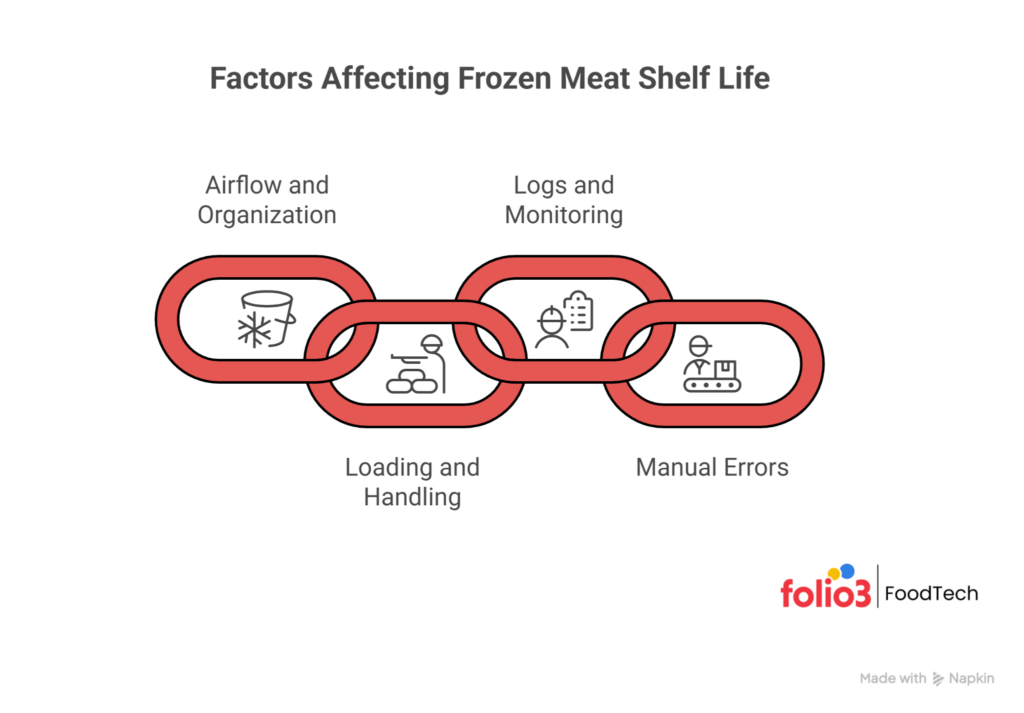
Poor Airflow and Freezer Organization
Inadequate airflow in freezers creates warm spots where meat can partially thaw, accelerating spoilage. Overcrowding or stacking products without consideration for ventilation prevents consistent cooling. Proper freezer layout and regular checks ensure uniform temperature distribution.
Inconsistent Loading and Handling
Frequent or careless handling of meat during loading and unloading can lead to temperature fluctuations and physical damage. These actions reduce shelf life and can increase the risk of contamination. Standardized handling procedures and staff training are critical to prevent these issues.
Lack of Logs and Monitoring
Failing to track temperature history or storage conditions makes it difficult to detect issues before they affect meat quality. Manual logging errors or incomplete records often result in unrecognized spoilage. Automated monitoring systems with alerts can help businesses identify and correct problems promptly.
Manual Errors and Oversights
Mistakes such as mislabeling, not following FIFO or FEFO inventory methods, or mishandling byproducts contribute to unnecessary waste. Even small errors can compound, leading to significant loss across the supply chain.
Businesses involved in meat processing must adopt rigorous operational standards to minimize these risks. By addressing poor airflow, improving handling practices, maintaining accurate logs, and reducing human errors, companies can protect both product quality and profitability. Correcting these common mistakes ensures that frozen meat retains its intended shelf life, safety, and customer appeal throughout storage and distribution.
The Role of Monitoring, Traceability, and Data
Maintaining optimal frozen meat shelf life increasingly relies on digital solutions that provide visibility across the supply chain. Monitoring systems and data-driven processes allow food businesses to detect issues early, ensure compliance, and protect product quality.
Digital Tracking and Alerts
Automated sensors and cloud-based tracking platforms monitor freezer temperatures in real time. These systems generate alerts if conditions deviate from set thresholds, enabling rapid corrective action. Consistent monitoring minimizes spoilage and ensures that meat remains within its expected shelf life.
Traceability Across the Supply Chain
End-to-end traceability linking storage conditions to shipment history allows businesses to track meat from the processing plant to the retailer, supporting quality assurance and regulatory compliance across every handling event. Leveraging technology for traceability also helps companies identify and address operational inefficiencies. Integrating such systems improves decision-making and accountability throughout the food supply chain managment, aligning with industry best practices for traceability in the food industry.
Data-Driven Decisions
Analyzing historical data on temperature trends, inventory turnover, and spoilage rates enables businesses to optimize storage practices, predict potential risks, and improve forecasting. Data insights help prioritize interventions, reduce waste, and enhance operational efficiency.
By combining monitoring, traceability, and data-driven decision-making, food businesses can extend frozen meat shelf life, safeguard product quality, and reduce financial losses. Technology ensures that every stage, from storage to distribution, maintains consistent standards, supporting both customer satisfaction and regulatory compliance.
Best Practices Food Businesses Should Standardize
To maximize frozen meat shelf life, food businesses should implement standardized practices that ensure consistency, safety, and quality. These measures help reduce spoilage, enhance operational efficiency, and maintain consumer trust.
- Standard Operating Practices: Establish clear protocols for freezing, storage, handling, and transportation. Consistent procedures prevent errors that can compromise shelf life.
- Employee Training: Educate staff on temperature control, proper handling techniques, labeling, and inventory management. Well-trained teams are less likely to make mistakes that reduce meat quality.
- Temperature Discipline: Maintain strict temperature control across all storage and transportation points. Regularly monitor equipment and address deviations immediately to prevent spoilage.
- System Adoption: Utilize digital monitoring, tracking, and reporting systems to provide visibility across the supply chain. Automated alerts and logs help identify potential issues before they affect product quality.
By standardizing these practices, businesses can extend frozen meat shelf life, minimize waste, and ensure that every product delivered to customers meets safety and quality expectations. A disciplined approach not only protects profitability but also strengthens brand reputation in a competitive market.
How Folio3 Foodtech Helps Optimize Frozen Meat Shelf Life
Optimizing frozen meat shelf life requires more than traditional storage practices. Folio3 FoodTech’s ERP built for frozen food shelf life, inventory, and traceability management provides food businesses with a comprehensive solution to monitor temperatures, maintain quality throughout the supply chain, reduce waste, and enhance compliance.
Key Features Related to Frozen Meat Shelf Life
- Real-time temperature monitoring
- Automated alerts for deviations
- Inventory tracking with FIFO/FEFO
- Shelf life analytics and reporting
- Packaging and batch management
- Traceability across supply chain
These features help businesses maintain consistent quality, prevent spoilage, and ensure frozen meat remains safe and profitable from storage to delivery. Folio3 Foodtech’s solutions are designed to align with emerging trends in the future of meat packaging industry, enabling companies to adopt modern storage, monitoring, and distribution practices that extend shelf life and enhance customer satisfaction.
By leveraging Meat ERP, food businesses can confidently manage frozen meat operations, reduce operational risk, and achieve measurable improvements in both efficiency and product quality, paving the way for stronger growth and profitability.
Conclusion
Optimizing frozen meat shelf life is a controllable factor that directly impacts profitability, quality, and customer satisfaction. By implementing structured processes, from precise temperature control and proper storage to digital monitoring and standardized best practices, food businesses can reduce waste and ensure consistent product quality. Strategic management of shelf life not only safeguards operational efficiency but also strengthens brand reputation, enabling companies to meet both regulatory requirements and market expectations with confidence.
FAQs
What Is the Typical Shelf Life of Frozen Meat?
The shelf life of frozen meat depends on the type and storage conditions. Beef can last up to 12 months, poultry around 9 months, and pork approximately 6 to 8 months when stored consistently at -18°C or below and properly packaged. Shelf life refers to quality, while safety may extend beyond these timelines if conditions are maintained.
How Can Businesses Extend Frozen Meat Shelf Life?
Businesses can extend frozen meat shelf life by controlling temperature, using proper packaging such as vacuum sealing, implementing FIFO or FEFO inventory methods, preventing freezer burn, and monitoring storage conditions with digital tracking systems. Regular staff training and hygiene practices also help maintain quality.
Does Freezing Kill Bacteria in Meat?
Freezing slows bacterial growth but does not eliminate pathogens. Meat must be stored at appropriate temperatures to maintain safety. Once thawed, bacteria can grow quickly, so proper handling and avoiding repeated thaw-refreeze cycles are critical to prevent contamination.
How Does Packaging Affect Frozen Meat Shelf Life?
Packaging impacts both quality and safety. Vacuum sealing removes air, reduces moisture loss, and prevents freezer burn. Poor or damaged packaging accelerates spoilage, affects texture and flavor, and reduces effective shelf life, even if storage temperatures are correct.
What Role Do Regulations Play in Managing Frozen Meat Shelf Life?
Regulations ensure safe handling, storage, and labeling of frozen meat. Compliance with temperature standards, monitoring protocols, and record-keeping protects consumers and businesses. Meeting regulatory requirements also supports traceability, audit readiness, and market access, particularly for exports.


