

An estimated 600 million people, almost 1 in 10 globally, fall ill after eating contaminated food each year, resulting in 420,000 deaths. This highlights the critical importance of understanding and managing food safety hazards across every stage of the supply chain. From production and processing to storage and distribution, even minor lapses can lead to serious health risks and significant business consequences.
At its core, food safety hazards refer to any biological, chemical, physical, or allergenic agents present in food that can cause harm when consumed. For professionals working in food manufacturing, processing, and distribution, clearly understanding the food hazards definition is essential for maintaining product integrity and ensuring consumer safety. For the ones asking, ‘what is a food hazard’, it is any potential source of contamination that can compromise the safety and quality of food products.
As global food systems become more complex, the need for structured controls and awareness continues to grow. Businesses must align with evolving regulations while implementing proactive strategies to minimize risks and maintain compliance.
This guide will cover the different types of food safety hazards, their sources, associated risks, and the most effective methods to identify, control, and prevent them in modern food operations.
What are Food Safety Hazards?
Understanding what constitutes food safety hazards is fundamental for anyone involved in the production, handling, or distribution of food. In simple terms, food safety hazards refers to any biological, chemical, physical, or allergenic agent that has the potential to cause harm when food is consumed. A clear food hazards definition helps businesses identify risks early and implement controls that protect both consumers and brand integrity.
When asking what is a food hazard, it is important to recognize that hazards are not limited to visible contamination. Microorganisms such as bacteria and viruses, chemical residues like pesticides, or even foreign objects such as glass or metal fragments all fall under the category of a food safety hazards. Each of these can enter the food chain at different stages, making consistent monitoring and control essential.
A key distinction that professionals must understand is the difference between a hazard and a risk. A hazard is the potential source of harm, while risk refers to the likelihood and severity of that harm occurring. For example, the presence of bacteria in raw meat is a hazard, but the risk depends on factors such as handling, storage, and cooking practices. This distinction is central to effective food safety management systems, where the goal is not only to identify hazards but also to assess and reduce associated risks.
Contamination is the primary pathway through which food safety hazards impact products. It can occur at any point, from raw material sourcing to final delivery. Cross-contamination, improper hygiene, inadequate temperature control, and poor storage conditions are among the most common contributors. Understanding how contamination occurs allows businesses to design preventive measures that minimize exposure to hazards.
This foundational knowledge sets the stage for implementing structured controls and aligns with best practices outlined in any comprehensive guide to food safety. By clearly defining hazards, differentiating them from risks, and understanding contamination pathways, food businesses can take a more proactive and informed approach to managing safety across their operations.
Types of Food Safety Hazards Explained
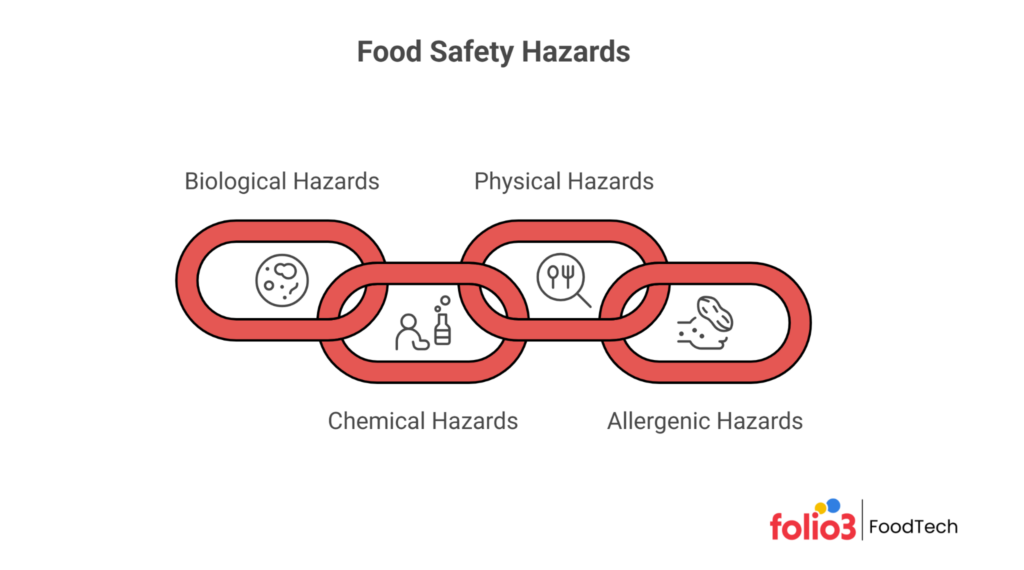
Food safety hazards can be classified into four main categories: biological, chemical, physical, and allergenic. Understanding these types of food hazards is crucial for developing effective control strategies, preventing contamination, and ensuring the safety of consumers. Each hazard type has unique characteristics, sources, and control measures, making it essential for food handlers and managers to recognize them in day-to-day operations. This section provides an in-depth look at each category and practical ways to mitigate risks in your food business, emphasizing the importance of food sanitation and safety in every step.
Biological Hazards
Biological hazards are caused by living organisms that can contaminate food and cause foodborne illnesses. These include bacteria, viruses, fungi, yeasts, and parasites. Common examples are Salmonella, Listeria monocytogenes, Escherichia coli, and noroviruses. These microorganisms thrive under specific conditions such as the right temperature, moisture, and pH levels, commonly referred to in the food industry as FATTOM (Food, Acidity, Temperature, Time, Oxygen, Moisture).
Biological hazards are the most frequent cause of foodborne illnesses, responsible for outbreaks ranging from mild gastrointestinal discomfort to life-threatening conditions. Raw ingredients, improper storage, inadequate cooking, and cross-contamination are primary sources. For example, raw poultry often carries Salmonella, while contaminated water can spread viruses and parasites across food production systems.
Preventive measures include maintaining proper hygiene, regular cleaning of food contact surfaces, temperature-controlled storage, and thorough cooking. Establishing and monitoring critical control points in the food production process ensures that biological hazards are identified and controlled effectively.
Chemical Hazards
Chemical hazards arise from naturally occurring substances, food additives, or contaminants that can pose a risk to health when consumed. Natural chemicals like saponins in legumes or toxins in pufferfish (tetrodotoxin) are inherent hazards. Intentional chemicals include preservatives, flavor enhancers, and food additives, which become hazardous if used in excessive amounts.
Unintentional chemical contamination often comes from pesticides, fertilizers, cleaning agents, heavy metals, or residues from packaging materials. For instance, prolonged heat treatment can form acrylamide in baked or fried foods, posing long-term health risks. Proper handling, accurate labeling, adherence to regulatory limits, and careful monitoring of raw materials are critical strategies to manage chemical hazards.
Chemical hazards can have long-lasting effects, sometimes manifesting after extended exposure, making early detection, routine testing, and supplier verification essential in maintaining food safety.
Physical Hazards
Physical hazards include any foreign object in food that may cause injury or pose a contamination risk. Common examples are glass shards, metal fragments, stones, bones, and plastic pieces. These hazards may be naturally present in raw materials or introduced during processing, handling, or packaging.
Sources of physical hazards include production equipment, utensils, packaging materials, food handlers, and pests. For example, broken machinery parts can contaminate products, and hair or jewelry from food handlers may inadvertently enter food. Effective mitigation involves inspection, use of protective equipment, proper maintenance of machinery, and employing detection systems like metal detectors or X-ray machines.
Physical hazards not only pose a direct risk of injury but can also serve as vectors for microbial contamination, reinforcing the need for strict monitoring and hygiene practices.
Allergenic Hazards
Allergenic hazards are proteins in food that trigger immune responses in sensitive individuals. Common allergens include milk, eggs, shellfish, peanuts, tree nuts, soy, wheat, and fish. In some cases, exposure can lead to severe reactions like anaphylaxis, making allergen control a critical component of food safety management.
Allergen contamination can occur due to cross-contact in production lines, improper labeling, or shared utensils and storage areas. Preventive strategies include proper segregation, labeling, staff training, and allergen-specific cleaning procedures. Awareness of allergenic hazards is particularly important for protecting vulnerable populations and complying with food safety regulations.
Food Safety Hazard Sources Across the Supply Chain
Food safety hazards can enter the supply chain at multiple points, making it essential for food businesses to identify and control potential risks at every stage. Understanding food safety hazards sources helps food handlers implement targeted preventive measures, maintain product integrity, and ensure consumer safety. Effective monitoring and traceability systems are critical tools for managing hazards throughout the food supply chain.
Raw Materials
Raw materials are one of the most significant sources of food safety hazards. Fresh produce, meat, seafood, and dairy can harbor biological contaminants such as bacteria, viruses, fungi, and parasites. Chemical hazards like pesticide residues, naturally occurring toxins, or heavy metals may also be present. Physical hazards such as stones, shells, or bone fragments can further compromise safety.
Proper sourcing, supplier verification, and initial inspection of raw materials are essential to reduce risks. Implementing traceability in the food industry ensures that any contaminated batches can be quickly identified and removed, preventing downstream contamination and protecting consumers.
Water and Environment
Water used during production, washing, and processing can carry biological hazards including E. coli, Salmonella, and parasites. Environmental factors such as soil quality, air contamination, and proximity to industrial pollutants can also introduce chemical and physical hazards. Maintaining proper sanitation, using clean water sources, and monitoring environmental conditions help mitigate these risks.
Food Handlers
Humans are both potential carriers and vectors for biological hazards. Contamination can occur through unwashed hands, improper hygiene, or contact with contaminated surfaces. Viruses and bacteria naturally present on skin or clothing can easily transfer to food during handling.
Staff training, hand hygiene protocols, and personal protective equipment (PPE) are critical to prevent the introduction and spread of contaminants.
Equipment and Surfaces
Processing equipment, utensils, and contact surfaces can harbor hazards if not cleaned and sanitized regularly. Residues from previous batches, biofilm formation, or chemical contamination from cleaning agents can all compromise food safety. Regular maintenance, validated cleaning procedures, and proper sanitation schedules are essential.
Storage and Transportation
Improper storage conditions, including temperature abuse, humidity, or inadequate separation of raw and ready-to-eat foods, can amplify biological hazards and accelerate spoilage. Physical hazards may also arise from poor packaging or vehicle maintenance. Cold chain management and monitoring during transit are critical to minimizing contamination risks.
Pests and Waste
Pests such as rodents, insects, and birds can introduce biological and physical hazards into the food supply chain. Waste management practices that leave organic matter exposed can attract pests, creating additional contamination risks. Implementing robust pest control programs and proper waste disposal measures reduces these hazards significantly.
By understanding the sources of food safety hazards across the supply chain and integrating monitoring systems that support traceability in the food industry, businesses can proactively prevent contamination, ensure compliance with food safety regulations, and protect consumer health.
Food Safety Risks and Their Impact on Businesses and Consumers
Food safety risks extend beyond individual health concerns, they have profound consequences for businesses, public trust, and the broader food industry. Food safety hazards left uncontrolled can quickly escalate into a full-scale outbreak, affecting both consumers and organizations alike.
Health Risks to Consumers
Foodborne illnesses are the most direct outcome of uncontrolled food safety hazards. According to the World Health Organization, an estimated 600 million people fall ill from contaminated food each year, with 420,000 fatalities globally. Pathogens such as Salmonella, E. coli, and Listeria can lead to mild digestive upset, severe infections, or even death in vulnerable populations such as children, the elderly, and immunocompromised individuals. Chemical contaminants, including pesticides or heavy metals, may have long-term health effects, while allergenic hazards can trigger acute and potentially life-threatening reactions in sensitive individuals.
Business Risks
For food businesses, the consequences of failing to control food safety hazards are multifaceted:
- Financial Losses: Product recalls, waste, legal liabilities, and compensation claims can result in significant financial damage.
- Reputation Damage: Publicized outbreaks or incidents erode consumer trust, potentially causing long-term brand harm.
- Regulatory Non-Compliance: Violations of food safety standards may result in fines, closures, or sanctions from authorities.
- Operational Disruption: Managing contamination events can strain staff, disrupt production, and impact supply chains.
Mitigating Food Safety Risks
Effective management of food safety risks is critical to protect both consumers and business viability. Implementing a robust food safety system helps monitor hazards across the supply chain, ensures compliance with safety standards, and prevents contamination before it reaches the consumer. Additionally, integrating food quality assurance programs provides an extra layer of protection. These programs encompass regular audits, quality checks, supplier verification, and validation of handling procedures, ensuring that food safety hazards are consistently controlled and that products meet stringent quality benchmarks.
By understanding the full spectrum of health and business risks associated with food safety, food handlers and business owners can take proactive steps to protect public health, maintain regulatory compliance, and preserve consumer confidence.
How to Identify Food Safety Hazards (Hazard Analysis Process)
Proper identification of food safety hazards is the foundation of any effective food safety management system. Without knowing the potential risks, it is impossible to prevent contamination, protect consumers, or comply with regulatory standards. This process is central to frameworks like HACCP (Hazard Analysis and Critical Control Points), which emphasizes proactive hazard identification and control.
Conducting Hazard Analysis
The first step in identifying hazards is a thorough hazard analysis. Every stage of food handling, from raw material sourcing to final product delivery, should be examined for potential threats. These threats can be biological, chemical, physical, or allergenic. By systematically mapping out the production and supply chain, food handlers can pinpoint critical control points (CCPs) where hazards are most likely to occur. This structured approach ensures that all potential contamination points are accounted for and that preventive measures can be implemented.
Using Scientific Data
Reliable scientific data is essential for accurate hazard identification. Peer-reviewed studies, regulatory guidelines, and historical outbreak reports provide insights into common hazards associated with specific foods and processes. For instance, certain seafood may carry a higher risk of bacterial contamination, while leafy greens might be more susceptible to pesticides. Integrating this data allows businesses to anticipate risks rather than reacting after incidents occur.
Reviewing Complaints and Incidents
Customer complaints, product returns, and previous foodborne illness reports offer valuable information about recurring hazards. Analyzing these incidents helps identify patterns of contamination, procedural weaknesses, or supplier issues. Documenting and reviewing such events enables food handlers to make data-driven adjustments to handling practices and preventive measures.
Consulting Experts
Food safety experts and consultants bring practical knowledge and experience to the hazard identification process. Their insights can highlight risks that may not be apparent from routine monitoring or internal assessments. Expert guidance is particularly useful when implementing new processes, entering new markets, or addressing emerging hazards.
By systematically applying these methods, food businesses can create a robust food safety risk assessment program. This program not only identifies hazards early but also provides the basis for monitoring, controlling, and verifying food safety practices across the supply chain. Proper hazard analysis ensures that food safety hazards are managed effectively, reducing risks to both consumers and the business.
Critical Control Points (CCPs) and High-Risk Stages in Food Handling
Critical Control Points (CCPs) are stages in food production and handling where potential hazards can be effectively controlled, prevented, or eliminated. Identifying these points is essential for maintaining the safety and integrity of food products. By focusing on CCPs, food businesses can reduce the likelihood of contamination and ensure compliance with food safety regulations.
Common examples of CCPs include:
- Cooking and Heat Treatment: Proper cooking temperatures are crucial to eliminate harmful bacteria and pathogens in foods such as poultry, meat, and seafood. For instance, poultry should reach an internal temperature of 165°F (74°C) to ensure bacterial hazards like Salmonella are destroyed.
- Cooling and Chilling: Rapid cooling of cooked or perishable foods prevents microbial growth. Improper refrigeration or slow cooling can allow pathogens to multiply, leading to foodborne illness.
- Storage and Handling: Proper storage practices, such as separating raw and ready-to-eat foods, prevent cross-contamination. Temperature-controlled storage is especially critical for perishable and frozen products.
- Receiving and Supplier Control: Inspecting raw materials and verifying supplier compliance with safety standards ensures that hazards are minimized at the very beginning of the supply chain.
High-risk stages in food handling are points where contamination is most likely to occur. These include raw material handling, processing, packaging, and distribution. Focusing on these stages and applying preventive measures reduces the risk of food safety hazards.
A robust food safety control system integrates CCP identification with monitoring procedures, corrective actions, and verification processes. This ensures that each critical point is consistently managed, helping businesses protect consumers while maintaining compliance with regulatory standards. Proper management of CCPs ultimately strengthens a food business’s overall food safety strategy and reduces the likelihood of contamination incidents.
How to Prevent and Control Food Safety Hazards
Effectively preventing and controlling food safety hazards is essential for protecting consumers and maintaining the integrity of your food business. Implementing practical strategies at every stage of the supply chain reduces the risk of contamination and ensures compliance with food safety regulations.
Core Practices: Clean, Cook, Chill, Separate
The foundation of hazard prevention lies in the four basic food safety practices:
- Clean: Regular handwashing, sanitizing surfaces, and maintaining personal hygiene minimize the transfer of biological hazards. Cleaning equipment and food contact surfaces prevents contamination from pathogens and residues.
- Cook: Ensuring proper cooking temperatures eliminates harmful microorganisms in foods. Cooking guidelines vary by product type, but the goal is to achieve an internal temperature sufficient to destroy bacteria, viruses, and parasites.
- Chill: Rapidly cooling perishable foods and maintaining cold storage below 5°C (41°F) slows microbial growth. Proper refrigeration during storage and transport is critical to preserving food safety.
- Separate: Avoid cross-contamination by storing raw and ready-to-eat foods separately and using dedicated equipment and utensils.
These core food safety practices are the cornerstone of any food safety management system, providing a clear, actionable framework for all staff.
Supplier Control
Suppliers are the first line of defense against hazards. Ensure all raw materials meet safety standards by requesting certifications, test results, and compliance records. Periodic audits and inspections help maintain high-quality inputs and prevent the introduction of chemical, biological, or physical hazards into your facility.
Staff Training
Educating employees on food safety hazards, proper handling procedures, and hygiene practices ensures consistent compliance. Regular refresher training reinforces protocols and empowers staff to identify and address potential risks proactively.
Pest Management
Pests, including rodents, insects, and birds, can carry biological hazards and compromise food safety. Implement a strict pest control program, eliminate food and water sources, seal entry points, and monitor facilities regularly to prevent infestations.
Storage and Temperature Control
Proper storage practices are crucial for controlling hazards. Use temperature-controlled storage for perishable items, monitor humidity and airflow, and ensure correct stacking and packaging. Regularly check equipment and maintain records to verify compliance with safe storage standards.
By combining these strategies, core practices, supplier oversight, staff training, pest management, and proper storage, food businesses can effectively prevent and control food safety hazards. These proactive measures reduce risks to consumers, protect your brand reputation, and ensure adherence to regulatory requirements, creating a safer and more reliable food supply chain.
Role of Food Safety Management Systems (FSMS) and Standards
A Food Safety Management System (FSMS) is a structured approach designed to control food safety hazards and ensure that food products are safe for consumption. FSMS integrates regulatory standards, risk assessments, and operational procedures to systematically manage potential hazards across the entire food supply chain.
Implementing a robust FSMS helps food businesses prevent contamination, maintain compliance with regulations, and protect both consumers and brand reputation. The system encompasses every stage of food handling, from sourcing and production to storage, transport, and final delivery.
HACCP: The Core Framework
HACCP (Hazard Analysis and Critical Control Points) is a widely recognized FSMS approach that identifies, evaluates, and controls hazards. By mapping the food production process and establishing critical control points, HACCP ensures that biological, chemical, physical, and allergenic hazards are monitored and controlled effectively. Integrating the principles of HACCP into daily operations allows managers to proactively prevent foodborne illnesses rather than simply reacting to incidents.
ISO and FSSC Standards
ISO 22000 and FSSC 22000 are international food safety standards that complement HACCP by providing additional structure and certification frameworks. ISO standards define requirements for a systematic FSMS, emphasizing traceability, documentation, and continual improvement. FSSC 22000 builds on ISO 22000 and includes prerequisite programs, enabling food businesses to achieve global recognition for their food safety practices. These frameworks also align closely with regulatory requirements such as the Food Safety Modernization Act (FSMA), ensuring a preventive approach to managing food safety risks.
Monitoring, Documentation, and Compliance
Effective FSMS implementation requires continuous monitoring of critical control points, thorough record-keeping, and regular internal audits. Documentation ensures traceability, helps identify areas for improvement, and demonstrates compliance to regulatory authorities and customers. Modern FSMS solutions often leverage digital tools to automate monitoring, generate reports, and provide real-time insights into food safety performance.
Benefits of an FSMS
- Reduces the risk of foodborne illness and contamination
- Ensures compliance with national and international regulations
- Enhances consumer confidence and brand reputation
- Improves operational efficiency through standardized procedures
- Facilitates traceability and rapid response to incidents
By adopting FSMS frameworks like HACCP, ISO, and FSSC, food businesses can systematically manage hazards, maintain high safety standards, and meet regulatory requirements. A properly implemented FSMS not only safeguards public health but also strengthens operational resilience, ensuring food safety remains at the core of every decision.
Common Mistakes Businesses Make in Managing Food Hazards
Even with well-defined procedures, many food businesses make operational errors that compromise food safety. Recognizing these common mistakes is crucial for preventing contamination, ensuring compliance, and protecting both consumers and the brand.
Inadequate Staff Training
One of the most frequent gaps is insufficient training for employees handling food. Without proper knowledge of hygiene practices, temperature control, and cross-contamination prevention, staff may inadvertently introduce hazards. Regular training and refresher sessions are essential to maintain consistent food safety practices.
Failure to Monitor Critical Control Points
Critical control points (CCPs) exist to prevent, eliminate, or reduce hazards. Many businesses neglect consistent monitoring or fail to document deviations. Without regular oversight, small lapses can escalate into serious food safety incidents.
Poor Supplier Oversight
Food safety begins at the source. Relying on suppliers without verifying their practices or quality standards can introduce biological, chemical, or physical hazards into the production chain. Businesses must implement supplier audits and maintain clear specifications for raw materials.
Improper Storage and Temperature Control
Many food safety failures stem from improper storage conditions. Incorrect refrigeration, delayed processing, or inappropriate segregation of raw and ready-to-eat foods can foster microbial growth or cross-contamination. Strict adherence to temperature guidelines and organized storage systems is vital.
Neglecting Regular Cleaning and Sanitation
Equipment, utensils, and work surfaces that are not cleaned and sanitized properly can harbor pathogens and contaminants. Skipping routine cleaning schedules or using ineffective sanitation methods significantly increases the risk of foodborne illness.
Inadequate Record-Keeping
Documentation serves as proof of the food safety compliance and allows businesses to track trends or deviations. Many businesses fail to maintain accurate records of temperature logs, cleaning schedules, or hazard monitoring, making it difficult to respond effectively to safety issues or regulatory inspections.
By addressing these operational gaps through training, monitoring, supplier management, proper storage, sanitation, and record-keeping, businesses can significantly reduce the risk of food hazards and maintain a culture of food safety.
How Folio3 Foodtech Solutions Enhance Food Safety Hazards Management
In today’s complex food supply chains, managing food safety hazards manually can be time-consuming and prone to errors. Folio3 Foodtech’s food safety software leverages automation, real-time monitoring, and digital traceability to streamline hazard management, ensuring both compliance and consumer safety from farm to fork.
Key Features Include:
Automated Monitoring: Tracks temperature, cleaning schedules, and critical checks automatically to reduce human error.
Real-Time Alerts: Sends instant notifications for deviations or tasks that need attention.
Digital Traceability: Tracks ingredients, suppliers, and batches from farm to fork for faster hazard response.
Data Analytics: Provides insights into recurring risks and potential problem areas for proactive management.
Integrated SOPs & Training: Guides staff on proper handling, critical control points, and hazard prevention steps.
Regulatory Compliance Support: Aligns operations with HACCP, ISO, and FSSC standards, simplifying audits and reporting.
Folio3 Foodtech’s software makes managing food safety hazards simpler, faster, and more reliable, helping businesses protect consumers, reduce risks, and ensure consistent quality across the food supply chain.
Conclusion
Food safety hazards are an ever-present challenge in the food industry, ranging from biological and chemical to physical and allergenic risks. These hazards not only threaten consumer health but also pose significant operational and financial risks to businesses. Understanding what constitutes food safety hazards, identifying its sources across the supply chain, and recognizing high-risk stages in food handling are essential first steps toward mitigation.
Ultimately, maintaining food safety is a shared responsibility. Every team member, from suppliers to handlers, plays a critical role in minimizing hazards. By fostering a culture of vigilance, adhering to best practices, and continuously monitoring operations, businesses can protect consumers, safeguard their reputation, and ensure consistent food quality. Proactive management of food safety hazards is not only a legal and ethical obligation but also a strategic investment in the long-term success of any food business.
FAQs
What Are the Common Food Safety Hazards?
Food safety hazards are substances, organisms, or conditions that can contaminate food and harm consumers. They are generally divided into four main types: biological hazards such as bacteria, viruses, parasites, and fungi that can cause foodborne illnesses; chemical hazards, including pesticides, food additives, cleaning agents, or naturally occurring toxins; physical hazards like glass, metal fragments, or bones that can cause injury; and allergenic hazards, which are proteins in certain foods that trigger allergic reactions in susceptible individuals.
Why Is It Important to Identify Food Safety Hazards?
Identifying food safety hazards is essential for preventing foodborne illnesses, ensuring compliance with regulatory standards, and protecting public health. By knowing the hazards present in their operations, food businesses can implement preventive measures, monitor critical control points, and maintain consistent food quality while reducing the risk of recalls, legal penalties, and reputational damage.
What Are the Hazards of Food Safety?
The hazards of food safety include contamination that can lead to illnesses, allergic reactions, and, in severe cases, hospitalization or death. For food businesses, these hazards pose operational and financial risks, including potential product recalls, regulatory fines, loss of consumer trust, and harm to employees handling contaminated foods. Effective hazard management is critical to minimizing these risks.
What Are 5 Potentially Hazardous Foods?
Potentially hazardous foods are those that are highly susceptible to microbial growth if stored or handled incorrectly. These include raw or cooked meats and poultry, seafood and shellfish, dairy products such as milk, cheese, and yogurt, cooked rice, pasta, and grains, and cut fruits or vegetables that are not properly refrigerated. These foods require careful temperature control, proper hygiene, and timely handling to prevent contamination and ensure food safety.


