

Approximately 14 percent of the world’s food is lost between harvest and retail, much of which occurs during transport, handling, and storage due to inadequate infrastructure and temperature control. This highlights the critical role of food and beverage transportation in modern supply chains, where moving products safely from farms, factories, or processing facilities to retailers or consumers is more than just logistics, it is essential for preserving quality, minimizing losses, and protecting public health.
The transportation of food products involves specialized handling, temperature management, and monitoring protocols to ensure perishables, frozen goods, and other sensitive items remain safe and compliant with regulatory standards. From refrigerated trucks to controlled warehouses, every stage must maintain integrity, prevent contamination, and comply with evolving food safety regulations.
Rising complexity in global supply chains, including multi-stop deliveries, cross-border shipments, and diverse product types, has increased the pressure on businesses to adopt advanced food transportation logistics solutions. Companies are expected not only to deliver efficiently but also to uphold stringent quality and safety measures. This blog explores the challenges, solutions, and best practices in food transportation, combining operational efficiency with compliance, safety, and innovative strategies to reduce waste and protect both consumers and business investments.
What Is Food Transportation and Why It Matters in Modern Supply Chains
Food transportation refers to the movement of food products from farms, processing facilities, and manufacturing plants to distributors, retailers, and consumers. It covers a wide range of products, including raw ingredients, processed foods, and ready-to-eat items, each requiring specific handling, storage, and temperature controls to maintain quality and safety.
Efficient food logistics and transportation ensures supply chain continuity and helps preserve product shelf life. Raw products often need cold storage to maintain freshness, while processed and packaged foods must be protected from contamination and physical damage. Ready-to-eat items carry higher risks, as improper handling can lead to microbial growth or rapid spoilage.
Proper transportation for food also directly impacts compliance with food safety regulations and overall consumer safety. Businesses must follow strict temperature, hygiene, and traceability protocols to prevent spoilage, contamination, or recalls. Route optimization, vehicle selection, and monitoring systems further support safe and timely delivery of food products.
In today’s complex supply chains, food transportation is not just a logistics activity; it is essential for ensuring product integrity, reducing losses, and building consumer trust. Companies that invest in optimized systems can maintain high standards of safety, efficiency, and quality across the entire supply chain.
Types of Food Transportation and Handling Requirements
Effective food transportation depends on understanding the unique requirements of different product categories. Proper handling, storage, and packaging are critical to maintain quality, safety, and regulatory compliance.
Perishable Foods (Dairy, Meat, Produce)
Food and beverage transportation of perishable items requires strict temperature control, typically between 0°C and 4°C for dairy and produce, and even colder for fresh meats. Improper handling can result in spoilage, bacterial growth, and loss of nutrients. Packaging should include insulated containers, refrigeration units, and tamper-evident seals to ensure product integrity during transit.
Frozen Foods
Frozen foods demand continuous cold chain management, maintaining temperatures below −18°C. Breaks in the cold chain can cause partial thawing, texture degradation, and microbial hazards. Specialized refrigerated trucks or containers with temperature monitoring systems are essential for safe transporting food.
Dry and Shelf-Stable Goods
Dry foods, cereals, and canned goods are less sensitive to temperature but must be protected from moisture, pests, and physical damage. Proper stacking, cushioning, and secure pallets are critical during food and beverage transportation to prevent crushing or contamination.
Liquid Food Products (Oils, Beverages)
Liquid products, including oils, juices, and beverages, require stable, leak-proof packaging. Temperature requirements vary depending on the product, with some oils needing cool storage to prevent rancidity. Handling must prevent spillage, contamination, and breakage during the transportation of food.
By tailoring food transportation practices to the type of product, businesses can reduce spoilage, maintain quality, and comply with safety standards, ensuring consumer satisfaction and regulatory adherence.
Food Transportation Logistics: Key Components and Operational Flow
Efficient food transportation logistics are essential to maintain product quality, safety, and timely delivery across the supply chain. From farm to retailer, every step must be carefully coordinated to prevent spoilage, contamination, and delays.
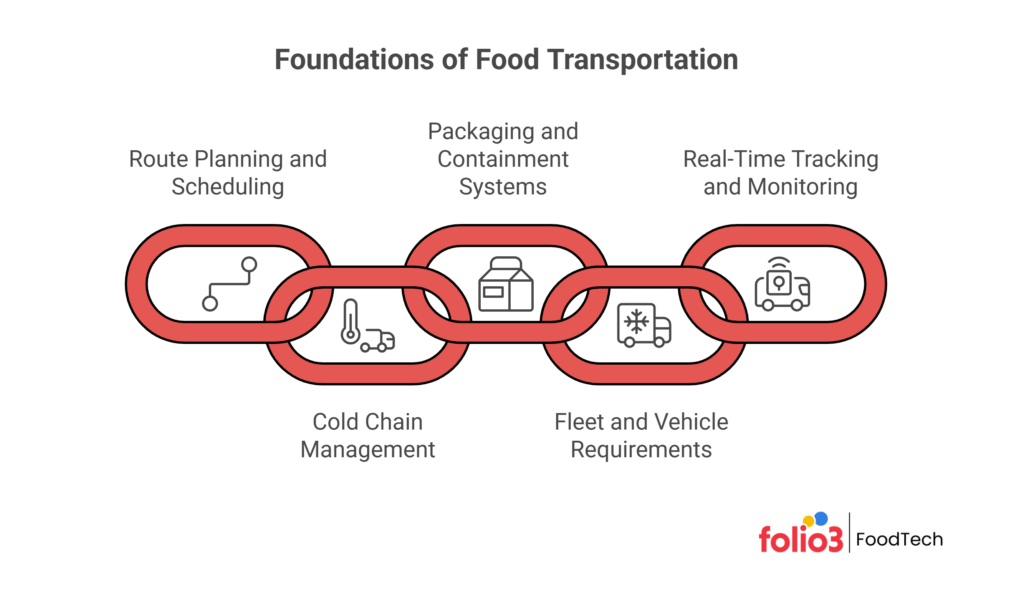
Route Planning and Scheduling
Optimized routes reduce transit time, fuel costs, and the risk of temperature excursions. For sensitive products, scheduling must account for traffic, distance, and environmental conditions to maintain integrity during food logistics and transportation. Proper planning also allows for contingencies such as vehicle breakdowns or weather delays, ensuring that products arrive on time and in optimal condition.
Cold Chain Management
Maintaining a continuous cold chain is critical for perishable and frozen foods. Temperature-controlled vehicles, real-time monitoring devices, and proper handling protocols ensure that products remain within safe temperature ranges throughout the journey. Effective cold chain management reduces spoilage, prevents biological hazards, and ensures regulatory compliance. Businesses can further improve cold chain efficiency by integrating predictive analytics to anticipate equipment failures or delays.
Packaging and Containment Systems
Proper packaging protects against physical damage, contamination, and temperature fluctuations. Insulated containers, refrigerated pallets, and tamper-evident seals are commonly used in food transportation logistics to safeguard perishable and sensitive goods. Additionally, customized packaging solutions can extend shelf life and reduce environmental impact through recyclable or reusable materials.
Fleet and Vehicle Requirements
Vehicles must be equipped with refrigeration units, GPS tracking, and proper sanitation protocols. Dedicated fleets for allergen-containing or high-risk foods minimize cross-contamination during food logistics and transportation. Regular maintenance and compliance checks ensure that fleets remain reliable and capable of sustaining required temperature ranges over long distances.
Real-Time Tracking and Monitoring
Sensors and IoT devices allow operators to monitor temperature, humidity, and location in real-time. Alerts for deviations enable quick corrective actions, maintaining product quality and safety during food transportation. Advanced monitoring can also provide detailed historical reports for audits, insurance purposes, and continuous improvement of logistics performance.
By integrating route optimization, proper packaging, fleet management, and real-time monitoring, businesses can achieve efficient food traceability while maintaining product integrity and regulatory compliance.
Food Safety Transportation Standards and Regulatory Requirements
Ensuring safe food transportation is not just about moving products from point A to B; it is a regulated process designed to protect consumers and maintain product integrity. Adhering to food safety transportation standards ensures that food arrives fresh, uncontaminated, and compliant with national and international requirements.
Regulatory Frameworks and Guidelines
The FDA’s FSMA Sanitary Transportation Rule sets clear expectations for businesses involved in food transportation logistics, covering carriers, shippers, and receivers. Compliance requires documented procedures for sanitation, temperature control, and personnel training. Following these frameworks helps companies minimize liability, prevent recalls, and maintain consumer trust.
Hygiene, Sanitation, and Contamination Prevention
Proper cleaning, sanitizing, and maintenance of vehicles and equipment are critical. Dedicated compartments, sealed containers, and staff hygiene protocols reduce the risk of contamination during food transportation. By integrating these food safety practices, businesses can ensure a consistently high standard of safety throughout the transport process.
Temperature Control Compliance
Temperature-sensitive foods, such as dairy, seafood, and frozen products, must be maintained within strict ranges. Monitoring systems, data loggers, and validated refrigeration units allow operators to meet food safety transportation standards. Deviations can lead to spoilage, biological hazards, and regulatory penalties, emphasizing the need for strict adherence.
Documentation and Audit Readiness
Maintaining accurate records of temperature logs, cleaning schedules, vehicle inspections, and shipment manifests is essential for compliance. Proper documentation not only supports regulatory audits but also enables quick response in case of incidents, recalls, or disputes.
Risk Mitigation Through Standards
Adherence to food safety transportation standards reduces the likelihood of contamination, spoilage, and supply chain disruptions. Companies that implement consistent food safety practices benefit from improved efficiency, lower waste, and stronger consumer confidence.
By combining regulatory compliance, rigorous sanitation, precise temperature control, and thorough documentation, businesses can elevate food transportation from a basic operational task to a critical component of food safety and quality assurance.
Safe Food Storage Practices During Transportation
Maintaining proper food transportation conditions is essential to ensure product integrity and safety from the point of origin to delivery. Implementing safe food storage practices during transit minimizes spoilage, preserves quality, and reduces the risk of contamination.
Storage Conditions During Transit
Foods must be stored according to their specific requirements, whether refrigerated, frozen, or dry. Monitoring temperature and humidity continuously ensures that perishable and temperature-sensitive products remain within safe limits throughout transportation. These measures help prevent biological hazards in food and extend shelf life.
Temperature Zoning Within Vehicles
Segregating cargo into temperature zones allows carriers to transport multiple product types safely in the same vehicle. For example, frozen items can be kept separate from chilled produce to maintain optimal cold holding temperatures for each. Proper zoning also reduces the likelihood of temperature abuse, spoilage, and contamination.
Airflow and Humidity Control
Maintaining proper airflow and controlling humidity inside transport vehicles is critical. Stagnant air or excessive moisture can accelerate spoilage or foster microbial growth. Ventilation systems and humidity controls help preserve freshness and prevent conditions that could compromise food safety.
Avoiding Cross-Contamination Between Loads
Segregation of allergen-containing, raw, and ready-to-eat foods is essential to prevent cross-contact. Packaging barriers, separate compartments, and dedicated pallets reduce the risk of contamination during loading, transit, and unloading.
Packaging Integrity and Stacking Practices
Secure packaging and careful stacking prevent physical damage and contamination during transportation. Containers should be sealed and stable to avoid leaks, crushing, or exposure to external contaminants. Proper stacking also supports efficient airflow and temperature maintenance within the vehicle.
By following these safe food storage practices, businesses can maintain product quality, comply with regulatory requirements ensuring safe delivery across the supply chain.
Common Food Transportation Problems and Industry Challenges
Efficient food transportation is critical to maintaining product quality, safety, and timely delivery. However, the industry faces numerous food transportation problems and food transportation issues that can compromise both consumer safety and business profitability. Identifying these risks allows companies to implement proactive solutions and minimize losses.
Temperature Fluctuations and Cold Chain Failure
Inconsistent temperatures during transit can spoil perishable goods such as dairy, meat, seafood, and fresh produce. Cold chain failures not only reduce shelf life but also increase the risk of microbial contamination, which can threaten consumer health.
Delays and Route Disruptions
Unexpected delays due to traffic, weather, or logistical bottlenecks can result in late deliveries and product spoilage. Inefficient routing further exacerbates fuel costs, driver hours, and overall supply chain inefficiencies. This highlights how Supply Chain Inefficiencies raise food business costs.
Improper Handling and Loading Errors
Incorrect stacking, overloading, or careless handling can damage products and compromise packaging integrity. Mishandling can also cause contamination, especially for raw and ready-to-eat foods transported in the same vehicle.
Cross-Contamination Risks
Transporting allergen-containing, raw, and ready-to-eat foods without proper segregation increases the risk of cross-contact. This is particularly critical for sensitive products such as seafood, nuts, and dairy.
Equipment Failure (Refrigeration Units)
Malfunctioning refrigeration or temperature control systems can result in spoilage and regulatory non-compliance. Routine maintenance, inspections, and backup systems are essential to prevent such failures.
Lack of Visibility and Tracking
Limited monitoring of temperature, humidity, and location during transit reduces the ability to respond to issues in real time. Advanced tracking and monitoring systems improve accountability and allow corrective actions before losses occur.
Regulatory Non-Compliance
Failing to comply with local or international food safety transportation regulations can result in fines, recalls, or reputational damage. Maintaining proper documentation, hygiene practices, and temperature records is crucial.
Addressing these food transportation issues through robust operational protocols, staff training, and technology adoption helps businesses reduce risks, protect consumer safety, and improve overall efficiency in their supply chain.
Best Practices to Improve Food Transportation Safety and Efficiency
Efficient food transportation requires a combination of proper planning, technology, and staff accountability. Implementing best practices helps reduce spoilage, prevent contamination, and maintain regulatory compliance while optimizing costs.
Standard Operating Procedures (SOPs)
Clear SOPs define every step of the transporting food process, from loading and unloading to in-transit handling. They ensure consistency, reduce human error, and provide a benchmark for performance evaluation.
Staff Training and Accountability
Personnel must be trained in handling sensitive food products, understanding temperature requirements, and identifying potential hazards. Accountability mechanisms, such as checklists and reporting protocols, ensure adherence to safety standards.
Preventive Maintenance of Vehicles
Regular maintenance of trucks, refrigeration units, and other transport equipment prevents mechanical failures. Inspections before each trip reduce the risk of temperature deviations, delays, and product damage.
Use of Validated Packaging
Proper packaging protects food during transit by maintaining temperature, preventing cross-contamination, and preserving product integrity. Validated packaging ensures that goods remain safe and consumable throughout the supply chain.
Digital Monitoring Systems
Real-time monitoring of temperature, humidity, and location allows companies to respond quickly to deviations or delays. Automated alerts help maintain food transportation safety and reduce the risk of spoilage or regulatory violations.
Supplier and Vendor Coordination
Coordinating with suppliers and vendors ensures timely pickups, optimized routes, and compliance with handling requirements. Collaborative planning minimizes delays, reduces costs, and ensures a smooth flow of goods.
By integrating these practices into daily operations, businesses can ensure safer, more reliable, and efficient transportation of food, protecting both consumers and their bottom line.
How Folio3 Foodtech Enhances Food Transportation Safety and Traceability
Modern food transportation faces growing complexity, from maintaining proper temperatures to ensuring compliance across multi-leg supply chains. Food transportation facts reveal that even minor deviations in handling can compromise product quality, safety, and shelf life. Folio3 Foodtech provides food distribution software that helps businesses monitor every stage of the journey, from loading to delivery. By integrating real-time GPS tracking, IoT-enabled temperature sensors, and automated documentation, companies can maintain product integrity, prevent spoilage, and comply with food safety regulations. These tools also enable proactive alerts for delays, temperature deviations, or cross-contamination risks, giving logistics teams the insight to act immediately.
Key capabilities include:
- ERP Systems for Optimized Logistics Planning: Our technology enables centralized planning for shipments, route optimization, and fleet allocation, ensuring that transporting food meets both time and safety requirements.
- IoT Sensors for Continuous Temperature Monitoring: Sensors monitor conditions in real time, alerting teams to any deviations that could affect perishable goods, helping prevent spoilage or contamination.
- GPS and Real-Time Vehicle Tracking: Track every shipment in transit, providing full visibility of location, transit times, and delivery status.
- Automated Documentation and Compliance Checks: Digital record-keeping simplifies audits, maintains compliance with food safety transportation standards, and ensures traceability across the supply chain.
- Data-Driven Insights for Risk Mitigation and Efficiency: Advanced analytics identify bottlenecks, predict potential issues, and optimize resource allocation for smoother operations.
By integrating these tools, Folio3 Foodtech empowers businesses to maintain full visibility over food transportation, prevent losses, and meet regulatory requirements. Moreover, leveraging blockchain food traceability ensures that every product movement is recorded immutably, increasing transparency for suppliers, regulators, and consumers. With Folio3 Foodtech, companies can turn complex logistics challenges into streamlined, safe, and efficient food transportation processes.
FAQs
What is food transportation and why is it important?
Food transportation refers to the movement of food products from farms, processing facilities, or warehouses to retailers, restaurants, or consumers. It is crucial for maintaining product quality, ensuring food safety, and minimizing spoilage. Proper food transportation helps prevent contamination, extends shelf life, and ensures compliance with regulatory standards.
What are the common food transportation problems?
Common issues include temperature fluctuations, cold chain failures, delays and route disruptions, improper handling, cross-contamination, equipment breakdowns (like refrigeration units), and lack of visibility or tracking. These challenges can compromise food safety and increase operational costs.
How can businesses ensure safe food storage during transportation?
Safe storage involves temperature zoning in vehicles, maintaining airflow and humidity control, preventing cross-contamination between loads, using validated packaging, and proper stacking techniques. Adhering to these practices helps prevent biological hazards in food.
What are food safety transportation standards?
Food safety transportation standards, such as the FDA FSMA Sanitary Transportation Rule, cover hygiene, sanitation, temperature compliance, and documentation. They aim to reduce contamination risks, maintain product integrity, and ensure regulatory compliance during transportation of food products.
How do supply chain inefficiencies raise food business costs?
Delays, equipment failures, poor route planning, and lack of tracking lead to spoilage, product loss, regulatory fines, and higher operational costs. Efficient logistics, monitoring, and coordination help reduce these expenses while improving safety.
What is food logistics and transportation?
Food logistics and transportation encompass all planning, management, and execution of moving food products safely and efficiently. It involves route planning, temperature control, vehicle management, and coordination between suppliers, carriers, and recipients.


