Folio3 FoodTech's Seafood Processing ERP connects vessel landings, cold-chain IoT monitoring, yield control, and blockchain traceability with procurement, finance, HR, supply chain, and customer fulfillment, in one system. No siloed point solutions. No manual handoffs between the processing floor and the back office.
Since 2004, we’ve helped 100+ food businesses across global markets simplify operations, boost compliance, and scale sustainably with our ERP solutions. With two decades of industry expertise and a dedicated focus on ERP for seafood, we empower processors, distributors, and fisheries to achieve efficiency. Our team has implemented seafood manufacturing software in plants of every size, streamlining day-to-day work so profitability is protected at every stage.
Running a seafood business means managing variable weights, perishable stock, strict regulations, and global trade complexities. Our ERP software for seafood unifies these unique challenges into one platform. From pricing and compliance to cold-chain and sustainability, it equips your facility to perform with accuracy, efficiency, and confidence.
Ensure every gram counts with automated pricing that adapts to seafood’s variable weights, grades, and seasonal fluctuations. This feature protects profitability while keeping customer contracts transparent and compliant.
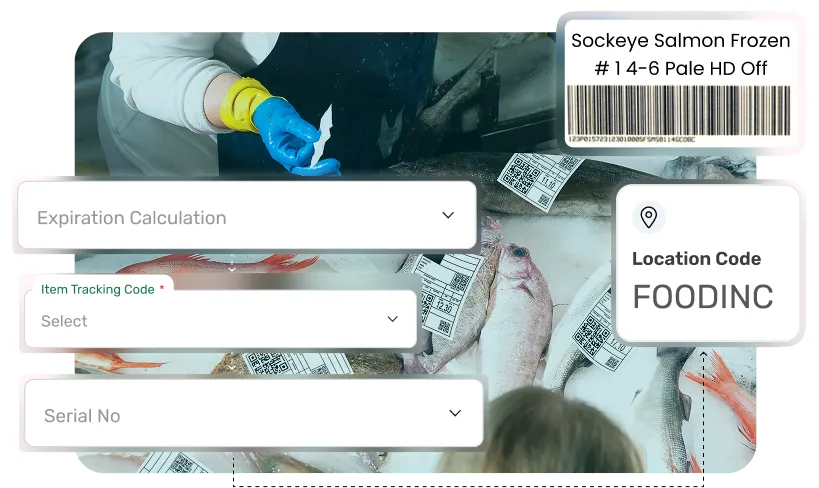
Keep seafood fresh and audit-ready with IoT-enabled temperature and humidity tracking from vessel to distribution. Our seafood ERP system ensures you never lose product value to preventable spoilage.
Achieve regulatory peace of mind with traceability that spans vessels, crews, processors, and distributors. This functionality makes ERP software for the seafood industry a compliance powerhouse.
Turn filleting, trimming, and packing into measurable metrics. Our seafood ERP solution empowers processors to improve yields, reduce waste, and maximize profitability across facilities.
Stay competitive with built-in sustainability management. From eco-labels to carbon tracking, our ERP seafood solution helps seafood businesses prove responsibility and win customer loyalty.
Most seafood processors run a separate MES, cold store WMS, and finance system. Data gaps between them mean manual reconciliations, missed yield costs, and compliance blind spots that surface at the worst time — an FDA audit or a recall.
From catch and harvest to finished goods dispatch, our Seafood ERP modules cover every stage of seafood processing. Each one is purpose-built, fully connected, and designed to give your team clean data where it matters most.
Control starts at the source. Folio3 FoodTech's seafood ERP captures every data point from vessel landings, aquaculture farms, and landing docks — recording species, weights, catch areas, crew, and biomass before a single gram enters the processing floor. Your operations team gets a verified, auditable record from the moment of catch. Your compliance team gets catch-area data for sustainability labeling and SIMP reporting without manual rekeying. And your finance team gets grower and crew settlement costs tied directly to individual catch records.
Once catch arrives on the processing floor, precision matters. Folio3 FoodTech's primary processing modules connect landing data directly to filleting, portioning, grading, and headless/gutted production lines — building a continuous, auditable record with zero manual handoffs. Your production supervisors get real-time throughput data by species and cut program. Your QA team gets batch-level inspection records and non-conformance workflows built into the daily routine. And your finance team gets yield-to-cost data flowing directly from the production floor to costing and invoicing without spreadsheet reconciliation.
Value-added seafood products — smoked fillets, breaded portions, marinated lines, canned formats — require a different level of formulation and allergen control. Folio3 FoodTech's secondary processing modules manage recipe formulation, allergen visibility, pack-out automation, and batch consistency across further processing lines. Your NPD team gets version-controlled recipe management. Your labeling team gets automated allergen and nutritional label generation tied to actual batch composition. And your packagers get production scheduling that connects raw material availability with customer order demand in one plan.
Seafood perishability makes cold storage one of the highest-risk stages in the supply chain. Folio3 FoodTech's cold storage modules integrate IoT temperature and humidity sensors directly with inventory tracking — so every deviation triggers a real-time alert linked to the affected lot. FEFO rotation is enforced automatically. Shelf-life data flows through to order fulfillment, preventing short-dated batches from being allocated to orders with long lead times. Your cold store team gets full inventory visibility by zone, batch, and expiry. Your compliance team gets verified condition logs for every lot, ready for audit or recall.
Global seafood distribution adds layers of complexity that plant-floor software simply cannot handle. Folio3 FoodTech's distribution and export modules connect your cold store with container tracking, dispatch scheduling, customs documentation, and retail EDI — in one connected system. Your logistics team gets route optimization and container load planning. Your export team gets automated customs and import documentation with FDA hold flagging. And your retail customers get accurate delivery confirmations, eco-label compliance data, and real-time shipment visibility through a connected B2B portal.
This is where Folio3 FoodTech goes further than any factory-floor specialist or single-function seafood tool. Our Seafood Processing ERP connects your entire processing and distribution operation to your enterprise backbone — ERP platforms, IoT networks, AI quality detection, blockchain traceability, BI dashboards, sustainability certifications, EDI trading partner networks, e-commerce channels, and external food detection APIs. One implementation partner. One connected system. Full enterprise visibility from catch to customer invoice.
Running a seafood business requires more than just basic tools; it demands an ecosystem of specialized modules. With our expertise, we bring together processing, planning, compliance, and distribution in a single seafood ERP system designed for real-world complexity.
Digitize Every Landing Event from Vessel to Dock
Record species, grades, trip data, and weights at landing with full integration into your ERP for seafood processing. Software for seafood processors automates settlements, tracks costs, and provides a transparent chain of custody from ocean to buyer, all within your erp for seafood processing footprint.
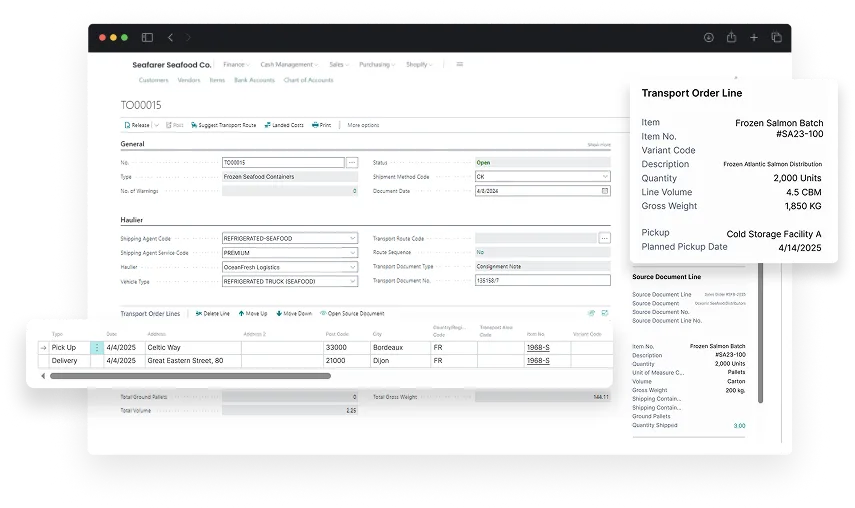
Align Supply with Unpredictable Demand
Balance harvest schedules, processing capacity, and market demand with intelligent planning inside our seafood ERP solutions. Anticipate shortages, cut delays, and plan production cycles that adapt to seasonal variability and fast-changing customer needs.
Source Smarter, Spend Better, and Stay Compliant
Streamline supplier management, purchase orders, and inbound quality checks with our ERP software for seafood. Gain complete visibility on costs, vendor performance, and contracts while ensuring every purchase aligns with production schedules and quality needs.
Turn Raw Catch into Profit with Smarter Processing Control
Manage cutting, portioning, grading, and packing with precision. Our seafood ERP software optimizes yields, reduces waste, and ensures product quality so you can maximize profitability without compromising compliance or freshness.
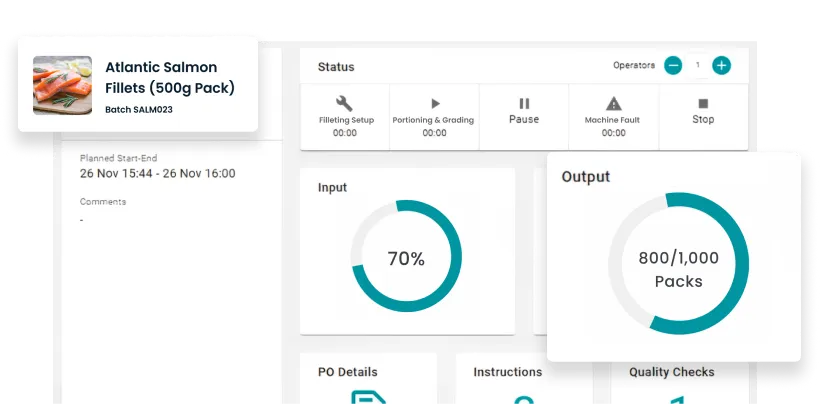
From Hatch to Harvest, Monitor Every Lifecycle
Plan, monitor, and optimize aquaculture operations within our ERP seafood solution. From biomass tracking and feed planning to water quality monitoring and harvest scheduling, gain control of every lifecycle stage for healthier, more profitable yields.
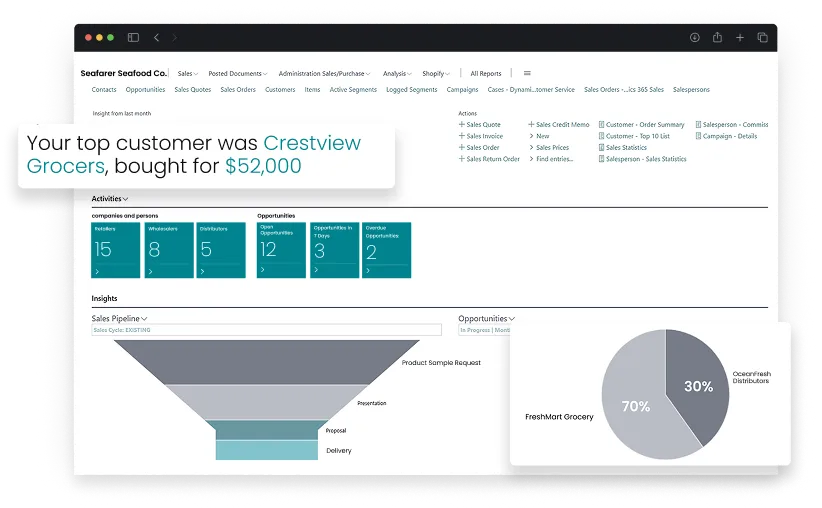
Stay in Control of Stock, Quality, and Shelf Life
Gain real-time visibility into frozen, chilled, and processed inventory with our ERP systems for seafood. Our seafood inventory software centralizes batches, expiry dates, and grades to reduce waste and improve accuracy. With built-in seafood inventory tracking and full seafood inventory management software controls, teams keep stock moving and customers supplied without disruption.
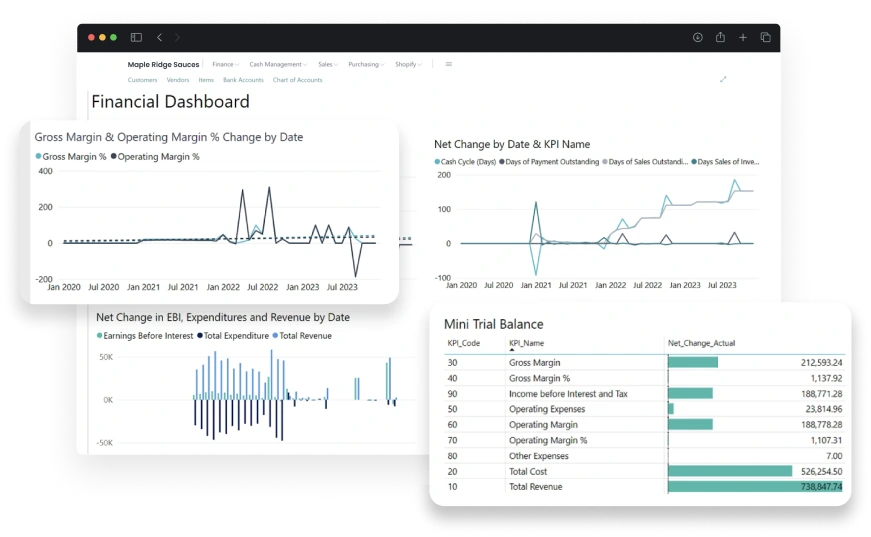
Sell with precision, Even When every Order is Unique
Handle complex pricing, catch-weight sales, and customer-specific requirements effortlessly with our cloud-based seafood ERP. Automate orders, manage contracts, and ensure every sale is traceable and profitable while meeting the tight timelines of the seafood trade.
Accuracy at Every Scan, Compliance on Every Label
Our seafood distribution ERP integrates warehouse workflows with GS1/SSCC label printing and handheld scanning. It pairs naturally with fish supply chain software to improve traceability, reduce errors, and ensure every shipment leaves your facility correctly labeled, documented, and audit-ready.
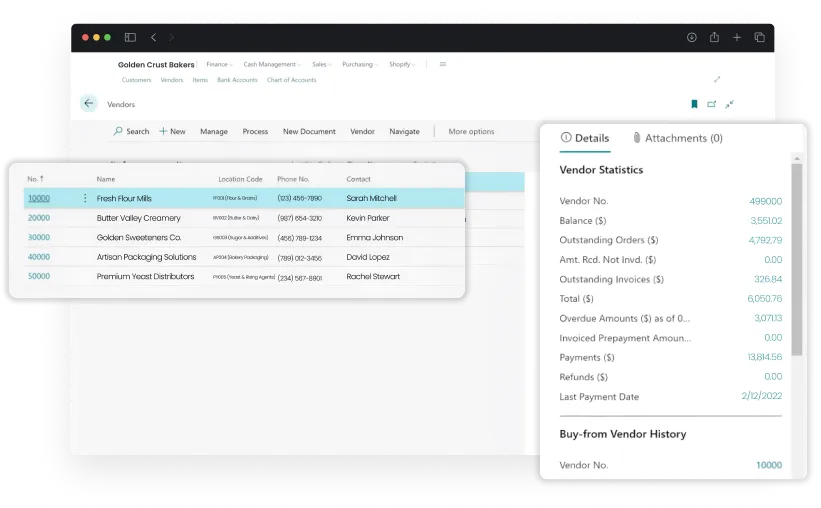
Keep Your Numbers as Fresh as Your Catch
Bring complete financial control into your seafood operations with our erp software for seafood industry. As dedicated seafood financial management software, it supports multi-entity consolidation, cost accounting by batch or vessel, and rolling forecasts that align every dollar with operational performance.
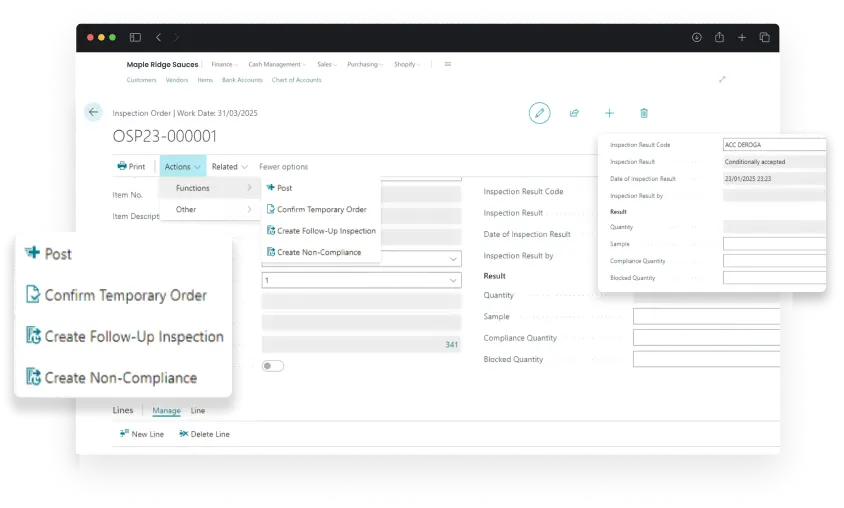
Compliance Built in, not Bolted on
Protect your brand and meet global standards with our seafood ERP. From HACCP and FSMA plans to inspections, allergen labeling, and recall workflows, we make food safety and compliance an effortless part of operations.
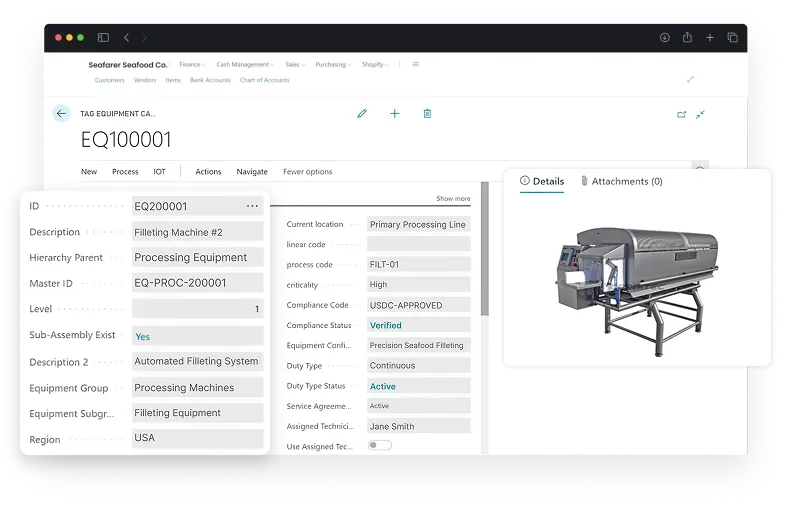
Keep Your Lines Running and Downtime Minimal
Our seafood ERP system integrates asset and plant maintenance, helping you schedule preventive care, track repairs, and manage spare parts, ensuring smooth production flow and fewer costly breakdowns during critical processing cycles.
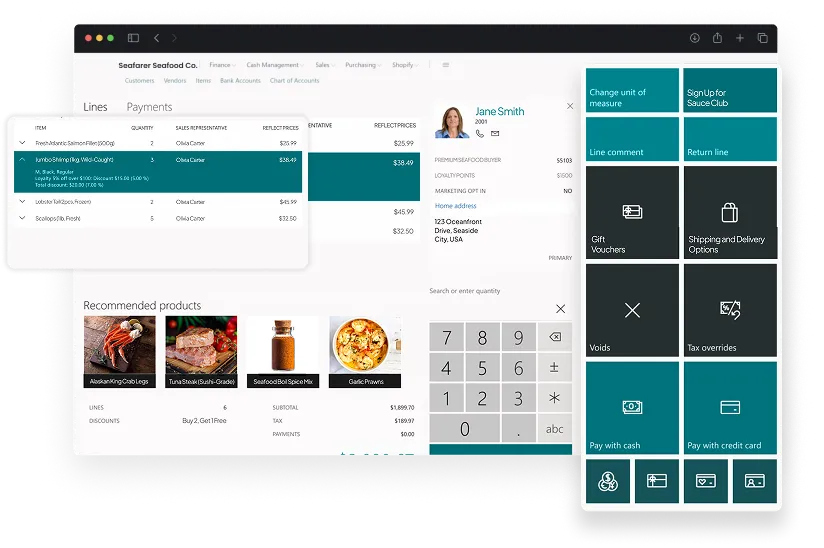
Deliver Seafood Fresh, Fast, and Traceable
Ensure flawless order fulfillment and global reach with our ERP seafood solution. From container tracking and dispatch planning to compliance documentation, manage every movement with transparency, speed, and reliability across your distribution network.
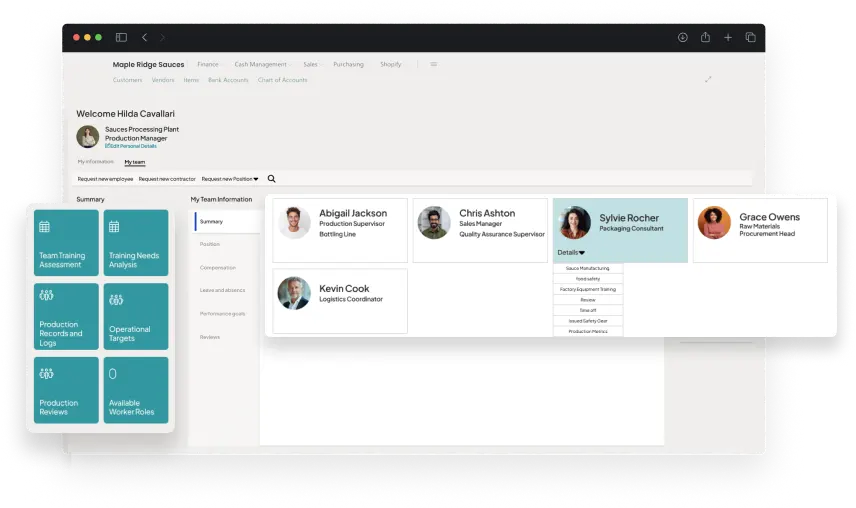
Factory-floor MES tools stop at the plant gate. Folio3 FoodTech's Seafood Processing ERP connects your operations, finance, and BI — breaking the silos that cost processors margin, compliance time, and decision speed.
| Capability | Folio3 FoodTech | Factory-Floor MES | Single-Function ERP |
|---|---|---|---|
| Catch & vessel data capture | Yes | Yes | Partial |
| Filleting yield & grading control | Yes | Yes | Yes |
| IoT cold-chain monitoring | Yes | No | No |
| Finance, costing & invoicing | Yes | No | Yes |
| Procurement & grower payments | Yes | No | Partial |
| Retail EDI & customer portal | Yes | No | Partial |
| BI dashboards & reporting | Yes | Limited | No |
| AI quality & food detection | Yes | No | No |
| Blockchain traceability | Yes | No | No |
| MSC / ASC sustainability certifications | Yes | No | No |
| Aquaculture & biomass management | Yes | No | Partial |
| Multi-site management | Yes | Partial | Partial |
Ready to break the silos? See how Folio3 FoodTech unifies your seafood operation.
Book a Discovery CallManaging a seafood supply chain means balancing perishability, compliance, and global logistics. Our seafood distribution ERP unifies every stage from harvest and processing to export and retail, ensuring efficiency, transparency, and sustainability across the journey.
Capture data at the source vessels, aquaculture farms, and landing docks. Record species, weights, catch area, crew, and biomass to set the foundation for compliance and downstream supply chain accuracy.
Integrate primary and secondary processing into your ERP: filleting, portioning, grading, and packaging. Ensure maximum yield, minimize waste, and align processing output with market demand and regulatory requirements.
Maintain freshness and compliance across frozen and chilled storage. Monitor temperature, expiry dates, and batch locations to guarantee safe inventory control and prevent losses in seafood supply chain operations.
Streamline outbound logistics with container tracking, dispatch scheduling, and customs documentation. Enable real-time visibility for distributors and exporters while reducing transportation costs and ensuring delivery reliability worldwide.
Meet the strict demands of retailers, restaurants, and export buyers. Manage contracts, fulfill variable-weight orders, and support eco-label requirements to build strong customer trust and long-term market relationships.
Close the loop with complete traceability. Use built-in seafood inventory tracking to follow lots from catch or farm to final sale while seafood inventory management software enforces FEFO and labeling accuracy. Compliance with HACCP, FSMA, and EU regulations becomes routine and brand credibility grows.
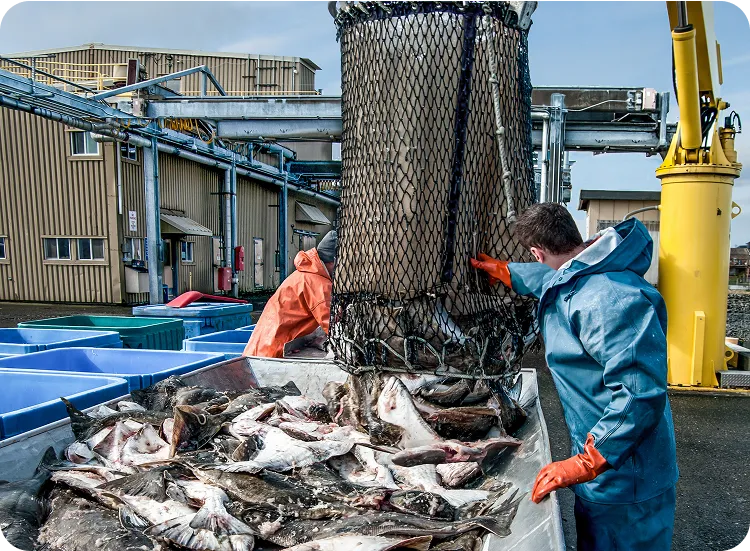
In seafood, safety and transparency aren’t just obligations; they are the foundation of global market access and customer confidence. Our ERP software for seafood industry connects compliance, monitoring, traceability, and recalls into one digital safety net. Integrated seafood inventory management software and IoT modules ensure every catch, batch, and shipment meets the highest standards.
Keep Seafood Operations Audit-Ready, Always
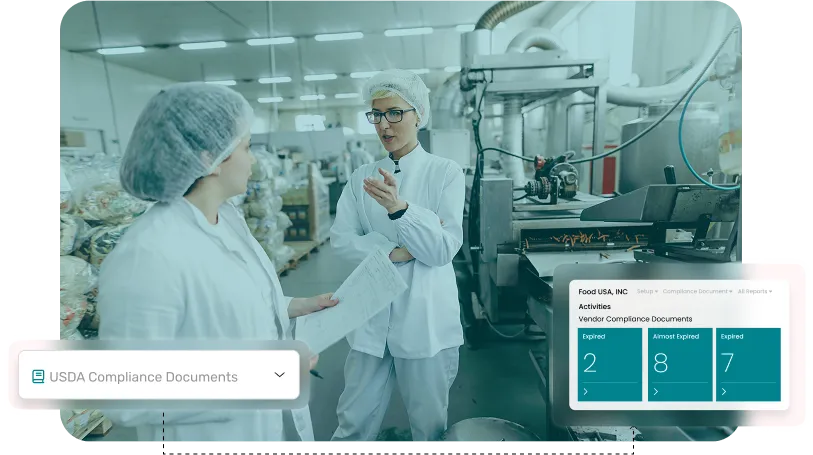
Licenses, catch documentation, eco-label certifications, and species declarations are managed centrally. Instead of scattered paperwork, compliance leaders get a live dashboard of obligations, expiry alerts, and regulator-ready documentation.
Contain Risk Before it Damages Your Brand
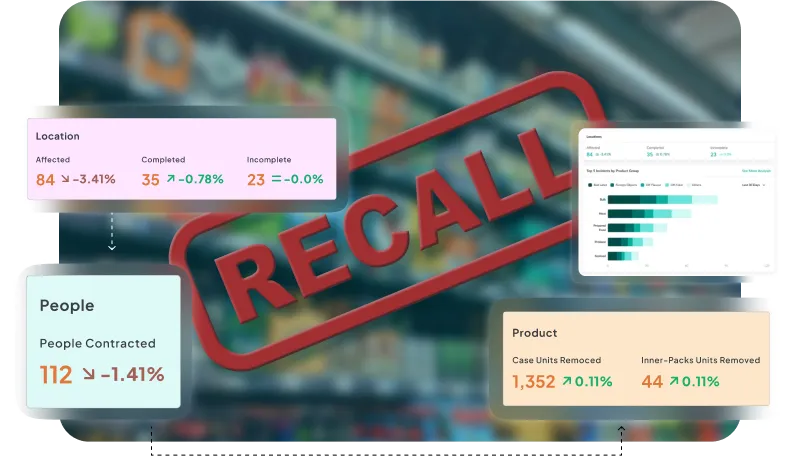
When a quality or safety issue arises, every minute counts. With complete lot genealogy, recalls can be executed in minutes, isolating affected batches and generating regulator-ready reports.
Stop Contamination Before It Reaches the Product
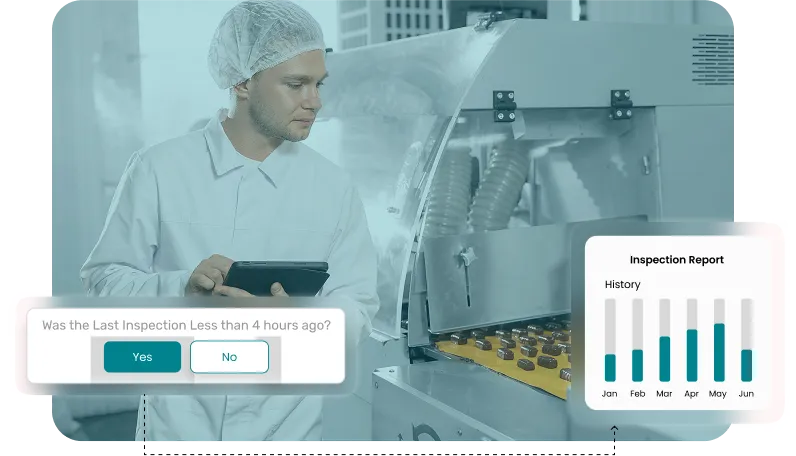
Whether it’s swab testing, allergen checks, or cold-room monitoring, our ERP for seafood turns preventive controls into measurable programs. Hotspots are identified early, and corrective actions are triggered automatically.
Vitalize Supplier Relationships to Assure Safety from the Source
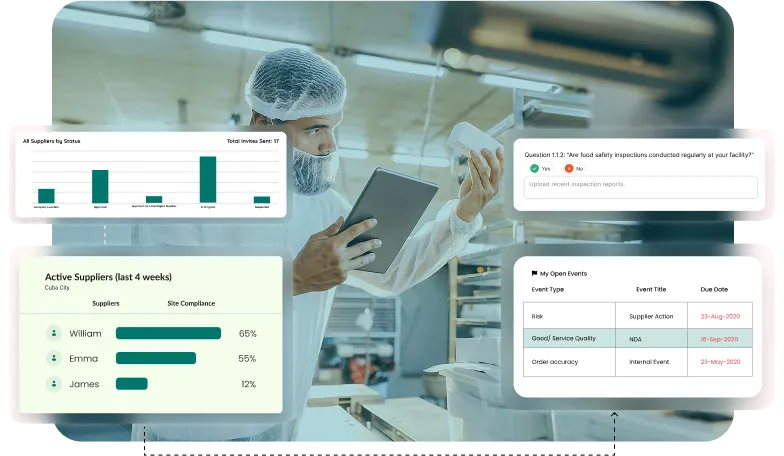
From fishing vessels to global suppliers, compliance begins before the product reaches your dock. Centralize supplier onboarding, approvals, and certifications to ensure that every incoming lot meets your safety and sustainability standards.
Simplify Global Regulatory Demands With Built-In Controls and Records
Seafood processors and distributors face some of the strictest FSMA controls. Our ERP embeds hazard analysis, preventive controls, and verification into workflows, ensuring compliance without slowing operations.
Keep Every Critical Control Point in Check
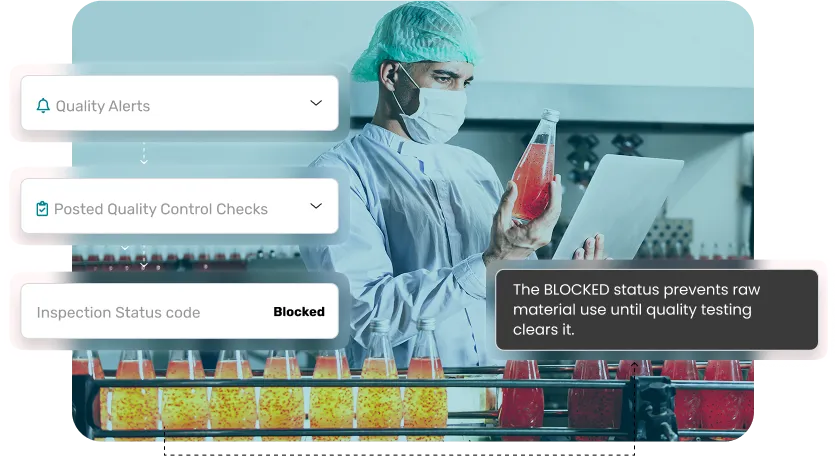
HACCP isn’t optional in seafood; it’s survival. Map flows, define CCPs, and monitor critical limits in real time, with deviations instantly flagged for corrective action.
Track Every Lot, Vessel & Batch Without Gaps
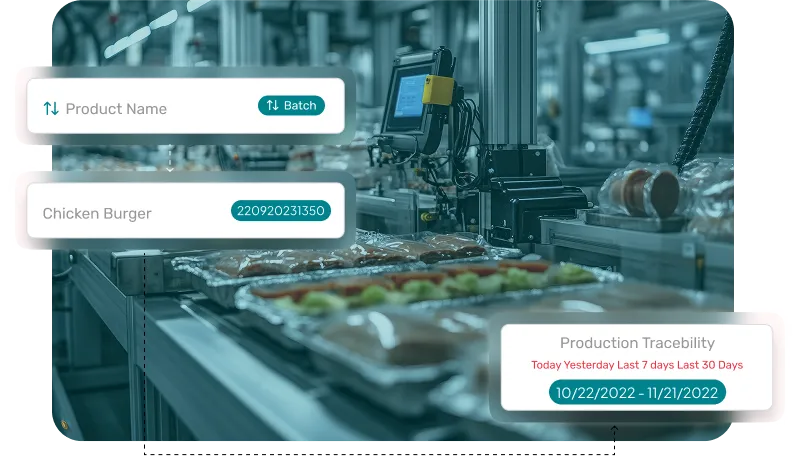
Traceability demands in seafood are non-negotiable. Our ERP provides lot-level genealogy across catches, processing, rework, and shipments, enabling instant recalls and transparent audit trails for trading partners.
Build Quality into Every Stage of Seafood Operations
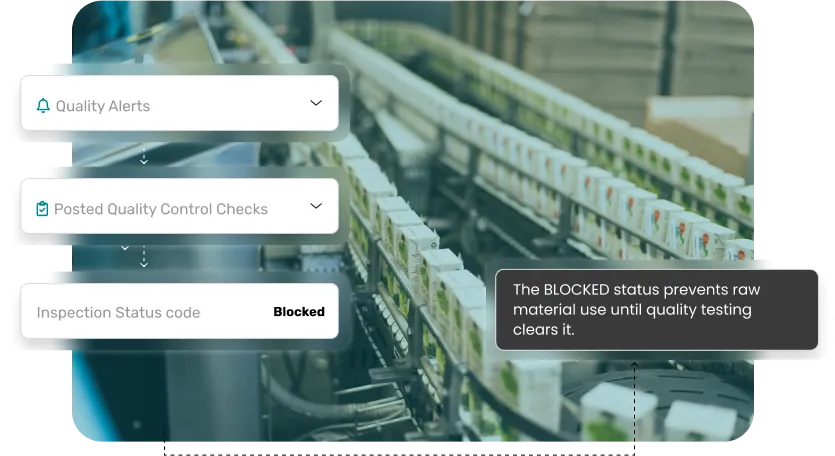
With built-in inspection plans and digital CAPA, quality management becomes proactive. QA teams can prevent issues early, manage holds instantly, and standardize inspections across vessels, plants, and distributors.
At Folio3 FoodTech, seafood ERP software is designed to transform the way you operate, not just manage the current workflow. We combine deep seafood expertise with next-gen tech to deliver measurable results: faster compliance, reduced waste, higher margins, and more intelligent decisions across your entire value chain. By revolutionizing the seafood industry through our ERP solutions, we give you multiple reasons to choose us, considering our following USPs:


AI-powered demand forecasting helps seafood companies cut wastage, balance volatile supply, and protect already thin margins.

IoT sensors track temperature, humidity, and location in real time, so you can prevent spoilage before it threatens your bottom line.

Blockchain verification proves origin, species, and sustainability credentials, building loyalty with consumers and confidence with regulators.

Native food and retail EDI means faster partner onboarding, fewer integration headaches, and smoother supply-chain transactions.

From fleets and aquaculture to processors and distributors, we cover the seafood chain end-to-end while applying learnings from other food sectors.

Partner with a single provider for ERP, CRM, mobile apps, and analytics, delivering value that goes beyond ERP to support every stage of your food business growth.
From finfish to shellfish, roe, and mollusks, every seafood category brings unique processing, compliance, and market challenges. Our ERP software for the seafood industry is tailored to meet diverse business demands with proven precision, scalability, and traceability.
From salmon and tuna to cod, halibut, and mackerel, finfish require careful grading and high-volume processing. Our ERP optimizes catch-weight handling, production scheduling, and compliance, ensuring efficiency and profitability across domestic and export markets.
Species like shrimp, crab, and lobster demand strict cold-chain control and rapid order cycles. Our ERP delivers real-time freshness monitoring, eco-label compliance, and streamlined sales workflows, helping suppliers maintain quality and transparency for global buyers.
Caviar, salmon roe, and tobiko require specialized handling, precise shelf-life monitoring, and premium export documentation. Our ERP integrates quality checks, lot-level traceability, and compliance reporting to help businesses meet luxury market expectations confidently.
Oysters, mussels, clams, and scallops face sustainability mandates and variable harvest conditions. Our ERP connects traceability, certification management, and processing efficiency, ensuring suppliers meet demand while protecting natural resources and boosting profitability.
With years of hands-on experience across diverse food sectors, we excel in crafting custom-built Seafood ERP solutions tailored from the ground up. If your operations are unique in seafood or across the food industry, we’ll analyze your workflows and design a customized Seafood ERP software that aligns seamlessly with your exact business needs. Our specialists configure every ERP for fish processing module to match your production reality.
Every seafood business has its own operational view, from variable catch weights to strict cold-chain demands. Our cross-functional experts dive deep into your workflows, uncover risks, and design an ERP for seafood processing that delivers precision, compliance, and measurable profitability. From discovery to deployment, we apply the same agile standards used in our seafood manufacturing software projects to guarantee seamless adoption.
Understanding the Mission before We Begin
In Discovery, we analyze your seafood operations, from catch reporting to compliance hurdles. This phase ensures we design an ERP scope aligned with your real-world challenges and goals.

Turning Insights into a Roadmap for Results
Here, insights become action. We structure modules, milestones, and dependencies so the ERP rollout is realistic, phased, and minimizes disruption to seafood processing operations.

Custom-built for Seafood, not Generic Templates
We configure and extend the seafood ERP system around catch-weight pricing, yield control, traceability, and cold-chain needs. This phase covers custom logic, portals, reports, and UX for floor, warehouse, and finance teams.

Prove it Works before it Reaches Production
We validate every process from traceability checks to cold-chain alerts. Our experts ensure the ERP meets seafood industry standards before it ever reaches your production floor.

One system, Endless Connections
We integrate scanners, IoT sensors, carriers, EDI, finance, and eCommerce so your ERP for seafood runs as one source of truth. You can handle real-time orders, inventory, cold-chain, and compliance data without silos.

Clean, Accurate, and Migration-ready
We profile, cleanse, and stage historical items, lots, suppliers, and financials into a cloud-based seafood ERP with test loads and cutover rehearsals so go-live accuracy is trusted on day one.

Go Live Without the Stress
Deployment is managed with precision to ensure stability, minimal downtime, and confidence that your seafood ERP will run smoothly from day one.

Adoption that Sticks, Support that Scales
We equip teams with hands-on training, SOPs, and continuous support so they adopt the seafood ERP fully, achieving ROI faster and sustaining long-term gains.

Seafood businesses rely on diverse tools from accounting and e-commerce to logistics, retail partners, and more. Our seafood ERP solutions integrate them all into one platform, giving you complete visibility and control without system silos. By linking fish supply chain software and seafood inventory tracking modules with finance and cold-chain systems, your data flows intelligently across departments for faster, more reliable decision-making.
Our clients span fisheries, processors, distributors, and exporters — and their success stories speak louder than promises. From improved compliance to higher yields and smoother operations, discover how our ERP software solutions help businesses thrive across the value chain.
We were extraordinarily pleased with the functionality and depth of understanding that Folio3's solution exhibited after a relatively brief but incisive, project kickoff meeting. Folio3 ``gets it`` from the start, relieving us from tedious development discussions drawn out over a long period of time.

Folio3 impressed me by learning a BI tool they did not have prior experience with and in a short amount of time produced analysis reports ready for business consumption. We are excited on the next set of critical reports Folio is working on for us and expect the relationship to continue for the foreseeable future.

"The team has done a tremendous job from testing and deploying our DAX applications to go live. They have also helped develop a reusable pattern for scheduling processes used by multiple workers. We will definitely continue to lean on folio3 for future support of these applications."

Folio3 has been an outstanding NetSuite implementation partner, excelling in complex integrations across our business units. Their expertise, innovative solutions, and responsive, supportive team make them truly impressive.

BioPak adopted NetSuite early in Australia, using its ERP, CRM, and eCommerce. After initial challenges with development partners, we partnered with Folio3 in 2016. Their transparency, work ethic, and seamless collaboration reignited our drive for crucial upgrades and innovations, making them a trusted partner in our growth.

We needed an online presence for our business that catered to both our B2B and B2C clientele and we needed it in record time. Folio3 was able to deliver in our timeline, in budget, and has continued to provide us with excellent on-going support.

We thank Folio3 for their dedication and hard work over the past 12 months. Folio3 team has been a great help to our organization, and I am proud of the relationship we have built between our colleagues and companies. I look forward to continuing to work with the Folio3 team.

Folio3 was extremely qualified within our NetSuite environment & was able to provide advanced proficiency when customizing the integration. I appreciate their ability to navigate the system well & provide the expertise needed to complete the project. We appreciate your hard work & look forward to our continued collaboration.

We are very excited to see the new PigWise app rolling out to production. When we had discussed the initial idea with Folio we had no idea that the final build would look this good. You guys rock!.

"I am happy to recogzine the work that was done by the Folio3 team. Our end users are very satisfied with the user interface and the performance of the app – and are excited to be more mobile. I appreciate the hard work and commiment to deliver a top quality solution. I look forward to continuing our business relationship."

"The Folio3 team has consistently exceeded our expectations. It felt as if we were working with an onshore team. It was their ability to understand our needs and keep us engaged throughout the entire process that has resulted in an exceptional product and a valued partner.."

Generic ERP systems are built for standard manufacturing. They cannot handle catch-weight pricing, vessel-level traceability, IoT cold-chain integration, species-level yield tracking, or MSC and ASC certification management. Folio3 FoodTech's Seafood ERP is purpose-built for these realities. From crew settlement at landing through FEFO cold store control, allergen label compliance, and retail EDI, every module is designed around how seafood businesses actually operate, not how generic manufacturers do.
Folio3 FoodTech's Seafood Processing Software integrates directly with your scale hardware at landing, grading, filleting, and packing. Every item is tracked by actual weighed quantity, not a standard unit estimate. Those weights flow automatically through production orders into inventory, costing, and customer invoicing. Variable-weight products like whole fish, portioned fillets, and shellfish are billed by actual packed weight using our catch weight software, eliminating reconciliation errors between the processing floor and your finance team.
Folio3 FoodTech's Seafood ERP connects IoT temperature and humidity sensors in your cold storage zones, refrigerated trucks, and chilling rooms directly to the food manufacturing inventory software and lot tracking system. Deviations trigger real-time alerts linked to the affected batch. FEFO rotation is enforced automatically in cold store picks. Verified condition logs are attached to every lot for audit readiness. This is a capability that standalone seafood MES tools and generic ERPs do not offer.
Yes. Folio3 FoodTech's Seafood ERP builds a continuous, auditable record from vessel landing, capturing species, catch area, crew, and weight, through primary and secondary processing, cold storage, and final dispatch to retail or export customers. Forward and backward lot traces run in seconds. Mock recalls are executed from one screen. SIMP reporting, HACCP documentation, FSMA records, and FDA import compliance are all handled within the same connected workflow.
A factory-floor MES manages what happens inside the plant. Folio3 FoodTech's Seafood Processing Software manages your entire enterprise, procurement, finance, HR, cold-chain logistics, EDI, e-commerce, and BI — plus full processing plant operations in one connected system. You get filleting yield tracking and IoT cold-chain monitoring inside the same platform that handles crew settlement, customs documentation, and retail EDI. One implementation partner. No siloed tools. No manual handoffs between the floor and the back office.
Yes. Folio3 FoodTech's Seafood ERP includes built-in sustainability and certification management. MSC, ASC, and eco-label certifications are stored, tracked, and linked to the relevant product lines and suppliers. Renewal reminders are automated. Carbon footprint data across vessels and logistics is tracked and reportable. Catch-area data captured at landing feeds directly into sustainability labeling and eco-label compliance, giving you audit-ready documentation without a separate certification management system.
Yes. Folio3 FoodTech's Seafood ERP covers both aquaculture and wild-catch in a single platform. For aquaculture operations, biomass tracking, feed management, health monitoring, and harvest scheduling are connected directly to processing plant scheduling and yield planning. For wild-catch, vessel landings, species data, and catch-area records feed into the same food traceability and compliance workflow. Integrated poultry and seafood businesses gain a unified view from source to dispatch without separate software instances.
Folio3 FoodTech's Seafood Processing Software automates customs and export documentation for global shipments. FDA hold flags are triggered automatically when import records match hold criteria, preventing the affected product from being released or shipped. Container tracking, dispatch scheduling, and carrier documentation are generated from the same system that manages your cold store and production floor through our food distribution software. This eliminates the manual coordination between your logistics team, compliance officer, and export documentation desk.
A typical Folio3 FoodTech Seafood ERP implementation runs four to nine months, depending on operation size, number of processing sites, integration complexity, and data migration scope. Single-site processors with standard module requirements tend toward the shorter end. Multi-site operations with IoT sensor networks, cold store vendors, and retail EDI partnerships take longer. Folio3 FoodTech follows a phased implementation process covering discovery, planning, configuration, integrations, data migration, training, and post-go-live support.
Folio3 FoodTech's Seafood ERP centralizes master data, traceability records, cold-chain compliance, and financial reporting across all processing sites while giving each location its own operational context. Corporate teams see yield performance, cold-chain status, and throughput across every plant in one dashboard. Site managers work within their own environment. Multi-location cold store definitions, inter-site transfer orders, and consolidated financial reporting across entities are supported through our food supply chain software without separate software instances or manual data synchronization.