

Seafood is one of the most perishable proteins in the food supply chain. According to the Food and Agriculture Organization of the United Nations (FAO), an estimated 35% of all fish and seafood produced globally is lost or wasted, with improper temperature control being one of the primary causes. For processors, distributors, and retailers, that number represents more than a compliance problem. It represents direct profit loss.
Every link in the seafood supply chain is a potential failure point. If the seafood cold storage process breaks down at any stage, whether at the vessel, the processing plant, the distribution center, or the retail floor, the product degrades faster than most operators realize.
This blog covers the key stages of seafood cold storage and handling, the seafood storage temperatures that apply at each stage, how to store seafood and fish correctly, and what seafood storage guidelines you need to follow to protect both product quality and your business.
Why Seafood Cold Storage Is Different From Other Proteins
When it comes to storing fish, the margin for error is very small. Fish tissue is high in moisture, has a neutral pH, and contains enzymes that accelerate spoilage once the fish dies. Bacteria that cause spoilage in seafood can multiply even at refrigeration temperatures, just more slowly.
This is why seafood storage is not simply about keeping things cold. It is about maintaining the right seafood temperature at every stage, reducing exposure time, and controlling handling conditions so that the product reaches the end consumer in sellable condition.
The good news is that when you follow proper seafood cold storage practices from the point of harvest to point of sale, you can significantly extend usable shelf life and reduce losses. The challenge is that each stage in the chain has different requirements.
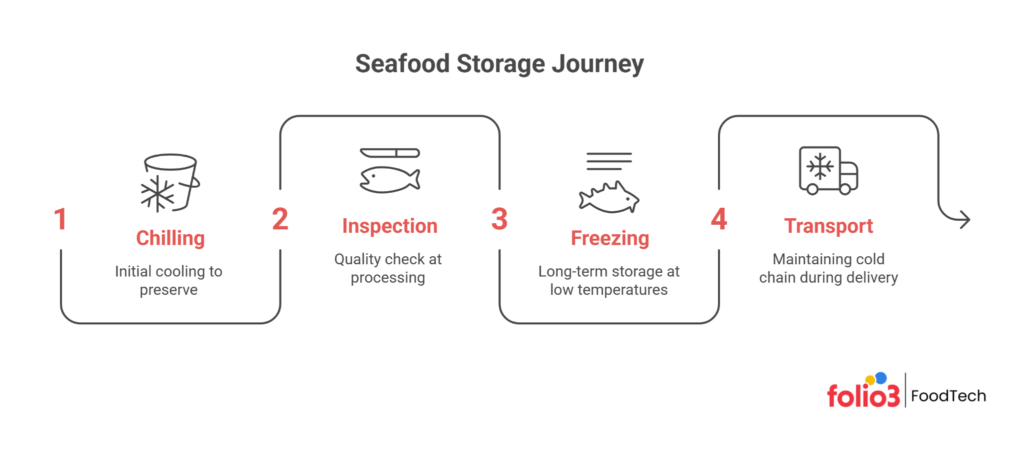
Stage 1: Harvest and Initial Chilling
What Happens at This Stage
The clock starts ticking the moment seafood leaves the water. At sea, fish must be iced down or placed into chilled seawater immediately after catch. Delay at this stage is one of the most common causes of quality degradation in the seafood supply chain.
Storage Temperature for Seafood at Harvest
Fresh fish should be held as close to 0°C (32°F) as possible without freezing the flesh. A common method is to use crushed ice or an ice slurry with two parts ice to one part water. The slurry method cools the fish faster than dry ice alone because it surrounds the entire surface.
For vessels with refrigerated seawater (RSW) systems, the target seafood temperature is 0°C. NOAA Fisheries recommends that fish be buried in ice immediately after catch to maintain the cold chain from the earliest possible point.
What This Stage Gets Wrong
Small operations often underestimate how much ice is needed. The rule of thumb is roughly equal parts ice to fish by weight. Too little ice means the core temperature of the fish stays elevated, accelerating spoilage long before the product reaches your seafood cold storage facility.
Stage 2: Receiving and Inspection at the Processing Facility
When seafood arrives at a processing plant or seafood cold storage facility, the receiving process is the first opportunity to assess the quality of what came in and to re-establish proper cold chain conditions.
Seafood Handling and Storage at Receiving
Temperature logs should be checked at the point of receiving. A product that arrives above the target seafood storage temperature range is already a quality risk and lot-level traceability for seafood links that arrival temperature data to the specific batch, supplier, and chain-of-custody record. A visible inspection for odor, texture, and eye clarity in whole fish can help identify any product that has begun to degrade.
Once accepted, the product should move directly into a cold holding area. It should not sit on a loading dock or in an ambient receiving area for an extended time. Every minute at room temperature costs shelf life.
Understanding food safety hazards at processing facilities helps receiving teams know exactly what biological risks they are managing when handling fresh catch.
Documentation at This Stage
Your team should log the arrival temperature, batch information, supplier name, and date. This feeds into your seafood traceability system and supports compliance with requirements like FSMA Rule 204, which mandates traceability lot codes for seafood.
Stage 3: Chilled Storage for Fresh Seafood
Fresh seafood that is not going directly into freezing needs to be stored in a refrigerated environment at the correct seafood storage temperature. This is typically between 0°C and 2°C (32°F to 36°F).
How to Store Fresh Fish in Cold Storage
Whole dressed fish should be packed on ice in a refrigerated display or storage unit. Fillets and steaks should be sealed in plastic bags or airtight containers and covered with ice in a pan. If you are working with fresh shrimp, scallops, or squid, store them in a zippered bag or an airtight container on ice.
For shellfish purchased live, such as mussels, clams, and oysters, the storage method differs. These should be placed in a shallow pan and covered with moistened paper towels, not submerged in water. Submerging live shellfish in fresh water will kill them.
How Long Can You Store Fresh Seafood
The best way to store fish for fresh use is to consume or process it within two days of receipt. Some species hold slightly longer under ideal conditions, but two days is the standard working benchmark. Beyond that, quality deterioration accelerates even under proper seafood cold storage conditions.
Understanding food shelf life testing methods gives you a scientific framework for validating how long your specific seafood products hold quality under your storage conditions.
What to Watch for in Chilled Storage
Monitor temperatures at least twice daily. The seafood temperature inside the unit should stay consistent. Watch for ice melt, which can raise temperatures and create pooled water that promotes bacterial growth. Drain pans regularly and replenish ice as needed.
Stage 4: Freezing and Frozen Seafood Storage
When fresh seafood needs to be held longer than a few days, freezing is the right method. Proper seafood cold storage in frozen form preserves both safety and quality when done correctly.
Storage Temperature for Frozen Seafood
The industry standard for frozen seafood storage is -18°C (0°F) or lower. At this temperature, microbial activity stops almost entirely, and enzymatic processes that cause quality loss slow down significantly. For fatty fish like salmon or tuna, holding at -24°C or below is often recommended to prevent fat oxidation, which causes rancid flavors.
Premium sashimi-grade tuna is sometimes held at temperatures as low as -60°C in specialized super-freezers. This level of seafood cold storage is common in high-end export operations and Japanese wholesale markets.
Freezing Methods and Their Impact on Quality
How you freeze matters as much as the temperature you freeze at. Blast freezing technology rapidly drops product temperature, which minimizes large ice crystal formation inside the fish tissue. Large ice crystals cause cell damage that results in a mushy texture when the product is thawed. Blast freezing produces a better end product compared to slow conventional freezing.
How Long Can Frozen Seafood Be Stored
At -18°C, lean fish like cod or haddock generally stays high quality for 6 to 12 months. Fatty species like salmon or mackerel may show quality decline after 4 to 6 months at the same temperature. At colder temperatures, these timelines extend.
FIFO inventory rotation across frozen storage is a basic but frequently overlooked seafood storage guideline, one that becomes automatic when lot expiry and stock movement are tracked in a real-time inventory system.
Packaging for Frozen Seafood
Wrapping fish tightly in moisture-proof bags or in plastic wrap and aluminum foil before freezing prevents freezer burn, which is surface dehydration caused by sublimation. Vacuum packaging removes air from around the product and is one of the most effective methods to preserve frozen seafood quality over longer storage periods.
Stage 5: Cold Chain During Transport and Distribution
Seafood cold storage does not end at your facility door. The cold chain must be maintained through every step of transport, from the cold storage facility to the distribution center to the retailer.
Temperature Control in Transit
Refrigerated vehicles used for fresh seafood should be pre-cooled to 0°C to 2°C before loading. For frozen seafood, the transport vehicle should be at -18°C or colder. Loading warm product into a cold vehicle creates condensation and temperature fluctuations that compromise quality.
Modern seafood logistics operations use real-time temperature monitoring devices that alert operators when the temperature in the trailer rises above the set threshold. This allows the driver or dispatcher to take corrective action before the product is damaged.
Seafood Cold Chain and Regulatory Compliance
The cold chain during transport is increasingly regulated. Understanding cold chain compliance requirements beyond just FSMA Rule 204, including sanitary transport rules and carrier verification obligations, is essential for seafood operators moving product across state lines or through multiple distribution nodes. Your cold chain management protocols need to be documented and verifiable.
This is especially relevant for seafood distributors and importers who must meet both domestic FDA requirements and the requirements of their retail or foodservice buyers. If you want a deeper look at how compliance frameworks apply to your seafood operation, reviewing FSMA 204 traceability requirements is a practical starting point.
Stage 6: Retail Holding and Display
At the retail level, seafood is held in refrigerated display cases or on ice. Both the display setup and the staff handling practices at this stage directly affect how long the product remains sellable.
Seafood Storage Temperature in Retail Settings
Refrigerated retail display cases should maintain a consistent seafood temperature of 0°C to 4°C (32°F to 39°F) for fresh product. Frozen seafood in retail freezers should be kept at -18°C or lower. Any deviation from these temperatures, even briefly, affects quality and food safety.
Understanding maximum cold holding temperatures is a baseline requirement for anyone managing retail seafood display. Going even a few degrees above the target seafood storage temperature can cut remaining shelf life significantly.
Handling Practices at Retail
Staff handling seafood at retail should keep their hands and surfaces clean. Raw seafood should never contact other food items. Cutting boards used for seafood should be plastic, acrylic, or rubber because wood is porous and harbors bacteria. Cooked or ready-to-eat seafood must never be placed on surfaces that held raw product.
Good retail handling practices sit within a broader seafood supply chain optimization strategy. When retail teams understand where their product has been and how it was handled, they make better decisions about shelf rotation and display management.
Key Seafood Storage Temperature Reference
Here is a quick summary of the storage temperature for seafood at each stage:
• Fresh fish (refrigerated): 0°C to 2°C (32°F to 36°F)
• Live shellfish (refrigerated): 0°C to 4°C (32°F to 39°F)
• Frozen seafood (standard): -18°C (0°F) or lower
• Fatty fish (long-term frozen): -24°C (-11°F) or lower
• Sashimi-grade tuna: as low as -60°C (-76°F)
• Retail display (fresh): 0°C to 4°C (32°F to 39°F)
• Transport (frozen): -18°C (0°F) or lower, pre-cooled vehicle
These are the seafood storage guidelines used by commercial processors, distributors, and retailers worldwide. Deviating from these at any stage creates compounding quality and safety risks.
Common Failures in Seafood Cold Storage
Understanding where seafood cold storage typically breaks down helps you build a tighter operation.
Temperature Abuse During Receiving
Product left on a dock for too long at ambient temperature is one of the most avoidable failures. Train receiving staff to move seafood directly into cold holding as quickly as possible.
Inconsistent Temperature in Cold Rooms
Cold rooms that are frequently opened or running near capacity often have temperature variation within the room. These warm spots are also Listeria control risk zones in cold and wet processing environments, where the pathogen thrives in corners, drains, and equipment crevices that manual checks miss. Regular temperature mapping helps identify these hot spots.
Cross-Contamination Risk
Raw seafood stored above ready-to-eat foods in a refrigerator creates cross-contamination risk from drip. Always store raw seafood on the lowest shelves and keep it sealed. In processing environments, raw and cooked areas need physical separation and when cross-contamination does occur, targeted seafood recall response systems determine how quickly affected lots are isolated before reaching retail.
Freezer Burn and Improper Packaging
Freezer burn does not make seafood unsafe, but it damages texture and flavor significantly. It is almost always caused by inadequate packaging. Products not sealed tightly against air exposure will develop freezer burn within weeks, even in a properly maintained seafood cold storage facility.
Inadequate Monitoring
Many operations still rely on manual temperature checks once or twice a day. HACCP critical limits for cold storage require that these monitoring points be defined, measured consistently, and supported by automated alerts not end-of-shift log sheets. If a compressor fails at night, you want an alert before the morning shift, not after. Proper seafood HACCP planning identifies these monitoring points as critical control points and establishes corrective action procedures.
Technology Supporting Seafood Cold Storage Today
Cold storage facilities and seafood processors are increasingly using technology to improve how they manage seafood storage. Several developments are worth noting.
Automated temperature monitoring allows operators to track seafood temperature across every zone of a cold room or refrigerated vehicle in real time, with data logged automatically for compliance records, removing reliance on manual checks entirely.
ERP systems built for food manufacturers now include dedicated modules for cold chain tracking, lot traceability, and expiry management. If you are operating a seafood processing or distribution business, having your seafood processing operations connected to a Seafood ERP gives you visibility that manual processes cannot provide.
Modified atmosphere packaging (MAP) is also being used more widely to extend fresh seafood shelf life by altering the gas composition inside the package. This reduces oxidation and slows bacterial growth, buying additional days of retail shelf life without affecting the cold storage temperature requirements.
Conclusion
Seafood cold storage is not a single action. It is a series of controlled stages that each require attention, measurement, and consistent execution. The seafood storage temperature at each stage is specific, the handling practices matter, and the consequences of failure are immediate and costly.
Whether you are storing fish at a processing plant, managing a distribution network, or running a retail display, the core seafood storage guidelines are the same: keep it cold, keep it moving, keep it clean, and document what you do.
If your current cold storage practices have gaps, whether in temperature consistency, packaging quality, monitoring, or traceability, addressing those gaps is a direct investment in product quality, customer trust, and operational profitability.
FAQs
What Is The Correct Seafood Storage Temperature For Fresh Fish?
Fresh fish should be stored as close to 0°C (32°F) as possible without freezing the flesh. In practice, this means holding fish between 0°C and 2°C in a refrigerated unit packed with ice. At temperatures above 4°C, bacteria multiply rapidly and shelf life drops significantly.
How Long Can You Store Fresh Seafood In Cold Storage?
Fresh seafood should generally be used within two days of purchase or receipt when stored at the correct seafood storage temperature. Some species may hold for up to three days under ideal conditions, but two days is the standard working guideline for commercial operations. Frozen seafood stored at -18°C can last 6 to 12 months, depending on the species and packaging.
What Is The Best Way To Store Fish In The Freezer?
The best way to store fish in the freezer is to wrap it tightly in moisture-proof plastic wrap or a vacuum-sealed bag, then store it at -18°C or lower. Removing as much air as possible from the packaging prevents freezer burn. Labeling each package with the species, date, and weight helps with proper rotation.
What Temperature Should A Seafood Cold Storage Facility Maintain?
A seafood cold storage facility should maintain -18°C (0°F) or colder for frozen product, and between 0°C and 2°C for fresh refrigerated seafood. Different zones may be required for different product types. Regular temperature mapping across the facility helps ensure no areas are running above target temperatures due to equipment placement, airflow issues, or door traffic.
How Do Seafood Storage Guidelines Differ For Shellfish Versus Finfish?
Live shellfish such as clams, mussels, and oysters are stored differently from finfish. They should be kept in a shallow pan covered with moistened paper towels and refrigerated between 0°C and 4°C. They must not be stored in sealed containers or submerged in fresh water. Shucked shellfish should be placed in a sealed container and kept at 0°C to 2°C or frozen. Finfish are generally packed on ice at 0°C to 2°C for fresh storage, or frozen at -18°C or below for longer holding.
What Are The Most Common Seafood Handling And Storage Mistakes?
The most common mistakes include leaving seafood at ambient temperature too long during receiving, using insufficient ice for fresh fish, inadequate packaging before freezing, storing raw seafood above other foods in shared refrigerators, failing to monitor temperatures continuously, and not following a first-in, first-out rotation for frozen inventory. Each of these errors accelerates spoilage and increases food safety risk.


