

Your customers want clean labels. Your QC team wants long shelf life. For years, those two goals pulled in opposite directions. Synthetic chemicals like BHA, BHT, and sodium benzoate delivered reliable preservation, but today’s buyers scan every ingredient on the back of the pack.
The good news? Modern food science has significantly closed the gap between natural and synthetic options. Natural preservatives for food now offer real commercial performance backed by decades of research, and the market is responding. The global clean label ingredients market is projected to grow from $47.91 billion in 2026 to $83.44 billion by 2034, at a CAGR of 7.18%. That growth is a signal you cannot ignore.
This guide walks you through the science, the categories, the application data, and the formulation challenges so you can make a confident switch to natural food preservatives without risking product quality.
What Are Natural Food Preservatives?
Not all “natural” claims are created equal. Here is what the term actually means and why it matters for your formulations.
Natural food preservatives are organic compounds derived from plants, animals, fungi, and microorganisms that prevent food spoilage by inhibiting microbial growth, slowing oxidation, or reducing enzymatic activity without the use of synthetic chemicals.
These preservatives include plant extracts like rosemary and green tea, organic acids such as citric and lactic acid, cultured ingredients like cultured dextrose, and biological agents like nisin. What separates them from synthetic alternatives is the source and method of production.
For example, cultured dextrose is produced through controlled fermentation of a sugar substrate using food-safe bacteria. It functions similarly to a synthetic antimicrobial, but its origin qualifies it as natural under most regulatory frameworks. Understanding this distinction is important when you review your food labeling strategy and make clean-label claims.
The Science: How Organic Food Preservatives Protect Product Integrity
Knowing which mechanism a preservative uses helps you choose the right one. Here is how organic food preservatives work at a biological level.
Inhibiting Microbial Growth: Nature’s Antimicrobials
Natural antimicrobials target the cellular structures of spoilage organisms. Compounds like nisin (a bacteriocin) puncture the cell membranes of gram-positive bacteria, causing cell contents to leak out and the organism to die. Organic acids such as lactic acid and acetic acid work differently. They lower the pH of the food matrix, creating an environment where bacteria, yeasts, and molds cannot maintain their internal pH balance. It disrupts their metabolism and halts reproduction.
Cultured dextrose combines both mechanisms. It produces a cocktail of organic acids and antimicrobial peptides during fermentation, giving you broad-spectrum protection. If you are working to control listeria in food manufacturing, these antimicrobial options deserve a close look.
Halting Oxidation: Plant-Based Antioxidants
Oxidation causes rancidity in fats, color loss in meats, and nutrient degradation in oils. Plant-based antioxidants like rosemary extract (rich in carnosic acid and carnosol) and green tea extract (rich in catechins) neutralize free radicals before they trigger chain reactions in lipid molecules.
It is especially critical in high-fat products like snack foods, cooking oils, and processed meats where lipid oxidation is the primary cause of quality decline. The right antioxidant can extend shelf life by weeks or even months without any synthetic additives on the label.
Selecting the right mechanism, whether antimicrobial, antioxidant, or both, is the first step in any food product development effort that involves organic preservatives for food. Understanding both pathways also helps your team build stronger HACCP plans and identify where natural solutions slot into your existing safety protocols.
The Master List of Natural Preservatives for Food
This is your reference section. Below is a list of natural preservatives for food broken down by category, with the active compound and primary application for each.
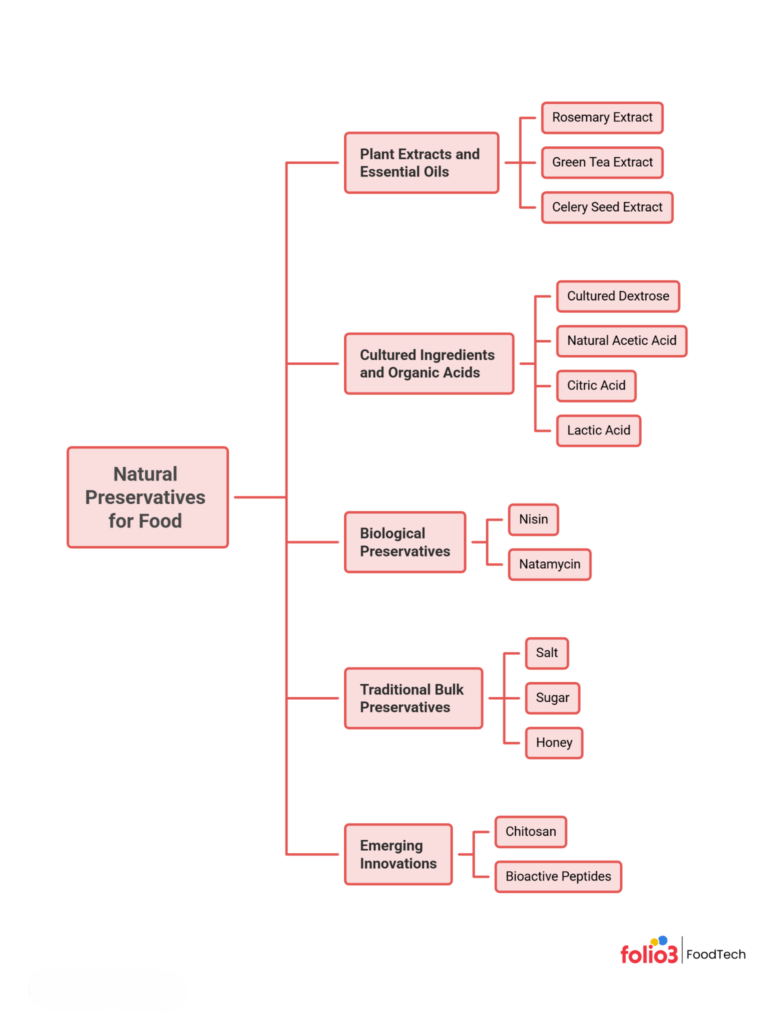
Plant Extracts and Essential Oils
Plant-derived preservatives are among the most versatile natural options available:
- Rosemary Extract (carnosic acid): The workhorse antioxidant for fats and oils. Approved by the EU as a food additive (E392) and widely used in snack foods, meat products, and baked goods to prevent lipid oxidation.
- Green Tea Extract (catechins, EGCG): A strong antioxidant that also shows antimicrobial activity against certain foodborne pathogens. Used in beverages, oils, and functional foods.
- Celery Seed Extract (natural nitrites): The primary clean-label alternative to sodium nitrite in cured meats. It provides the characteristic pink color and antimicrobial protection against Clostridium botulinum in products like hot dogs, bacon, and deli meats.
These extracts are key ingredients in today’s food processing methods focused on clean-label compliance.
Cultured Ingredients and Organic Acids
These preservatives work primarily by lowering pH and disrupting microbial cell walls:
- Cultured Dextrose: Produced by fermenting dextrose with Propionibacterium. It releases a mix of propionic acid and other metabolites that inhibit mold and bacteria. Widely used in baked goods, dairy, and prepared meals.
- Natural Acetic Acid (vinegar): One of the oldest preservatives in the world. Lowers pH effectively in sauces, condiments, and pickled products.
- Citric Acid: Derived from citrus fruits or Aspergillus niger fermentation and used as both a preservative and a flavor enhancer in beverages, canned goods, and confectionery.
- Lactic Acid: Produced through fermentation of sugars. Lowers pH and acts as an antimicrobial in meat, dairy, and fermented foods. If you work with fermented food products, lactic acid is already a core part of your process.
Biological Preservatives (Bacteriocins)
Bacteriocins are antimicrobial peptides produced by bacteria, and they offer some of the highest efficacy among all natural preservatives for food:
- Nisin: Produced by Lactococcus lactis. Effective against gram-positive bacteria, including Listeria monocytogenes and Clostridium botulinum. FDA-approved (GRAS) and widely used in dairy products, canned foods, and processed cheese.
- Natamycin: Produced by Streptomyces natalensis. Targets molds and yeasts specifically without affecting bacteria. Commonly applied as a surface treatment on cheese and baked goods.
Traditional Bulk Preservatives
These are the original natural preservatives, and they still play a major role:
- Salt (sodium chloride): Preserves food by reducing water activity (Aw) through osmotic pressure. Essential in cured meats, pickled vegetables, and meat preservation.
- Sugar: Works through the same osmotic mechanism. Critical in jams, jellies, and candied fruits.
- Honey: Contains hydrogen peroxide, methylglyoxal, and low moisture content, giving it both osmotic and antimicrobial properties.
Emerging Innovations
Two emerging technologies deserve your attention as future-ready natural preservatives:
- Chitosan: Derived from crustacean shells (chitin). Forms an edible antimicrobial film that can be applied to fruit, vegetables, and seafood surfaces. It extends shelf life and reduces moisture loss simultaneously.
- Bioactive Peptides: Peptides derived from milk, eggs, and plant proteins are showing promising antimicrobial and antioxidant activity in early research. These represent the next frontier of all-natural preservatives for food.
Application Matrix: Preservative Food Examples by Industry
Knowing which preservative to use for which product is half the battle. Here is a quick-reference table that fills a gap most resources miss.
| Food Category | Primary Spoilage Threat | Recommended Natural Preservative | Sensory Impact |
| Cured Meats | Botulism (C. botulinum) | Celery Powder / Celery Seed Extract | May impact color slightly; label-friendly |
| Baked Goods | Mold growth | Cultured Wheat / Nisin | Minimal flavor impact; clean-label approved |
| Oils and Fats | Rancidity (lipid oxidation) | Rosemary Extract | Can impart mild herbal notes at high doses |
| Dairy Products | Yeast and mold contamination | Natamycin / Nisin | No detectable flavor at approved levels |
| Beverages | Yeast fermentation, spoilage bacteria | Citric Acid / Green Tea Extract | Slightly tart; aligns with flavor profiles |
| Fresh Produce | Surface mold, moisture loss | Chitosan edible coating | Neutral; improves visual appearance |
| Sauces and Condiments | Bacterial spoilage, pH drift | Acetic Acid / Lactic Acid | Tangy flavor; typically complementary |
This matrix gives your R&D and quality control teams a starting point for preservative food examples across different product lines.
Natural vs. Artificial: Can Natural Preservatives Match Chemical Performance?
This is the question every plant manager asks. The short answer is yes, but it takes a smarter approach.
On a molecule-for-molecule basis, synthetic preservatives like sodium benzoate or BHA are often more potent. They are cheaper per pound, easier to standardize, and have decades of usage data. But they come with a growing consumer trust problem.
The answer is not to find one natural ingredient that replaces a synthetic one. Instead, modern food scientists use an approach called Hurdle Technology. It involves combining multiple natural barriers, such as mild heat treatment, controlled pH with organic acids, natural antimicrobials, and modified atmosphere packaging, into a single system. Each “hurdle” alone might be insufficient, but together they match or exceed the shelf life of synthetic chemicals while maintaining product safety.
The global natural food preservatives market was valued at over $1 billion in 2025 and is projected to grow at a CAGR of 7.0% through 2036. Manufacturers are investing in these solutions because they work at scale.
Navigating Formulation Challenges: How to Transition to All-Natural Food Preservatives
Switching to natural preservatives is not just a swap. Here are the three biggest challenges and how to work through them.
Challenge 1: The Sensory Hurdle
Botanical extracts can carry bitter, herbal, or acidic off-notes. Rosemary extract, for instance, can impart a noticeable herbal flavor in light-flavored products like white bread or mild cheese. The fix? Use encapsulated versions of the extract that release their active compounds slowly without impacting taste. You can also use masking agents or pair the preservative with complementary flavors.
Challenge 2: Sourcing and Standardization
Natural ingredients vary by crop, season, and geography. The carnosic acid content in rosemary extract can fluctuate by 15-30% between harvests. This is a real problem when your QC protocols demand batch-to-batch consistency.
Work with suppliers who provide certificates of analysis (CoA) for every lot, guaranteeing a minimum active compound level. Building this into your food procurement strategy ensures consistency without surprises on the production line.
Challenge 3: Cost-in-Use
Natural preservatives typically cost more per pound than their synthetic counterparts. But this comparison misses the bigger picture. Clean-label products command premium pricing. According to UNEP’s Food Waste Index Report, approximately 1.05 billion tonnes of food was wasted globally in 2022. Better preservation directly reduces waste, and that reduction goes straight to your bottom line.
The best natural preservatives for food are not the cheapest per kilogram. They are the ones that reduce waste, improve label appeal, and protect your brand reputation. When you factor in premium pricing potential and waste reduction savings, the ROI often favors the natural option.
Conclusion: Future-Proofing Your Food Processing Plant
Natural preservatives for food are no longer a compromise. They are a competitive advantage. The science supports them, the market demands them, and the formulation tools exist to make them work at industrial scale.
Start by auditing your current formulations. Identify which products are best suited for a clean-label transition. Then partner with specialized food-tech ingredient suppliers to test natural alternatives through accelerated shelf-life studies.
Struggling to reformulate your product with clean-label ingredients? Contact our FoodTech consulting team today for a custom shelf-life optimization audit.
FAQs
How Long Do Natural Food Preservatives Extend Shelf Life Compared to Synthetic Ones?
When combined using Hurdle Technology, natural preservatives can match or come close to synthetic shelf-life benchmarks. In baked goods, cultured dextrose has shown a mold-free shelf life of 21 days or more, comparable to calcium propionate.
Are Natural Preservatives Safe for People With Food Allergies?
Most natural preservatives are allergen-free. However, chitosan is derived from crustacean shells, making it a concern for shellfish allergies. Always check your food allergen management protocols before introducing a new ingredient.
Do Natural Preservatives Work in Frozen Food Products?
Yes, but their role shifts in frozen applications. Natural antioxidants like rosemary extract are especially useful in preventing freezer burn and lipid oxidation in frozen meat products, even when low temperatures pause microbial growth.
What Regulatory Approvals Do Natural Preservatives Need?
In the U.S., most natural preservatives are classified as GRAS (Generally Recognized as Safe) by the FDA. In the EU, ingredients like rosemary extract have specific E-numbers (E392). Always verify regulatory status in your target market before formulation.
Can You Use Multiple Natural Preservatives in a Single Product?
Absolutely. Combining preservatives is the basis of Hurdle Technology. For example, pairing cultured dextrose with rosemary extract gives you both antimicrobial and antioxidant protection in a single clean-label food safety system.
How Do Natural Preservatives Affect Nutritional Labeling?
Most natural preservatives contribute negligible calories and no major nutrients. They typically appear as simple ingredient names like “rosemary extract” or “cultured dextrose” on the label, which is exactly the transparency your consumers are looking for.


