Lot-Level Control Made Simple With Meat Traceability Software

Trace carcasses and products with precision across every stage. Meat traceability system unifies genealogy, weight records, and cold chain monitoring, giving processors instant control in audits and recalls.

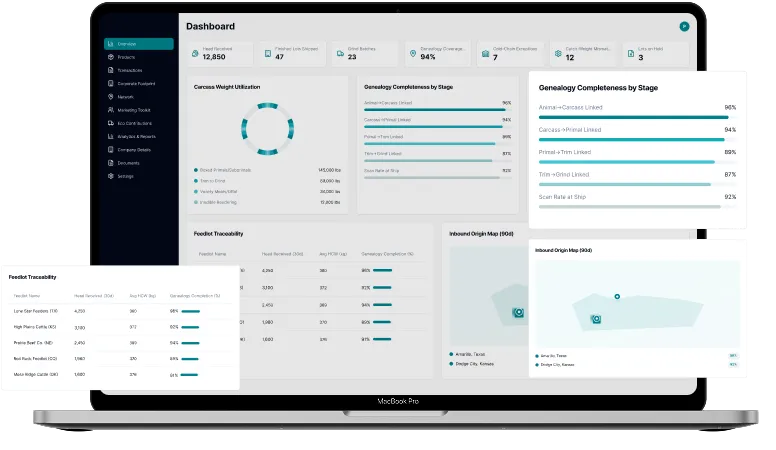
dashboard screen of meat traceability software

Over Two Decades of Proven Meat Industry Expertise

Traceability That Pays Off Across Meat Operations

Put every lot, carcass, and shipment under control. With traceability built into daily operations, your plant runs safer, faster, and more accountable.

Faster, Accurate Lot-to-Product Trace

Trace ribeye, trim, or ground beef lots back to the carcass and supplier within seconds.

Link carcass lots, COAs, and yields directly to supplying feedlots, ensuring supplier accountability across operations.

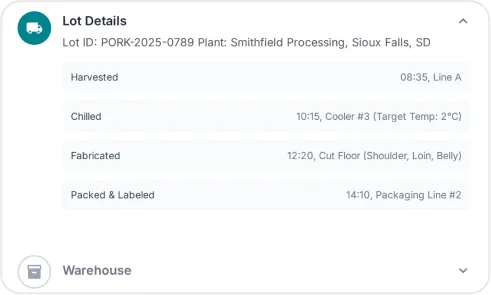
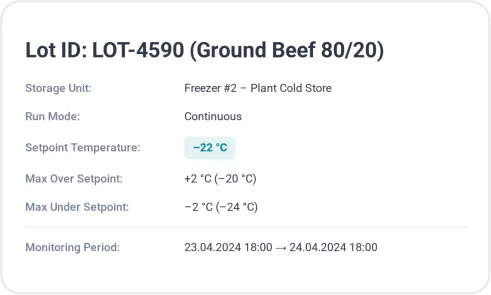
Monitor carcass chillers and reefer routes continuously, with deviations automatically linked to specific product lots.

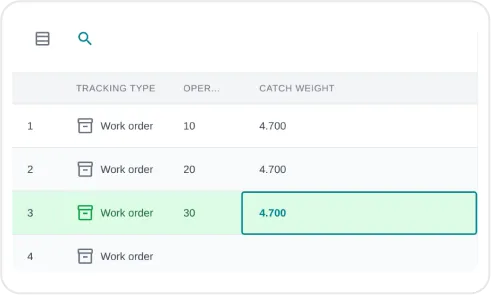
Capture exact loin, rib, and grind weights; auto-reconcile inventory, pricing, and GS1 label compliance rules.

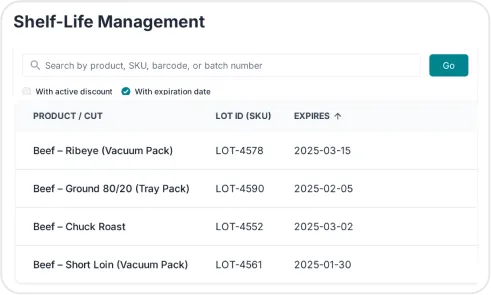
Manage cooler and freezer lots by production date and shelf-life rules, enforce FEFO picking, and flag ageing product before it risks shrink, compliance failure, or recall exposure.

Compare carcass input to primal and trim outputs, uncover shrink, and monitor supplier-specific yield performance.

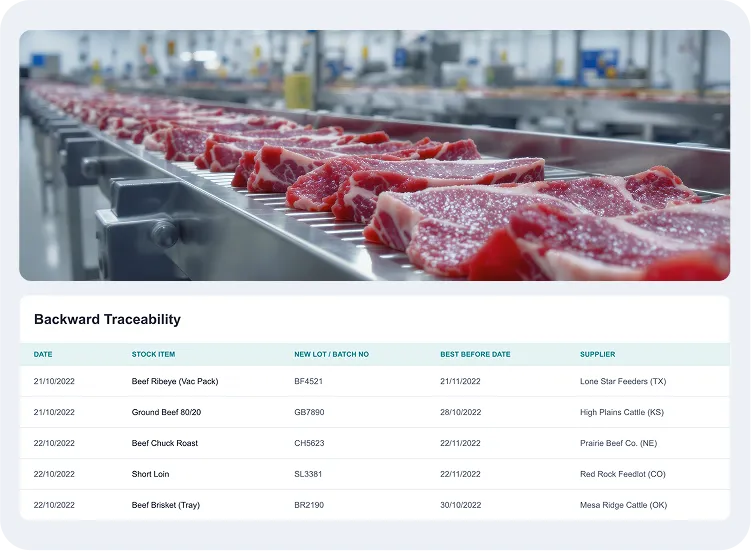
image showcasing beef backward traceability

Five Layers of Traceability Built for Meat Processing

Folio3 FoodTech's traceability architecture operates across five distinct layers. Each layer solves a different operational or regulatory problem. Together, they give processors complete control over every animal, lot, batch, and serialized package from receiving to retail.

Single-Step Trace: The Regulatory Baseline

Every traceability system starts here. Single-Step Trace captures one step back (where the animal or raw material came from) and one step forward (where the finished product shipped). This is the minimum standard under USDA, FDA, and most global food safety regulations. Folio3 FoodTech automates this at receiving and shipping, so your compliance team never has to chase paper records for basic audit questions.

Our solutions:

Automated supplier/origin capture at receiving

Ship-to destination logging at dispatch

FSIS and FDA audit-ready baseline reports

FSVP documentation for imported materials

Full Forward Trace: Source to Every Destination

Full Forward Trace starts with any source identifier, such as a purchase order, receiving lot, animal ear tag, or supplier name, and maps every downstream transaction through the plant. You can see exactly what happened to every kilogram of product from the moment it entered your facility: which lines it ran on, which batches it joined, which cases it was packed into, and which customers received it. This is the layer that powers proactive recall targeting.

Our solutions:

Search by PO, lot ID, carcass tag, or supplier

Trace through kill, fabrication, grinding, and packaging

Map all output SKUs and serialized cases

Identify every customer's shipping-to destination

Full Backward Trace: Product Back to Animal

Full Backward Trace starts from the other end. When a customer complaint, retailer inquiry, or regulatory question identifies a specific product, your team traces backward from the sales order or case barcode through every processing step to the original animal lot, supplier, and receiving date. This layer answers the question every auditor asks: where did this product come from, and can you prove it?

Our solutions:

Search by sales order, case barcode, or SSCC pallet ID

Reverse trace through packaging, production, and fabrication

Surface original animal lot, supplier, and receiving timestamp

Generate backward trace reports for FSIS mock recalls

Time-Window Trace: Contamination Incident Response

When a positive pathogen test, failed environmental swab, or cold chain exceedance is linked to a specific line, room, or piece of equipment during a specific time window, you need to know every product that was exposed. Time-Window Trace queries all transactions that passed through the affected zone during the defined period and surfaces every lot, batch, and case. This is what separates a targeted 500-case hold from a plant-wide recall.

Our solutions:

Query by time range, processing line, and facility zone

Surface all lots and batches within the contamination window

Identify shipped vs. held inventory for targeted action

Link to HACCP deviation logs and corrective action records

Batch Genealogy Trace: Many-to-Many Commingling Control

ind batch. That grind batch combines with other batches in a formulation run. The output splits across hundreds of retail SKUs. Batch Genealogy Trace maintains every connection through the commingling matrix, so even the most complex grinding, blending, or further processing operation remains fully traceable. This is the layer that protects you when a single supplier lot needs to be traced through an entire week of production.

Our solutions:

Commingling matrix for grind, blend, and formulation batches

Many-to-many lot relationship mapping

Trace any input lot through all downstream outputs

Supplier-specific exposure analysis for targeted recall scope

Digitization For a 3-Million-Head Beef Certification Program.

A custom digital audit and compliance platform enables one of the largest beef certification programs in North America to manage audits, monitor feed yard performance, and oversee animal welfare compliance across 83 locations, reducing audit cycle times and scaling operations without increasing headcount.

150%

Increase in auditor capacity, from managing 8 feed yards per person to 20, without adding a single hire.

10–15%

Reduction in total audit cycle time per engagement.

50%

Reduction in daily record-keeping time for feed yard workers.

30%

Reduction in centralized management time.

Features Behind Reliable Meat Traceability

Keep your plant audit-ready every day with real-time meat traceability software that unites safety, efficiency, and accountability.

image of animal origin genealogy

Animal-Origin Genealogy

Track each animal’s unique ID (ear tag/RFID) from birth, slaughter, through primal cuts, preserving full lineage.

image of production lot traceability

Production Lot Traceability

Assign lots for slaughter, processing batches, and packaging, enabling forward & backward trace for every finished product.

image of catch weight handling

Catch-Weight Handling

Record variable weights at cut/pack stages, adjust pricing and inventory automatically, reducing scale and manual errors.

image of grinding & batch formation logs

Grinding & Batch Formation Logs

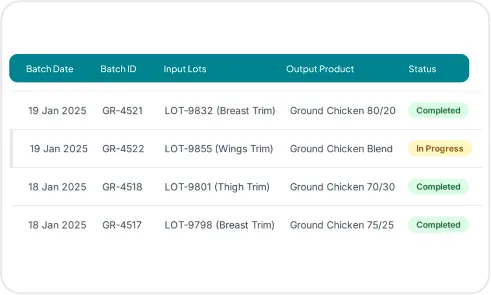
Log source lots for every grinding/batch event, record equipment & time, preserve traceability through commingling.

image of self life & expiry control

Shelf-Life & Expiry Control

Monitor production date, packaging type, and chilled storage duration to flag near-expiry lots for prioritized shipping.

image of cold chain lot linking

Cold Chain Lot Linking

Capture sensor/temperature data per lot in cold storage/transport, tie deviations to specific lots for audit & recall.

image of by product segregation traceability

By-Product Segregation Traceability

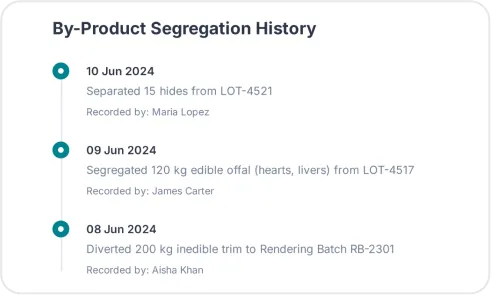
Track edible vs inedible streams (offals, hides, trim), record where each by-product came from, and how it was used.

image of audit trails & data integrity

Audit Trails & Data Integrity

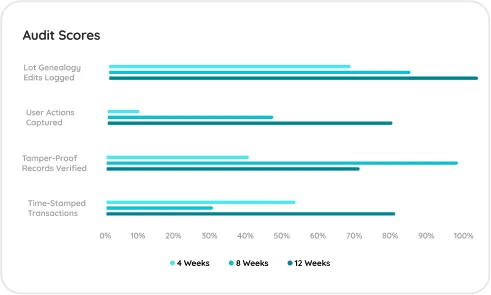
Record every change, who did it, and when (weights, lot assignments, supplier records), ensuring tamper-proof history.

image of role based access control

Role-Based Access Control

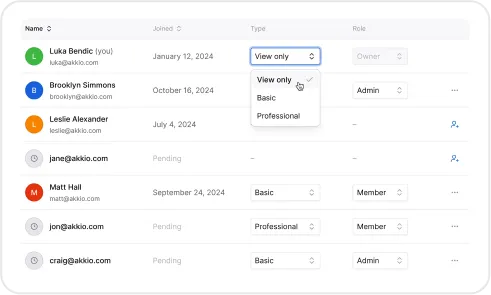
Grant permissions by role (QA, production, shipping), controlling who can view or modify lot, weight, or trace data.

Stronger Food Safety From Kill Floor To Cold Storage

Ensure safer meat operations by combining traceability with our wider food safety suite built for plant protection.

Compliance Management

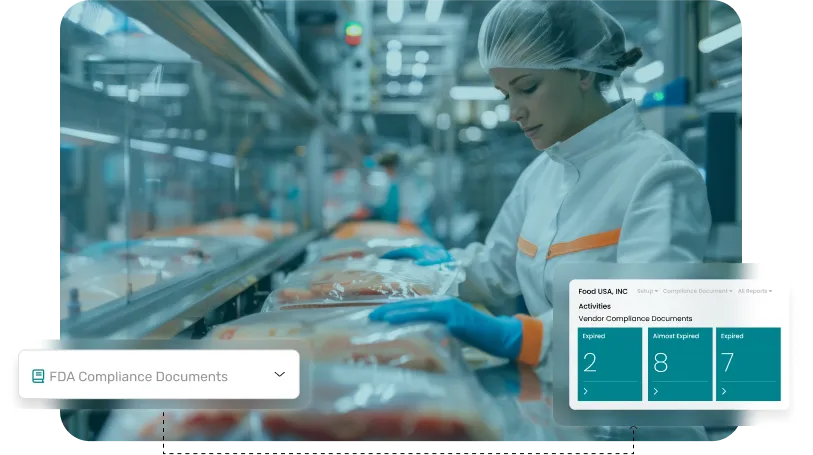
Maintain HACCP plans, FSIS documentation, and daily SOP checks in one system, keeping your plant audit-ready at all times.

Use Cases
Compliance management image to simplify regulatory compliance with Meat ERP

Quality Management

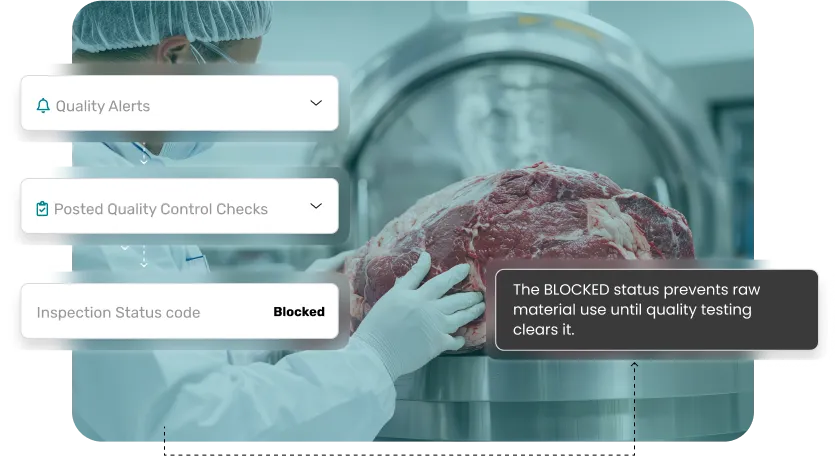
Track carcass grading, microbial testing, and packaging accuracy in real time to protect product integrity before it leaves the floor.

Use Cases
Image of Quality management conducting audits using Meat ERP tools

Supplier Management

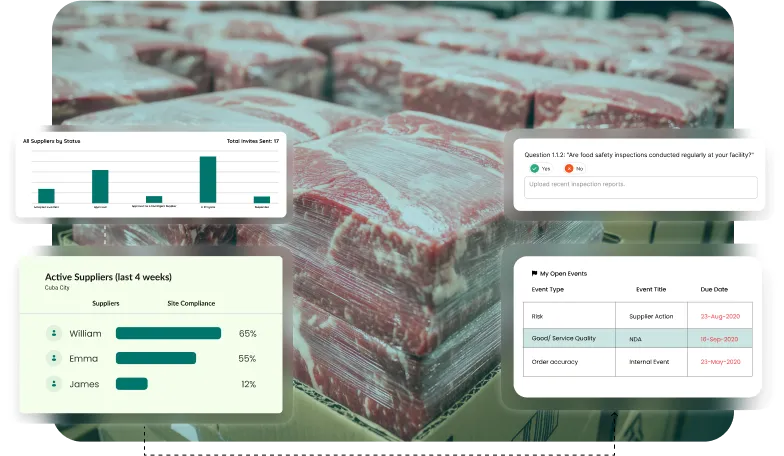
Capture COAs, monitor lot yields, and benchmark supplier performance, so sourcing decisions are backed by traceable, data-driven accountability.

Use Cases
image showcasing Supplier Management tools for monitoring & performance tracking

Food Recall Management

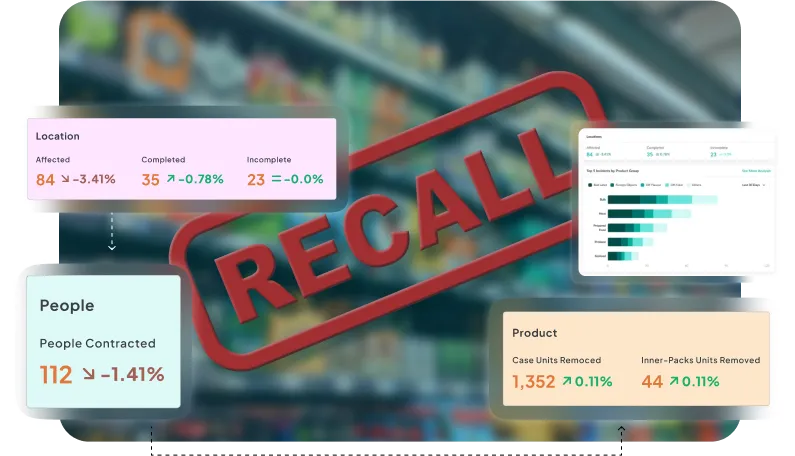
Execute forward and backward lot tracing within seconds, isolate only impacted batches, and trigger FSIS-compliant recall actions plant-wide.

Use Cases
image showcasing how Food Recall Management Enhance recall efficiency

Trace Every Cut, Lot, and Package With AI

Act faster with an AI-powered meat traceability control system that pinpoints risks instantly and protects meat quality from plant to shelf.

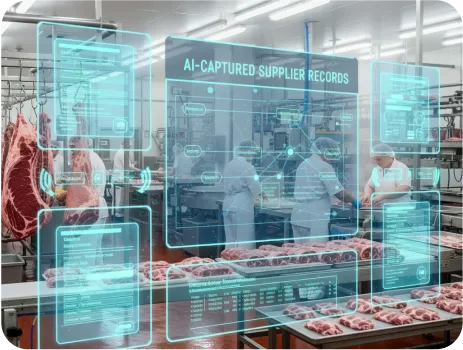
AI-Captured Supplier Records

Scan supplier certificates and delivery notes to let AI capture details and link them to incoming lots.

Carcass Identification

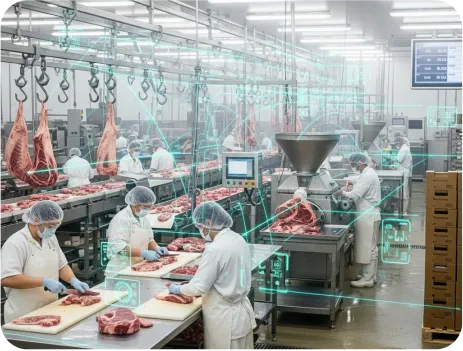
Use AI to automatically identify and tag each carcass, keeping genealogy intact through fabrication and packaging.

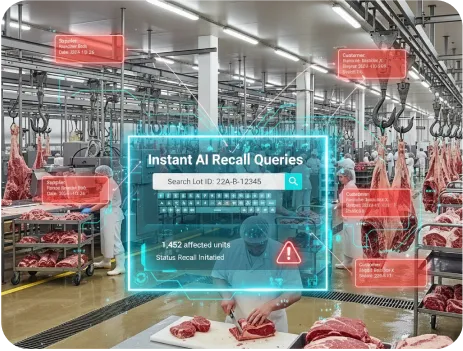
Instant AI Recall Queries

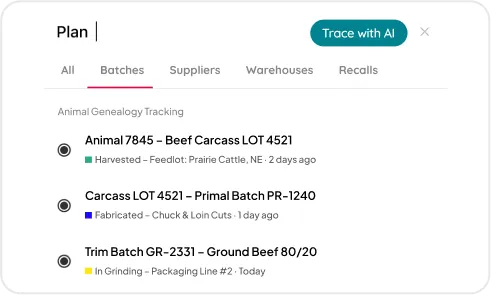
Run recall queries instantly with AI search to trace affected lots back to suppliers or forward to customers.

Predictive Cold Chain Alerts

Track storage and transport conditions while AI flags deviations early and links alerts to specific product lots.

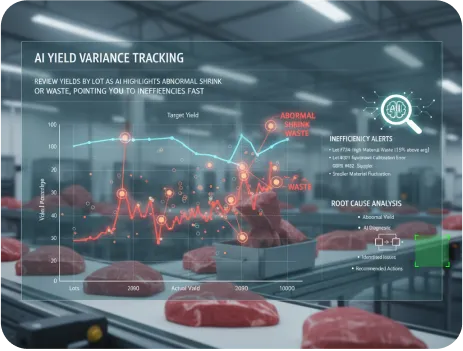
AI Yield Variance Tracking

Review yields by lot as AI highlights abnormal shrink or waste, pointing you to inefficiencies fast.

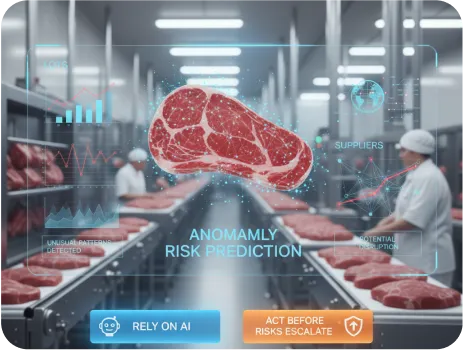
Anomaly Risk Prediction

Rely on AI to spot unusual patterns across lots or suppliers and act before risks escalate.

The New Era of AI Automation In The Meat Processing Industry

AI automation is changing the way meat plants operate. From carcass grading to packaging, AI reduces bottlenecks and improves consistency, while computer vision ensures staff compliance with safety and hygiene standards. Integrated with digital traceability, every product movement is captured for accuracy and accountability.

The real question is: will your plant lead the change or follow it?

Get A Modular ERP System That Manages Every Cut, Slice, & Pack

Track yields, control cuts, and handle packaging with a meat processing ERP that brings precision and efficiency to every step.

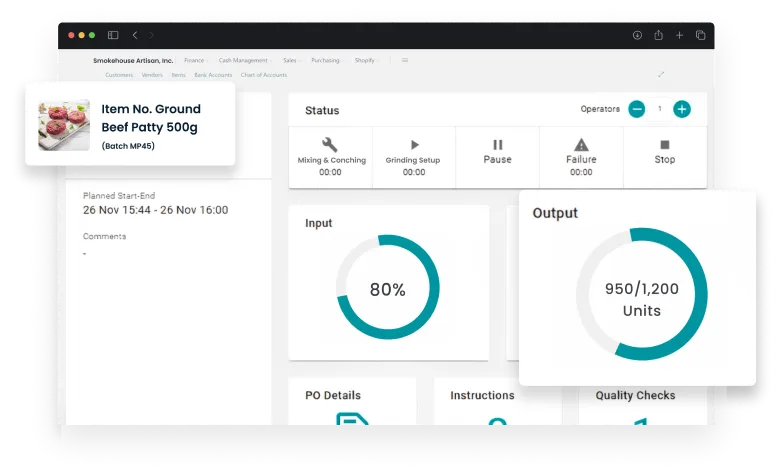
Meat Processing

From cut floor to cold storage, full production control in one system.

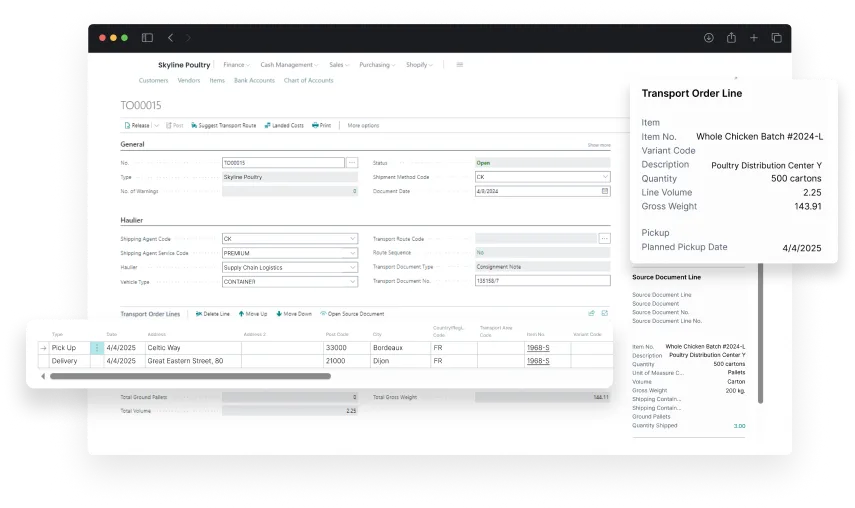
Dashboard screen of activities in meat processing

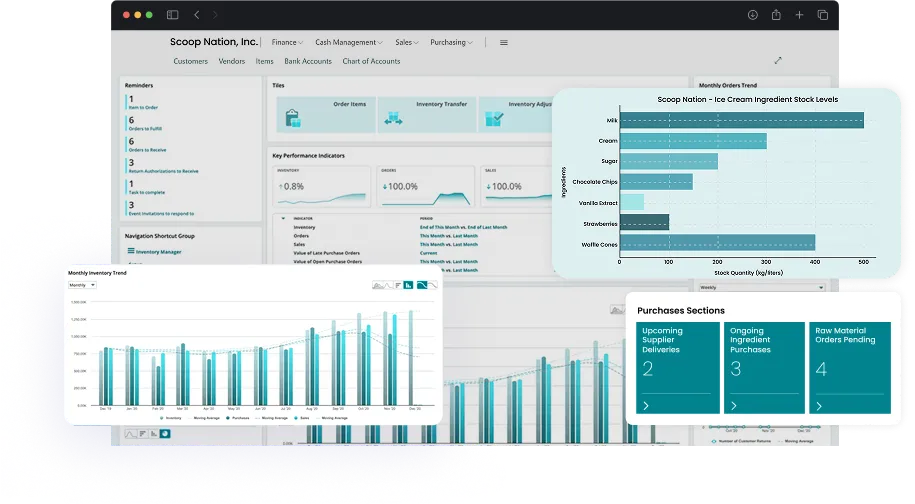
Procurement & Inventory Management

Buy smarter, stock tighter, waste less across every cold storage location.

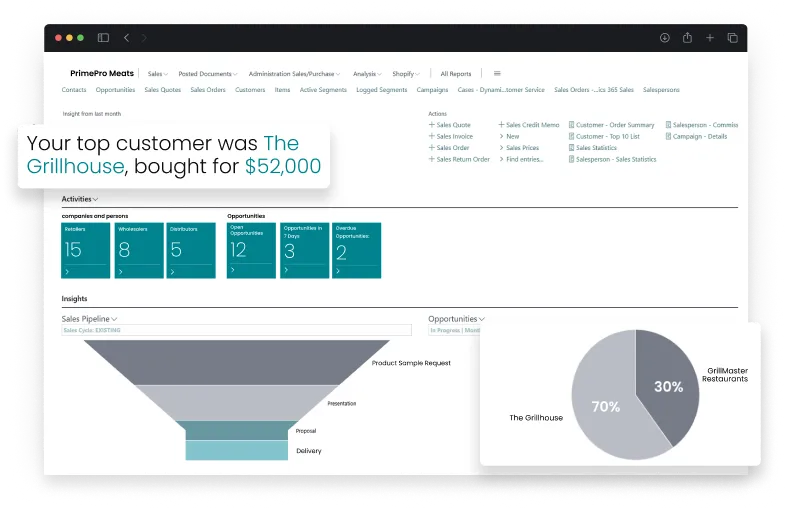
Sales and Order Management

Fill orders faster, stay compliant, keep your best customers coming back.

Dashboard screen of activities in Sales and Order Management

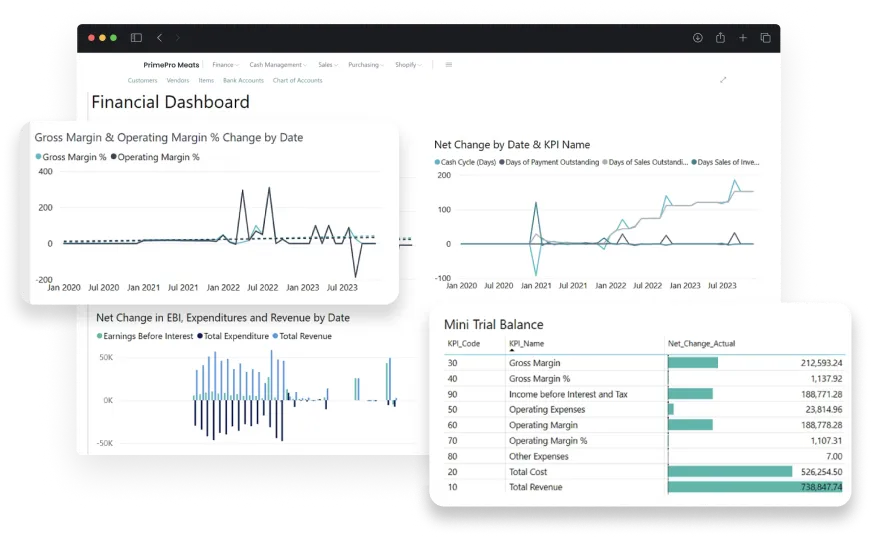
Financial Management

Know your true margins per batch, per cut, per facility.

image showcasing activities in financial management

Distribution Management

Move product faster, reduce spoilage, deliver on time every load.

Dashboard screen of activities in Distribution Management

Asset / Plant Maintenance

Keep your processing lines running before a breakdown costs you a shift.

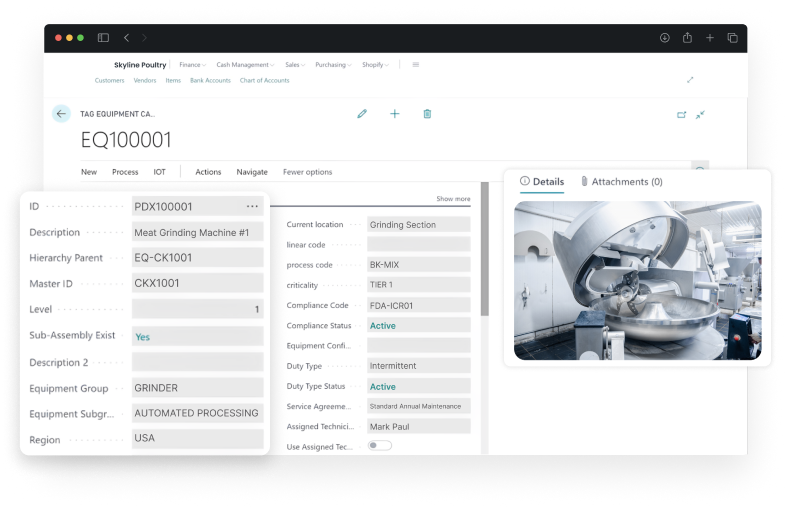
Dashboard screen of activities in Asset / Plant Maintenance

Quality and Food Safety

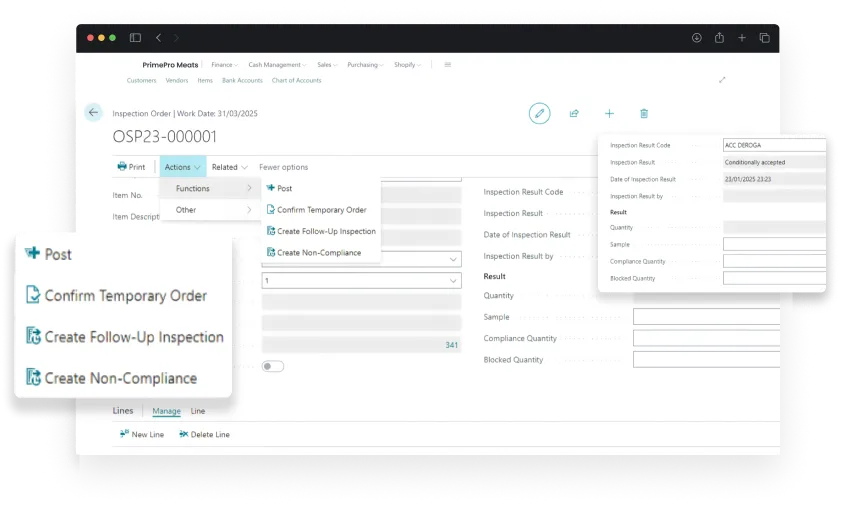
Dashboard screen of activities in Quality and Food Safety

Vendor Portal

Give your growers and suppliers one place to deliver, report, and stay aligned.

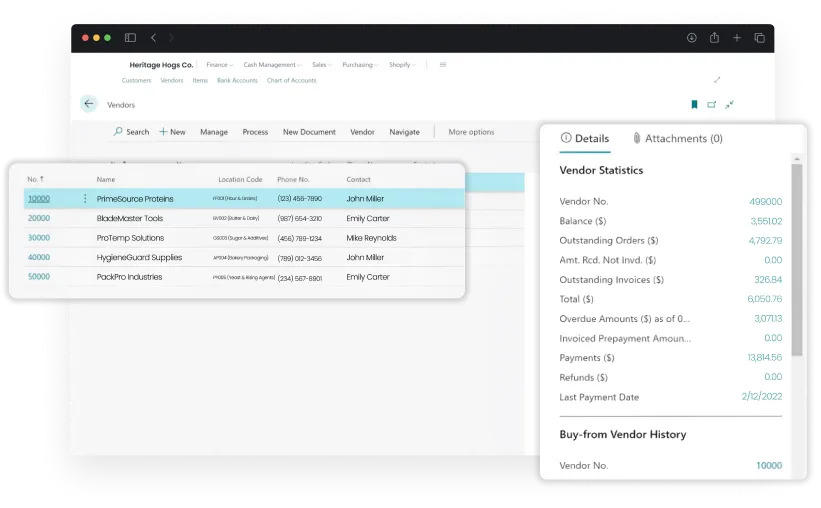
Dashboard screen of activities in Vendor Portal

E-commerce and Customer Portal

Sell every cut, every channel with inventory and compliance synced live.

Dashboard screen of activities in E-commerce and Customer Portal

Human Resource Management

Run lean shifts, stay audit ready, and keep your floor fully staffed and certified.

Dashboard screen of activities in Human Resource Management

Link Meat Traceability System With Every Critical Platform

Connect meat traceability software across your business to replace fragmented data with one clear, reliable source of truth.

Delivering Impact Across Food Industry

Digitizing Quality Control In A Leading Beef Processing Plant

The beef processor improved quality control and compliance in meat production by replacing paper-based inspection forms with an automated system, reducing quality deviations and audit delays.

65%

Workflows Digitized

78%

Less Data Entry Errors

55%

Reduced Audit Time

In the Words of Our Clients

What's Shaping the Future of Meat Industry

Frequently Asked Questions

What is meat traceability software, and how does it ensure full visibility from slaughter to packaged product?

Meat traceability solution creates a digital record of every step in production. It starts with carcass identification at slaughter, follows each lot through fabrication and packaging, and links cold storage data before shipment. This continuous chain of records gives processors complete visibility, making audits, recalls, and daily management far more reliable.

Folio3 FoodTech’s system connects with the tools plants use, scales, scanners, and line equipment. Each carcass tag or lot ID is automatically recorded as product moves through cutting, grinding, packaging, and storage. Because the data is linked in one system, processors can trace a finished box of product back to its original source in seconds.

Regulators require processors to maintain accurate records that show where a product came from and where it went. That means keeping lot IDs, production dates, packaging details, and cold chain information tied together in one system. USDA and FDA rules also emphasize being able to recall product quickly, keep HACCP documentation updated, and prove that labels and claims match the product shipped.

The software checks that weights, labels, and packaging match the right lot before the product leaves the floor. If there’s a mismatch, it flags it immediately so corrections can be made on the spot. It also stores audit trails and HACCP records in one place, helping plants avoid penalties and handle recall situations with confidence.

Traceability doesn’t stop with boxed products. It also tracks what happens to trim, offal, hides, and other by-products. By recording where these materials go and how they’re used, processors reduce waste, capture more value, and stay compliant with reporting requirements. This makes the entire operation more efficient and sustainable.

A meat traceability solution creates a shared record that follows each lot from farm through processing, distribution, and retail. By capturing data at every handoff, carcass tags, packaging IDs, transport scans, and delivery confirmations, all parties can view the same information in real time. This makes the meat traceability system in supply chain faster, more transparent, and far easier to manage during recalls or audits.

Digital traceability proves where meat came from and how it was handled at each step. Retailers gain confidence because they can verify supplier records, shelf-life status, and safety compliance. Consumers trust brands more when QR codes, labels, or certifications are backed by real traceability data, showing that products are safe, authentic, and responsibly sourced.

Folio3 FoodTech’s meat traceability solutions are built to integrate seamlessly with existing plant and business systems. That includes ERP platforms for finance and planning, WMS for warehouse movements, MES for production data, and automated labeling systems for catch-weights and compliance. These integrations reduce duplicate entry, keep records consistent, and provide one connected view of the entire plant.

ROI is measured in both risk reduction and operational gains. Faster recalls lower financial and reputational losses, while precise lot tracking reduces shrinkage by stopping expired or misrouted product. Yield recovery comes from better monitoring of trim, by-products, and pack weights. Together, these improvements quickly offset software investment and create measurable cost savings year after year.

How does Folio3 FoodTech's traceability system capture animal identification at receiving, including ear tags, RFID, and tattoo numbers?

Folio3 FoodTech's meat traceability software captures animal IDs through automated RFID readers at the chute, linking each tag to a digital record instantly. For visual ear tags or tattoo numbers (common in hog processing), operators scan or manually enter IDs validated against the incoming manifest. Each ID generates a carcass tag that follows the animal from live scale through cold storage, powering every downstream traceability report.

Folio3 FoodTech's traceability architecture supports five distinct methods:

Single-Step Trace: Records one step back (source) and one step forward (destination). The regulatory baseline under the USDA and FDA.

Full Forward Trace: From a PO, lot ID, or carcass tag, traces every downstream transaction through kill, fabrication, packaging, and shipping.

Full Backward Trace: From a sales order or case barcode, reverses through every step to the original animal lot and supplier.

Time-Window Trace: Queries all products that passed through a specific line during a defined time period. Critical for contamination investigations.

Batch Genealogy Trace: Maintains many-to-many lot relationships through grinding and commingling, even when multiple input lots create multiple output batches.

Intake: RFID readers capture EID tags. Smart scales record live weights. AI vision classifies animals by breed, age, and conformation.

Kill Line: Carcass tags travel through stunning and evisceration. Timestamps and HACCP checks are recorded at each station.

Hot Scale to Cooler: Hot carcass weights link to the carcass tag. Grade and veterinary holds are recorded.

Fabrication: Cold weights are captured. Carcasses are issued into production batches. Every primal, subprimal, and trim output tracks against the original lot.

Packaging: In-line scales capture catch weights. GS1-128 labels serialize each case and pallet.

Shipping: WMS picks by FEFO and records the final step forward.

Folio3 FoodTech's integration-as-a-service covers scales, RFID readers, barcode scanners, label printers, print-and-apply systems, and IoT sensors across all major equipment vendors.

Yes. Folio3 FoodTech's Primary Processing module captures breed, age classification (OTM/UTM), sex, conformation, feed program, vaccination history, treatment records, and health demerits for every animal. When animals move to slaughter, these attributes link to post-harvest traceability. This is critical for export markets where the EU, Japan, and Korea require verified breed and age documentation.

Folio3 FoodTech's system tracks by-products (offal, hides, bones, blood, trim) by associating each output with a container type and recording weights against the originating animal lot or production batch. Edible and inedible streams get separate lot assignments, maintaining traceability even when by-products are sold to renderers. This supports both waste reduction and by-product value recovery.

When a positive pathogen test or cold chain exceedance is linked to a specific line during a specific window, Folio3 FoodTech's meat traceability software queries all transactions within that time range and zone. Results include every affected lot, batch, and serialized case, plus customer ship-to destinations for shipped product. This enables targeted holds without pulling unaffected inventory. Learn more about preventing meat contamination.

Yes. Folio3 FoodTech's traceability software assigns each cut a unique serial number encoded in a GS1-128 barcode carrying GTIN, lot, serial, catch weight, and production date. A single retail package traces back to its production batch, carcass lot, supplier, and animal ID. Serial-level traceability is especially valuable for branded beef, Wagyu, and organic programs. Cases and pallets also carry SSCC license plates.

Folio3 FoodTech has expertise in configuring traceability outputs aligned with GS1-128 labeling, SSCC pallet identification, and data structures compatible with fTrace and EPCIS frameworks. The system captures Key Data Elements at every Critical Tracking Event, aligning with both FSMA 204 requirements and EU Regulation 178/2002 mandates for global supply chain data exchange.

Folio3 FoodTech's system creates a distinct workflow for imported raw materials, capturing FSVP documentation: supplier qualification records, certificates of analysis, country-of-origin data, and import lot IDs. Imported lots tag with FSVP status and linked to all downstream processing. The compliance module produces audit documentation on demand alongside HACCP and SQF records.

Folio3 FoodTech's mock-recall wizard produces a report covering: affected lot and batch numbers, total quantity produced and shipped, customer ship-to destinations with dates, remaining inventory location and hold status, and supplier source information. Reports export in PDF and Excel for FSIS submission. A full forward or backward trace completes in under 5 minutes with properly captured data, validated through mock recall drills before go-live.

Serving the FoodTech Industry Globally Since 2004

Get in Touch

Drop us a line and we'll connect you to the right person.