



Gain Better Control With a Warehouse Management System Built for Food & Beverage Industry

Manage the complete flow of food inventory from receiving and storage through picking, packing, and dispatch with a food warehouse management system built for greater control and traceability.
Warehouse Management System

Trusted by Leading Food and Beverage Brands

What is a Warehouse Management System for the Food and beverage Industry?

A warehouse management system for the food and beverage industry helps businesses control how inventory is received, stored, tracked, moved, picked, packed, and dispatched. It also supports food specific needs such as lot and batch traceability, shelf life monitoring, expiry control, stock rotation, and visibility across warehouse locations.

For food manufacturers, processors, and distributors, the goal is to maintain accurate inventory while keeping products traceable from receiving through fulfillment. Folio3 FoodTech WMS turns that visibility into day to day control, giving warehouse teams one system to manage product movement accurately while preserving traceability from receiving through fulfillment.

Warehouse Management System for the Food

What Slows Your Warehouse Today Can Cost You More Tomorrow

Food and beverage warehouse performance can slip long before the problem becomes obvious. Gaps in inventory accuracy, lot visibility, shelf life control, picking, and system connectivity can quickly affect fulfillment, waste, traceability, and day to day operations.

Inventory You Cannot Fully Trust

Stock discrepancies, delayed updates, and limited visibility across warehouse locations make it harder to know what is actually available when teams need it.

Lot and Batch Visibility Gaps

Without clear lot and batch tracking, tracing inventory movements and responding quickly to quality issues becomes more difficult.

Expiry and Shelf Life Losses

Poor visibility into expiration dates and stock rotation can lead to avoidable waste, write offs, and products sitting too long in storage.

Disconnected Warehouse Data

When warehouse information sits apart from production, quality, finance, or ERP systems, teams spend more time reconciling data and less time acting on it.

Limited Visibility Across Locations

Managing multiple warehouses or storage areas becomes difficult when inventory, movements, and order status cannot be viewed consistently from one place.

Features You Need in Your Food WMS To Manage WareHouses Smarter

Manage the daily movement, storage, and control of food & beverage inventory from one system. Our warehouse management system for the food industry brings the core warehouse functions for food manufacturers, processors, and distributors into a connected operational view.

Receiving & Putaway

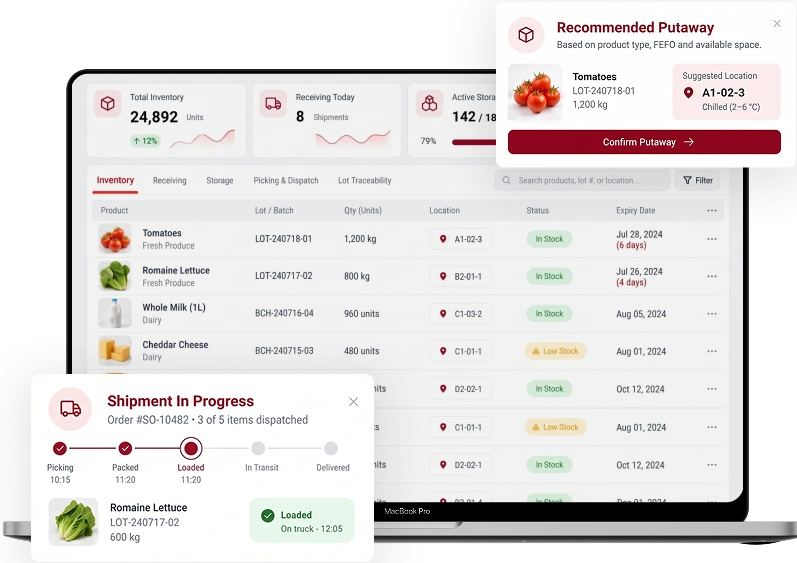
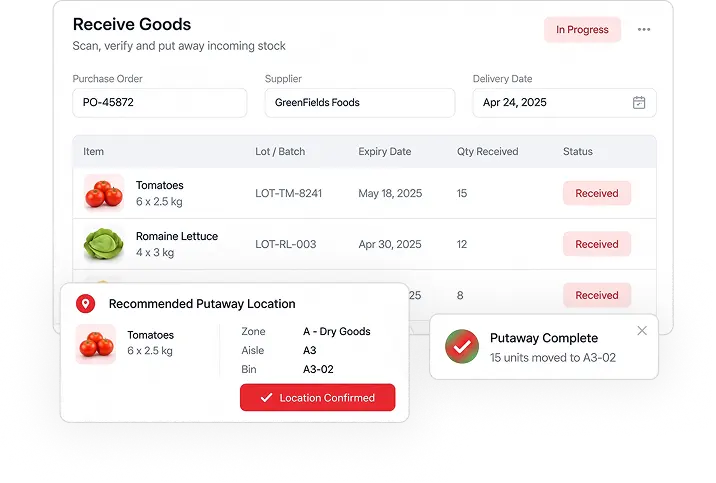
Control inbound product movement from the moment goods arrive. Verify quantities, assign the right storage areas, and direct inventory to the correct warehouse locations.
Receiving and Putaway

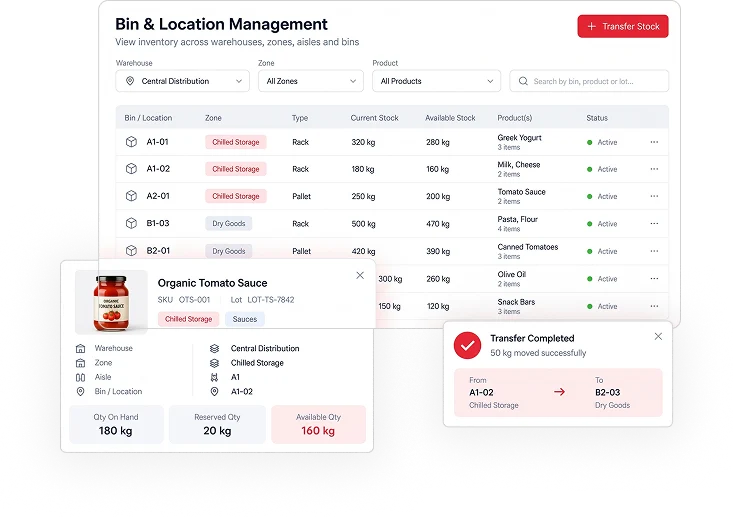
Inventory, Bin and Location Management

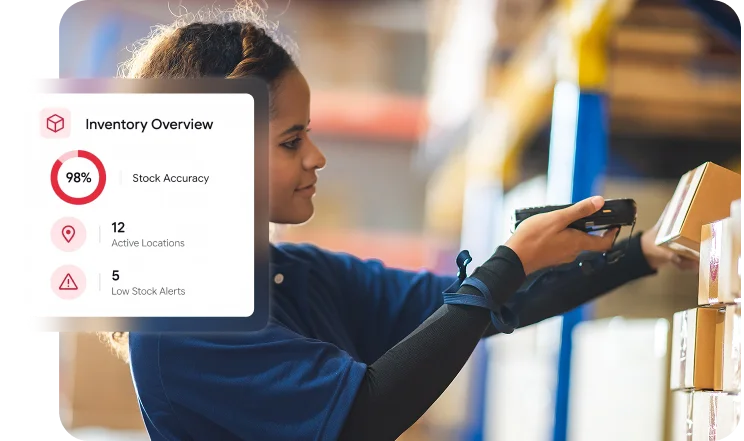
Maintain clear visibility into where inventory is stored and how it moves across your warehouse network. Track stock across bins, zones, facilities, and locations from one system.
Inventory, Bin & Location Management

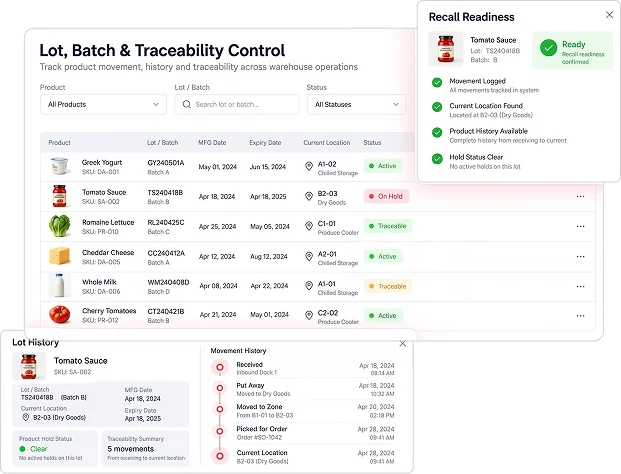
Lot, Batch & Traceability Control

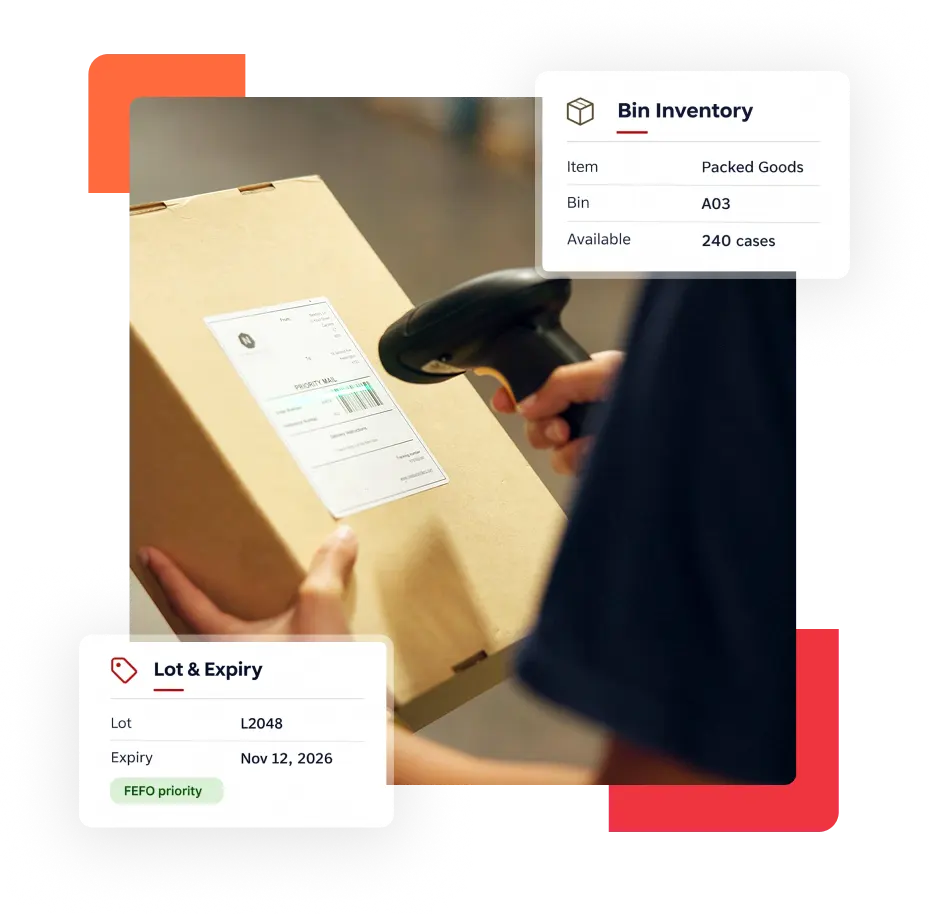
Keep food inventory traceable as it moves through the warehouse. Maintain lot and batch history so teams can respond faster to quality issues, holds, and recalls.
Lot, Batch & Traceability Control

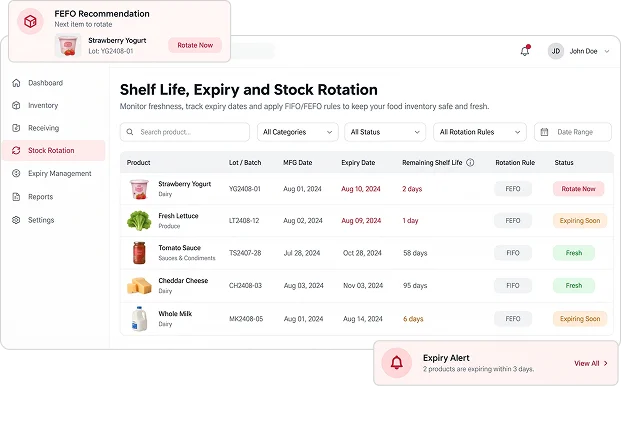
Shelf Life, Expiry & Stock Rotation

Maintain better control over product freshness and aging inventory. Track shelf life and expiration while applying the right stock rotation rules for food products.
Shelf Life, Expiry & Stock Rotation

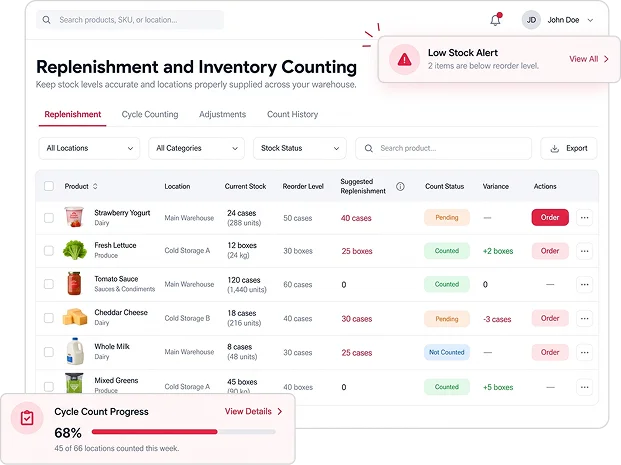
Replenishment & Inventory Counting

Keep stock levels accurate and warehouse locations properly supplied. Support regular counting, replenishment, and adjustments without losing visibility into available inventory.
Replenishment & Inventory Counting

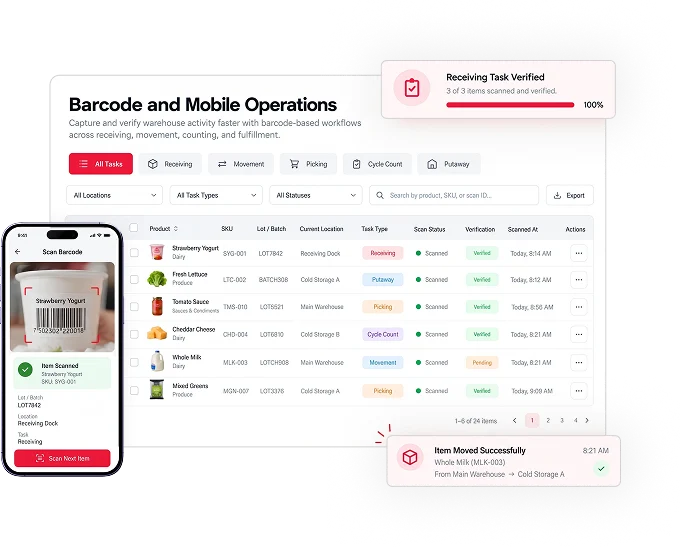
Barcode & Mobile Operations

Give warehouse teams faster ways to capture and verify inventory activity on the floor. Use barcode based workflows across common receiving, movement, counting, and fulfillment tasks.
Barcode & Mobile Operations

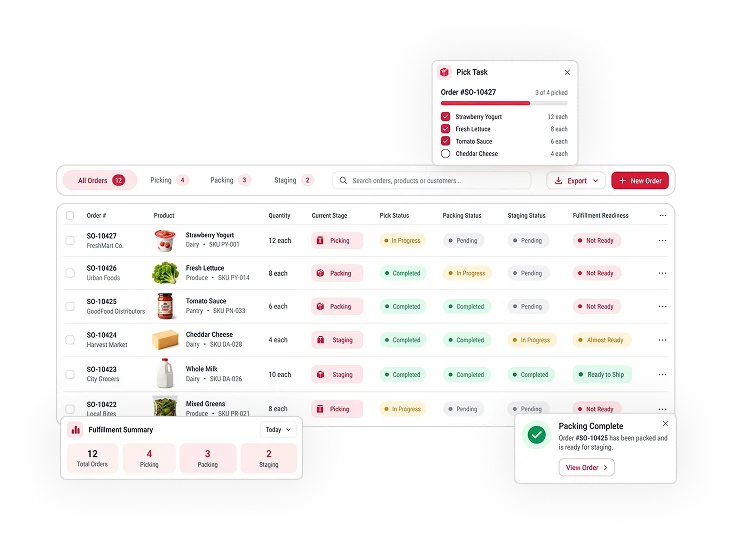
Picking, Packing & Order Fulfillment

Coordinate order preparation from warehouse picking through final staging. Keep fulfillment activity connected with current inventory so teams can process orders with greater accuracy.
Picking, Packing & Order Fulfillment

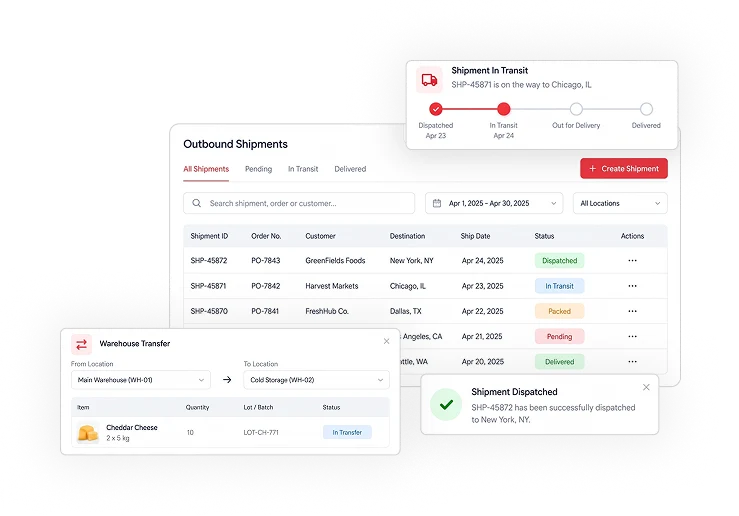
Shipping, Dispatch & Warehouse Transfers

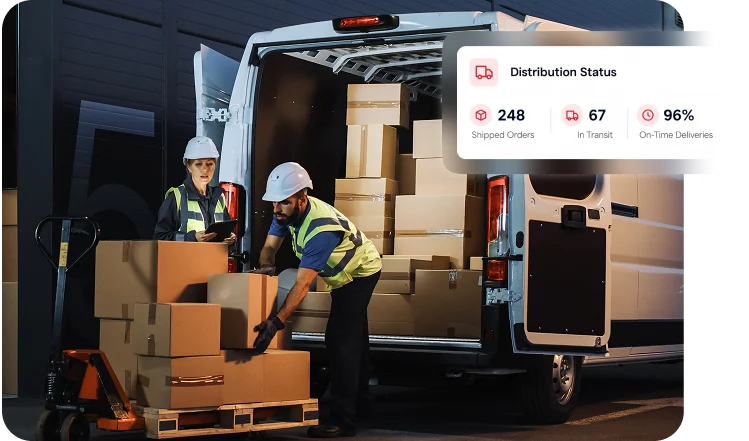
Maintain control over inventory as it leaves the warehouse or moves between locations. Track outbound activity and internal transfers without losing visibility into stock movement.
Shipping, Dispatch & Warehouse Transfers

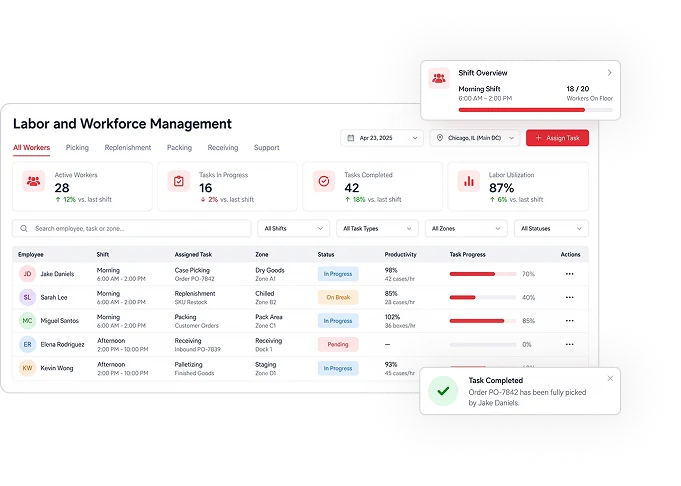
Labor & Workforce Management

Keep warehouse labor aligned with daily workload, task priorities, and operational demand. Improve visibility into workforce activity so supervisors can assign work, track progress, and manage human resources more effectively across warehouse operations.

Labor & Workforce Management

Control Every Step of Your Food Warehouse Operations

Keep inventory moving through a clear, connected warehouse process from the moment goods arrive to final dispatch. Coordinate receiving, storage, replenishment, fulfillment, and outbound activity with visibility at every stage.
01

Inbound

Accept, verify and place incoming goods.

Storage & Control

Keep inventory organized and accurately stocked.

02

Fulfillment

Prepare, pack and stage orders for dispatch.

03

Outbound

Ship orders to customers or transfer to other locations.

04

One Warehouse Management System Built Around the Food Operation You Run

Integrate Food Warehouse Management With Your Existing Business Tools

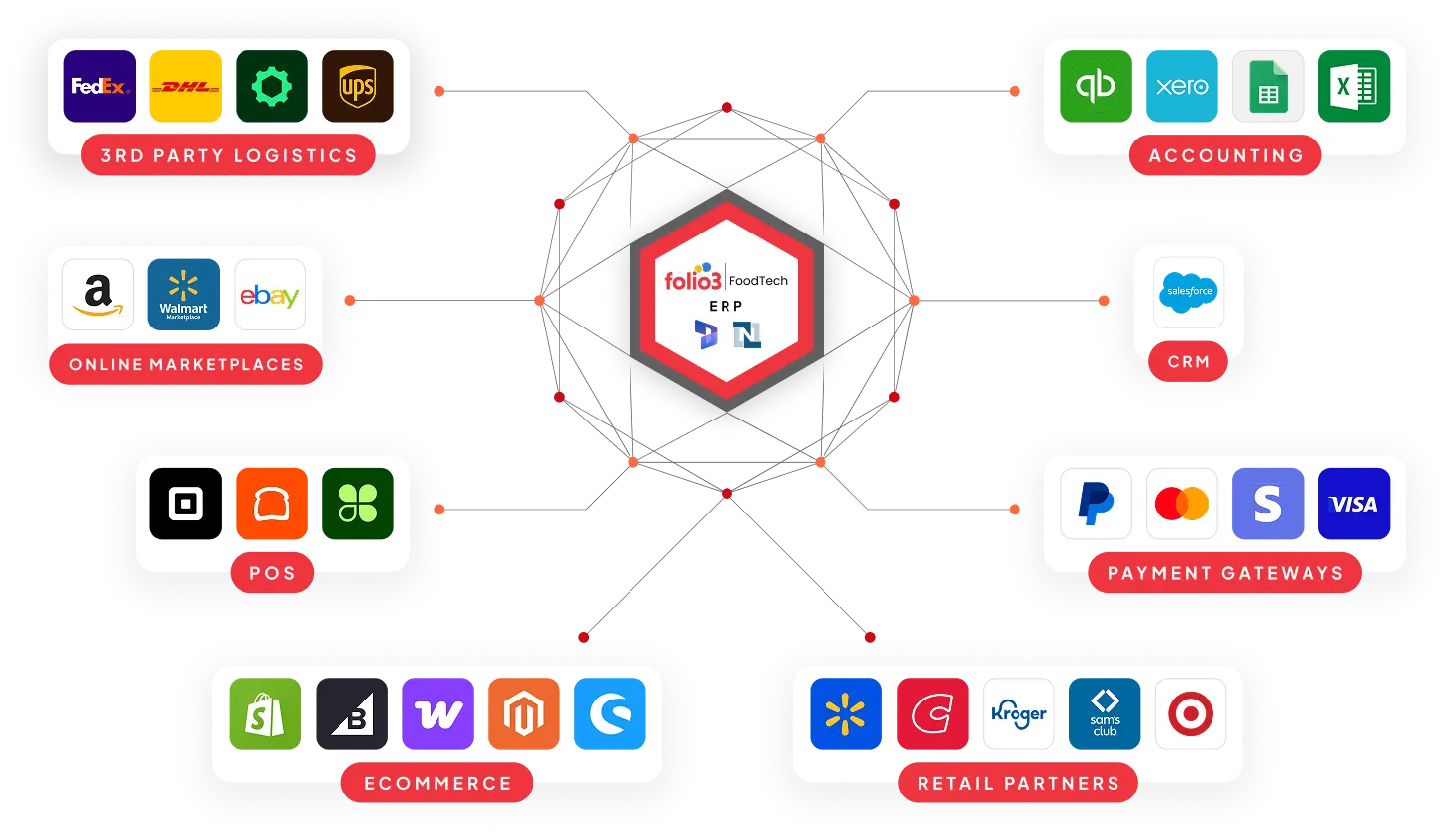
Connect WMS with accounting tools, EDI platforms, ecommerce stores, payment gateways, shipping tools, and other third party applications. Keep inventory, orders, fulfillment, and warehouse data connected across the tools your teams already use.
Warehouse Management With Your Existing Business Tools

Connect Folio3 Foodtech WMS Across Your Food Operations

Extend warehouse visibility beyond storage and fulfillment by connecting it with the core Food ERP modules that support production, inventory, procurement, distribution, supply chain, and workforce operations.

Manufacturing Management

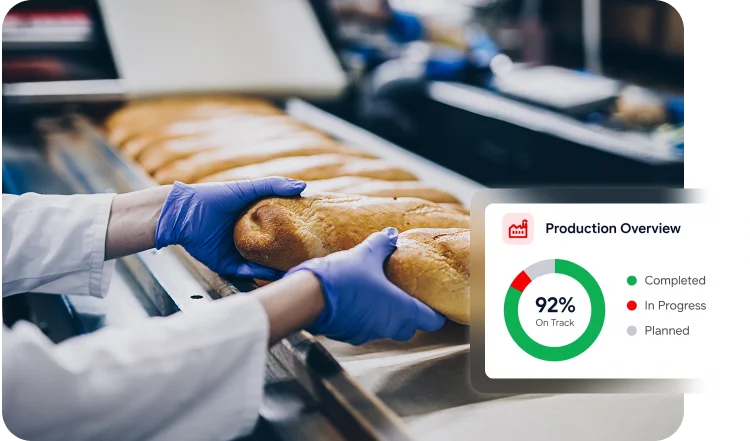
Connect warehouse inventory with production schedules, material requirements, work orders, and finished goods movement across food manufacturing operations. Help teams check material availability, coordinate stock transfers, and keep production supplied as schedules and requirements change.

Manufacturing Management

Inventory Management

Maintain visibility into raw materials, ingredients, packaging, work in progress, and finished goods across storage locations. Track stock balances and product movements to support replenishment, reduce inventory discrepancies, and make better purchasing and allocation decisions.

Inventory Management

Distribution Management

Coordinate order fulfillment, warehouse availability, customer deliveries, and product movement across food distribution networks. Give teams a shared view of stock and order status to plan dispatches, allocate products, and respond to changes in delivery requirements.

Distribution Management

Procurement Management

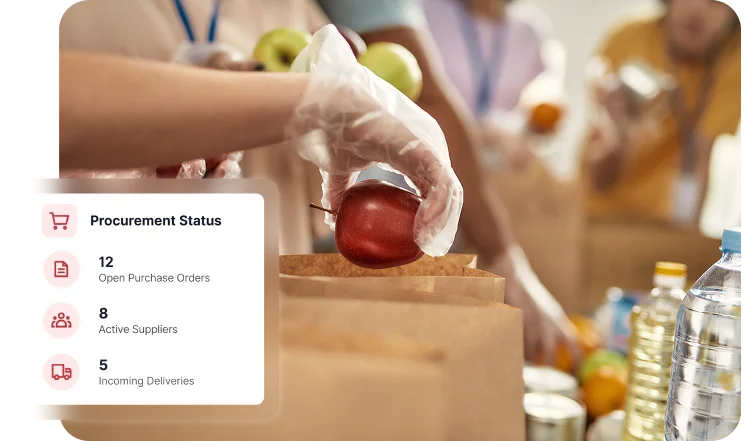
Connect purchasing decisions with inventory levels, supplier activity, material requirements, and warehouse receiving across food operations. Help purchasing and warehouse teams coordinate expected deliveries, identify supply gaps, and prepare for incoming stock before it arrives.

Procurement Management

Supply Chain Management

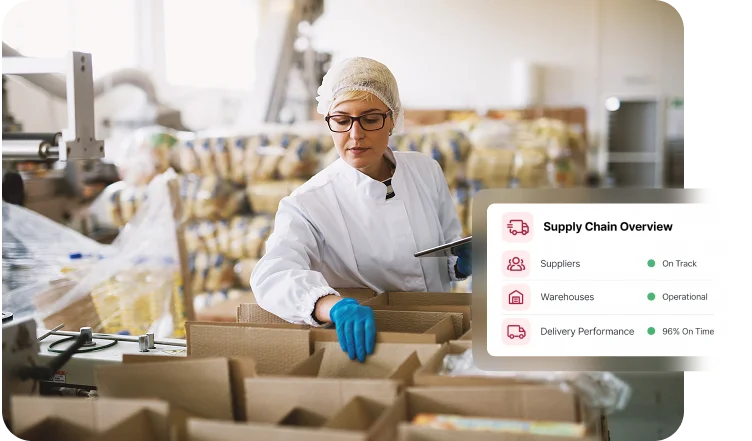
Bring purchasing, inventory, production, warehousing, and distribution data together for better visibility across the food supply chain. Help teams identify delays, coordinate product movement between facilities, and adjust plans as demand, supply, and delivery requirements change.

Supply Chain Management

Human Resource Management

Manage the workforce supporting food operations, including employee records, scheduling, attendance, payroll, and labor requirements across facilities. Help managers plan staffing for receiving, picking, packing, and dispatch while keeping employee information and labor records organized.

Human Resource Management

Why Food Businesses Choose Folio3 FoodTech

We combine industry knowledge, proven technology experience, and ongoing support to help you manage your warehouse operations with greater control and efficiency.
Years of Experience
0 +
Food Businesses Supported
0 +
Solutions Delivered
0 K+

Food Industry Focus

Deep understanding of food manufacturing, processing, and distribution operations.

Proven Implementation Approach

A structured and results driven process to ensure smooth deployment.

Flexible and Scalable Solutions

Configure and expand the solution as your operations grow and evolve.

Ongoing Support

Long term support to help you keep your warehouse operations running efficiently.

See How Food Businesses Move Forward With Folio3

From growing brands to established manufacturers, food companies turn to Folio3 FoodTech for ERP guidance that delivers results. Here are a few of their stories.

In the Words of Our Clients

Read what our clients say about their experiences and the difference our solutions have made for them.

Frequently Asked Questions

How is a warehouse management system for the food industry different from a standard WMS?

A warehouse management system for the food industry combines standard warehouse functions with controls required for food inventory, including lot and batch traceability, shelf life, expiry management, FIFO and FEFO, product holds, and recall readiness. This helps food businesses maintain visibility from receiving through fulfillment.
A food warehouse management system is relevant for manufacturers, processors, distributors, wholesalers, producers, packers, cold storage operators, and other businesses managing food inventory. The required capabilities depend on warehouse complexity, product characteristics, order volume, storage conditions, and traceability requirements.
Yes. Folio3 FoodTech WMS can operate as a focused warehouse solution or connect with an existing Food ERP and other business systems. Warehouse data can be connected with production, quality, finance, ecommerce, logistics, reporting, and other operational processes.
A warehouse management system focuses on warehouse execution, including receiving, storage, inventory movement, picking, packing, counting, and dispatch. A Food ERP covers a broader business environment that may also include finance, procurement, production, quality, planning, sales, and other functions.
Yes. A food warehouse management system can provide visibility across warehouses, bins, zones, facilities, and storage locations while tracking stock movements and transfers between them. This helps businesses maintain more consistent inventory information across distributed operations.
A food WMS can track lots and batches as inventory moves through receiving, storage, transfers, picking, and dispatch. Maintaining this movement history helps teams identify affected inventory, place products on hold, trace where goods moved, and respond more quickly when a recall or quality issue occurs.
The cost of a warehouse management system for the food industry depends on factors such as warehouse size, number of locations, users, integrations, required workflows, data migration, and customization. A detailed assessment is usually needed before an accurate implementation and software cost can be defined.

The implementation timeline depends on operational complexity, warehouse locations, integrations, data migration, configuration, testing, and training requirements. A focused WMS deployment may require less effort than a broader Food ERP rollout, while complex multi location environments generally require more planning and integration work.

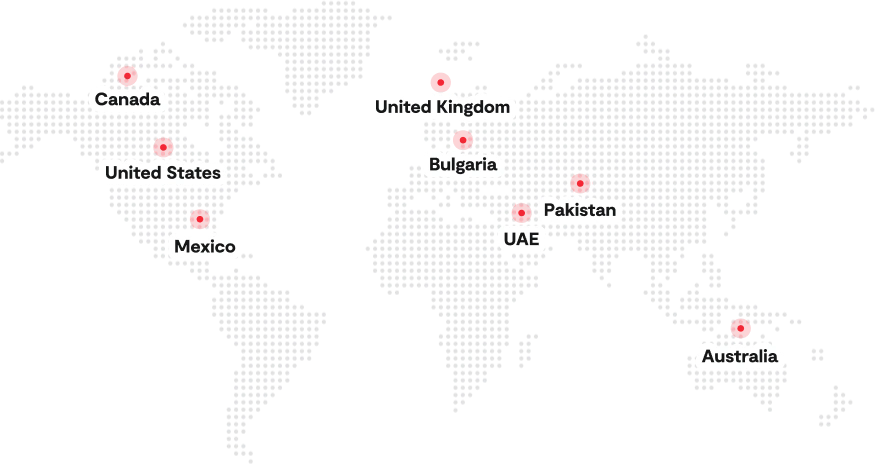
Serving the FoodTech Industry Globally Since 2004

Get in Touch

Drop us a line and we'll connect you to the right person.