



Take Control of Your Production With a Manufacturing Execution System Built for the Food & Beverage Industry

Monitor, control, and optimize what happens on your production floor in real time. Our MES gives food manufacturers the visibility to track every batch, enforce every recipe, manage quality at every stage, and maintain full traceability from raw material intake to finished product dispatch.
Manufacturing Execution

Trusted by Leading Food and Beverage Brands

What Is a Manufacturing Execution System in the Food Industry?

A manufacturing execution system for the food industry manages and records what happens during production after a production order reaches the plant floor. It connects planned production with actual execution by tracking materials, batches, operators, equipment activity, quality checks, output, and production status as work happens.

For food manufacturers, MES provides the operational control needed between business planning and finished production. Folio3 FoodTech MES brings production activity into one system so teams can execute orders consistently while maintaining visibility into materials, quality, traceability, and actual plant performance. 

Manufacturing Execution System in the Food

What Is Making Your Production Floor Harder to Control?

Production problems often begin before they become visible in final output. Disconnected records, delayed reporting, and limited plant floor visibility make it difficult to understand what is happening while production is still running.

Limited Plant Floor Visibility

Production teams cannot act quickly when actual progress, delays, and output are only visible after a shift or batch is complete.

Paper Based Production Records

Manual records make production data slower to capture, harder to verify, and more difficult to use across operations.

Batch and Lot Traceability Gaps

Incomplete production genealogy makes it harder to trace which materials entered a batch and where finished products moved afterward.

Production and Yield Variance

Differences between planned quantities and actual output can remain unnoticed until material, yield, or cost losses have already occurred.

Disconnected Quality Checks

When inspection results sit outside production workflows, quality issues can delay decisions around holds, releases, and corrective action.

Unplanned Downtime

Limited visibility into stoppages and equipment activity makes recurring production losses harder to identify and address.

Food MES Features Built for Better Production Control

A manufacturing execution system for food and beverage does not sit in a back office. It runs where production happens. These are the capabilities that food manufacturers need from their MES to control production, maintain quality, and keep every batch traceable and compliant.

Recipe and Formula Management

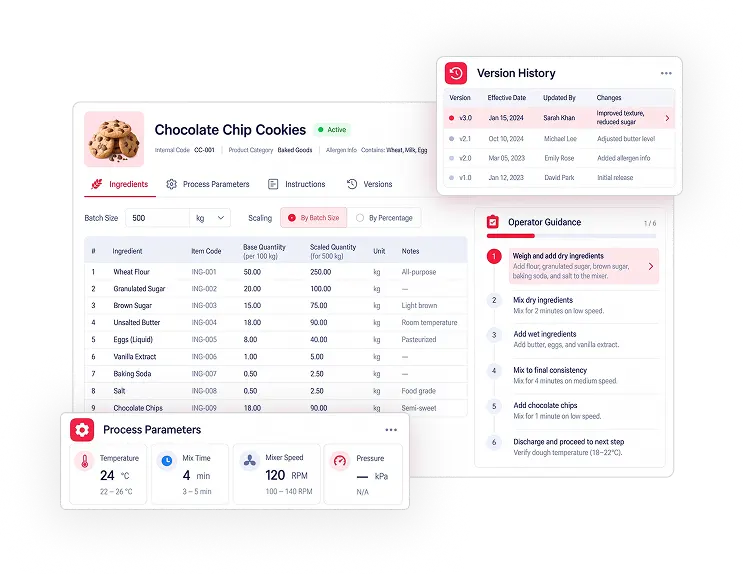
Control recipes, scaling, process parameters, and operator instructions while maintaining consistent versions across batches, lines, and facilities.
Recipe & Formula Management

Batch Production and Execution

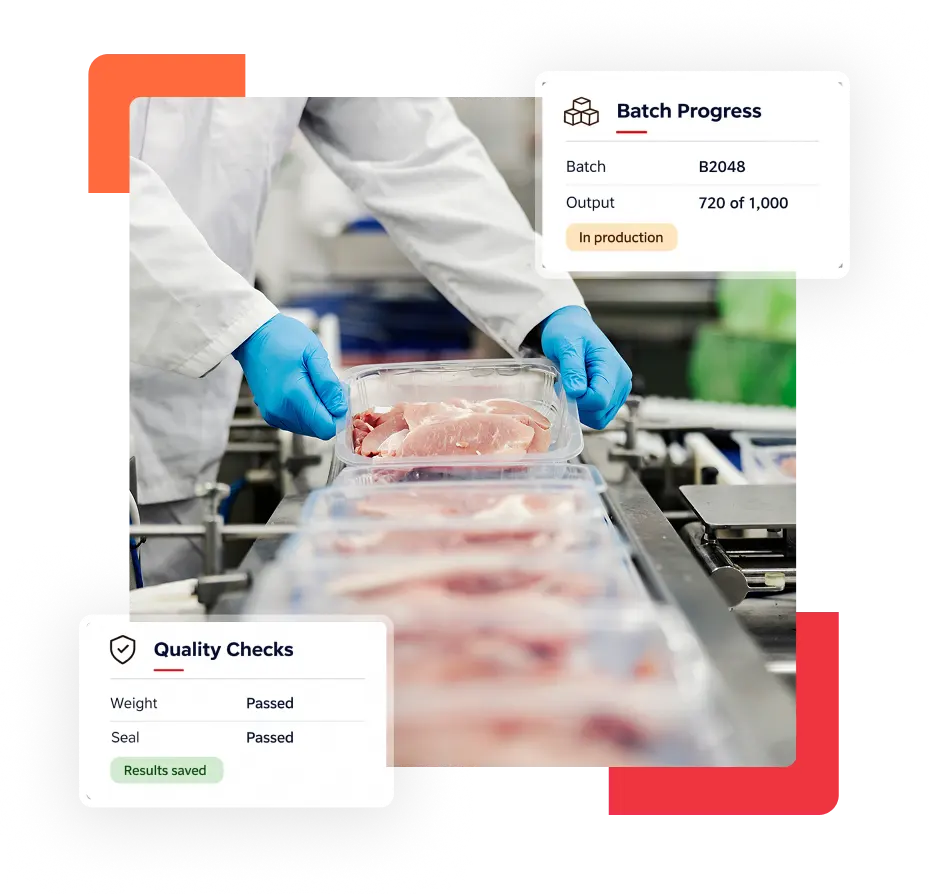
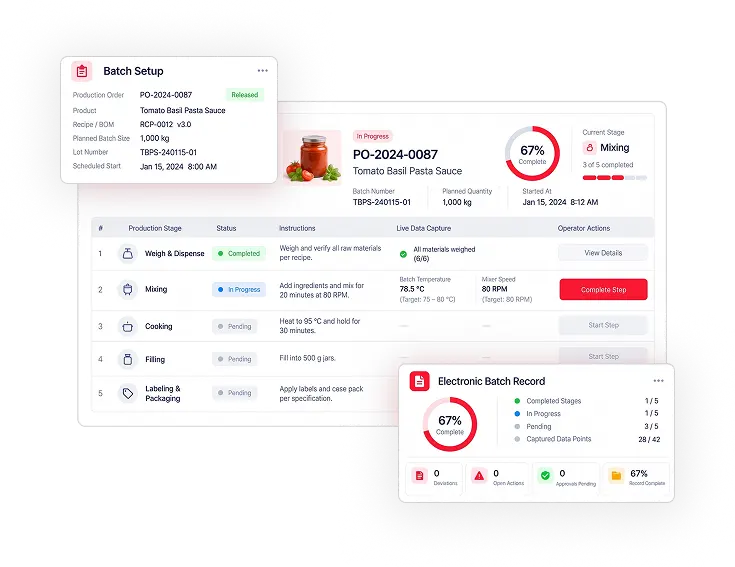
Run each batch through a controlled execution flow with operator guidance, real time data capture, and complete electronic production records.
Batch Production and Execution

Real Time Production Monitoring

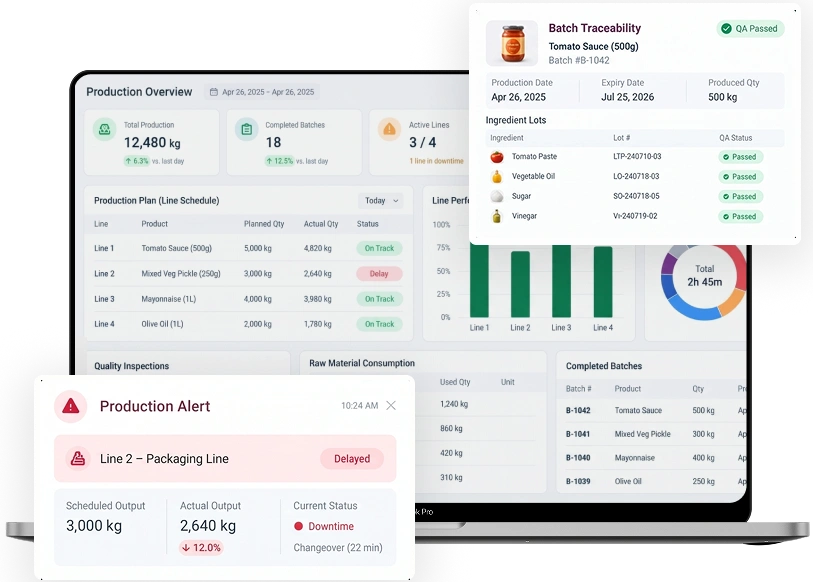
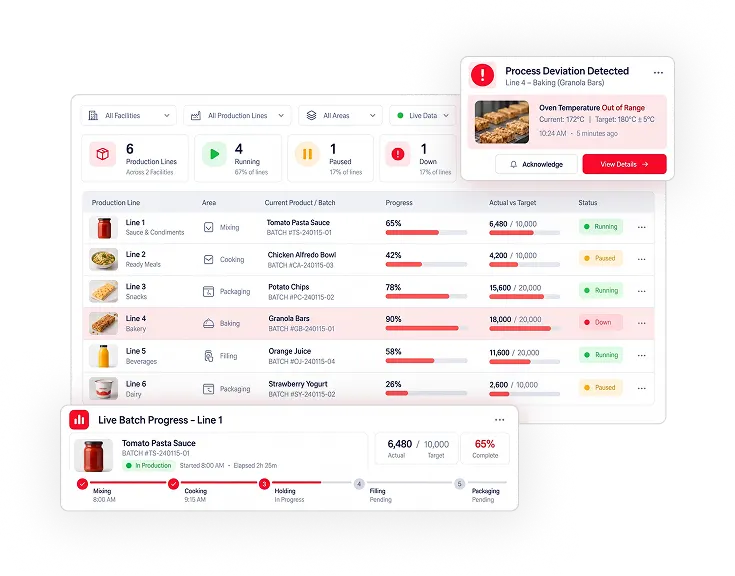
Monitor every line and batch as production happens, with live progress, deviation alerts, and visibility into actual output against plan.
Real-Time Production Monitoring

Quality Management and In Process Control

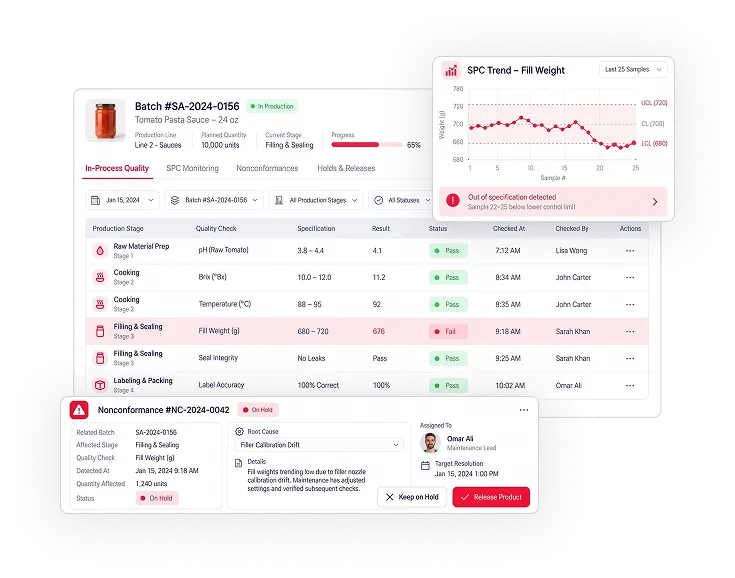
Embed quality checks into production, capture inspection results, manage holds and releases, and surface process issues before they affect output.
Quality Management & In-Process Control

OEE, Downtime, and Production Performance

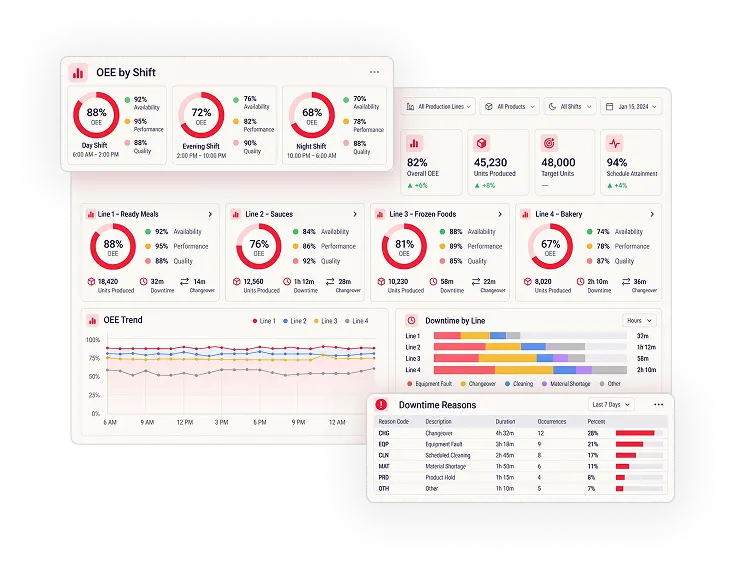
Measure availability, performance, quality, downtime, and changeovers to understand where production time is lost and where performance can improve.
OEE, Downtime, & Production Performance

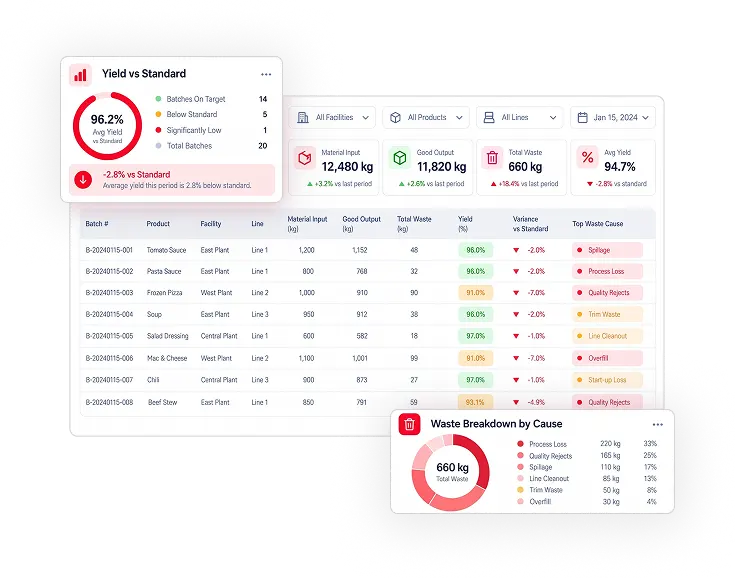
Yield and Waste Tracking

Track material input, output, waste, and yield at each stage to identify losses and improve production efficiency and margins.
Yield & Waste Tracking

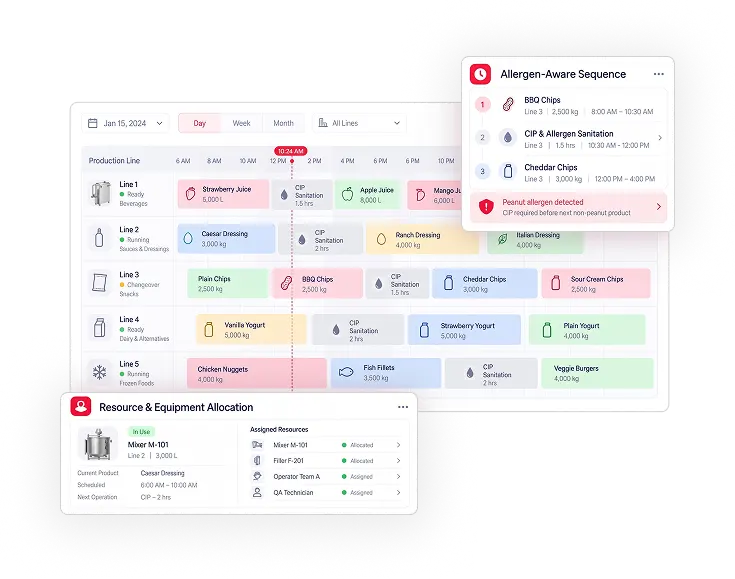
Production Scheduling and Dispatching

Turn production plans into executable sequences that account for allergens, sanitation, ingredient availability, equipment capacity, shelf life, and delivery requirements.
Production Scheduling & Dispatching

Measure What Actually Happens on the Plant Floor

Production plans show what should happen. MES shows what actually happened.

Folio3 FoodTech MES gives operations teams visibility into production output, yield, waste, downtime, throughput, labor activity, and production variance so they can compare planned performance with actual plant floor results.

Measure What Actually Happens on the Plant Floor

Planned vs Actual Output

Compare planned production with actual results

Batch Yield and Production Loss

Track yield and identify losses at each stage

Waste and Rework

Monitor waste, rework, and their impact on output

Production Downtime

Track downtime and understand the reasons behind it

Throughput and Cycle Time

Measure line speed and production cycle time

Equipment Utilization

See how equipment is being used across shifts and lines

Labor Productivity

Track labor activity and production efficiency

Production Variance

Identify variances and take action to stay on track

One MES Built Around Different Food Production Environments

Food production does not follow one standard operating model. Folio3 FoodTech MES can support different production processes, batch structures, quality requirements, and traceability needs across food and beverage operations.

Connect MES With the Systems Running Your Food Operations

Production execution works better when plant floor activity does not sit apart from the rest of the business. Folio3 FoodTech MES can connect production data with the systems responsible for planning, inventory, warehousing, quality, maintenance, and business reporting.

Food ERP

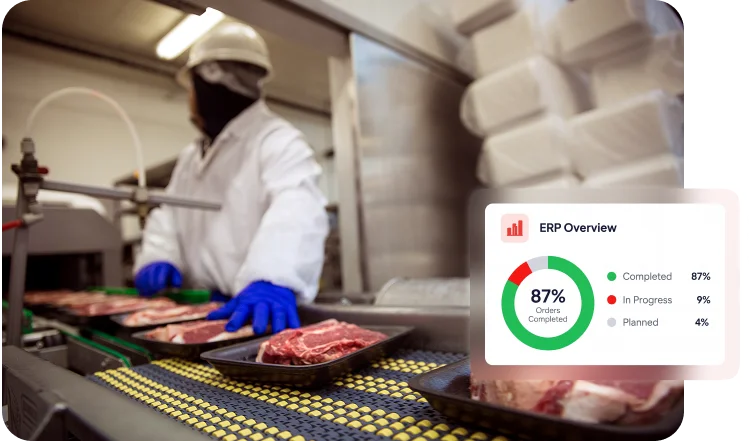
Connect production orders, material requirements, costing, inventory activity, and completed output with the broader ERP environment supporting food operations.

Food ERP

Warehouse Management

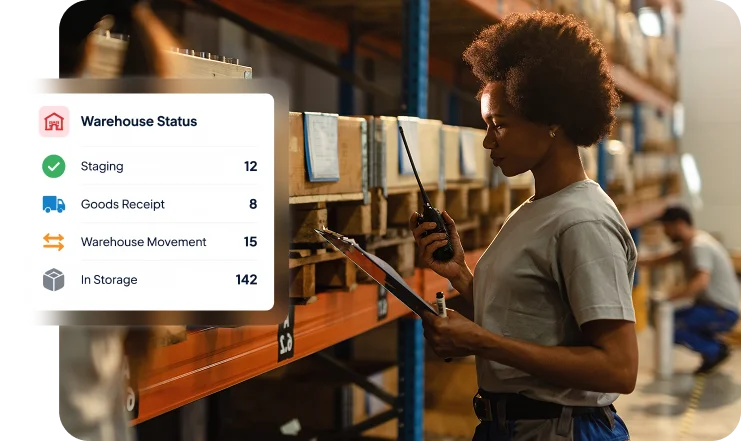
Coordinate material issue, production staging, finished goods receipt, warehouse movement, and storage activity around active food production workflows.

Warehouse Management1

Inventory Management

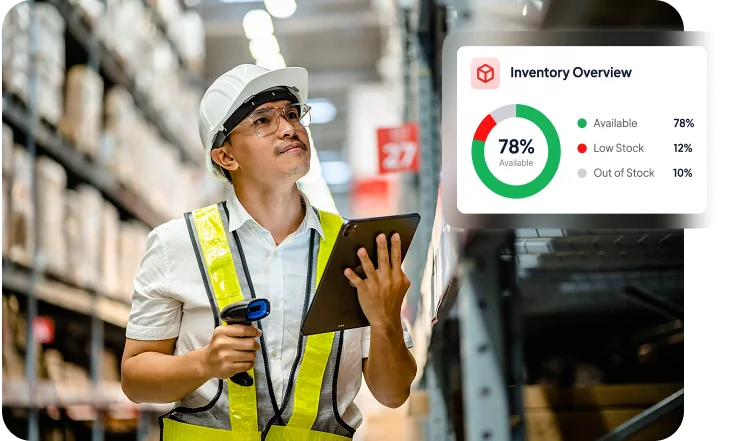
Keep raw materials, ingredients, packaging, work in progress, and finished goods aligned with actual production consumption, output, and availability.

Inventory Management1

Quality Management

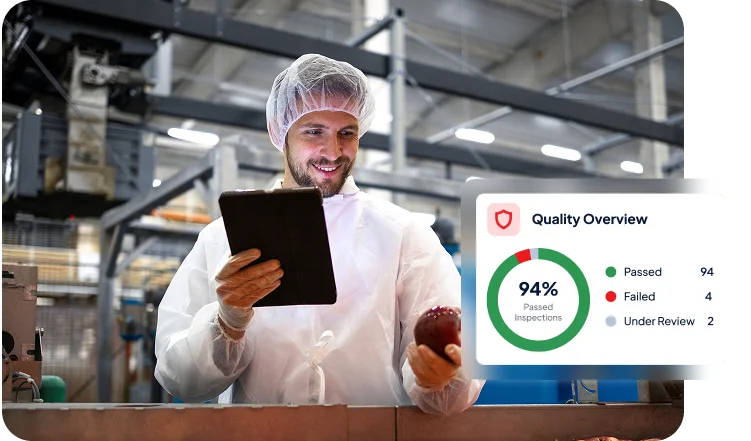
Connect production activity with inspections, holds, releases, corrective actions, quality records, and compliance checks across food manufacturing operations.

Quality Management

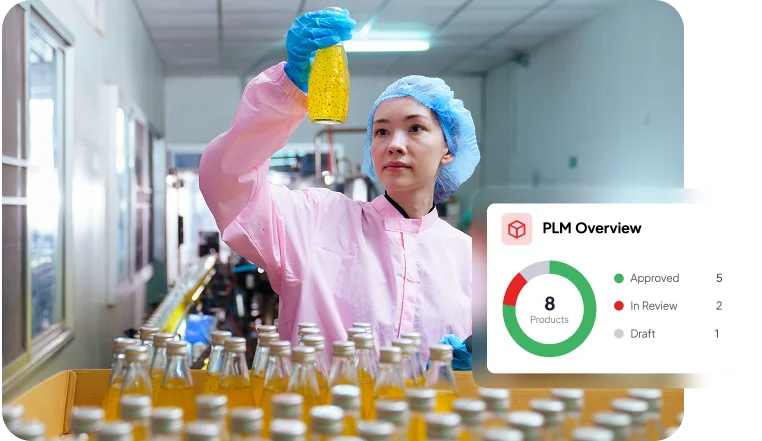
Product Lifecycle Management

Keep approved recipes, formulas, product specifications, and production requirements connected with execution so teams work from controlled product data.

Product Lifecycle Management

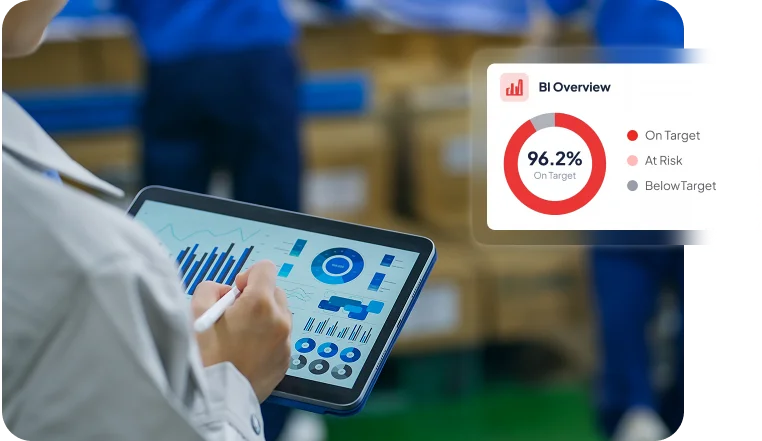
Business Intelligence

Bring production, performance, quality, and operational data into reporting environments for clearer analysis across operations, finance, and management teams.

Business Intelligence1

Why Food Businesses Choose Folio3 FoodTech

We combine industry knowledge, proven technology experience, and ongoing support to help you manage your workforce operations with greater control and efficiency.
Years of Experience
0 +
Food Businesses Supported
0 +
Solutions Delivered
0 K+

Food Industry Focus

Deep understanding of food manufacturing, processing, and distribution operations.

Proven Implementation Approach

A structured and results driven process to ensure smooth deployment.

Flexible and Scalable Solutions

Configure and expand the solution as your operations grow and evolve.

Ongoing Support

Long term support to help you keep your warehouse operations running efficiently.

See How Food Businesses Move Forward With Folio3

From growing brands to established manufacturers, food companies turn to Folio3 FoodTech for ERP guidance that delivers results. Here are a few of their stories.

In the Words of Our Clients

Read what our clients say about their experiences and the difference our solutions have made for them.

Frequently Asked Questions

How is a food MES different from a Food ERP?

A Food ERP manages business-level planning: sales orders, procurement, inventory, finance, and production planning. A food MES manages what happens during production itself. It sits between the ERP and the shop floor, turning production plans into executed batches with real-time data capture, quality enforcement, and traceability. The ERP tells you what needs to be made. The MES makes sure it gets made right.

MES is used across food and beverage manufacturing categories including meat and poultry processing, dairy production, bakery and confectionery, beverages, snacks, frozen foods, fresh produce, sauces and dressings, and FMCG. Any food operation that runs batch or process production and needs real-time visibility, traceability, or quality control benefits from a manufacturing execution system.
Yes. Folio3 FoodTech MES can operate as a standalone production management system or connect with an existing Food ERP. When connected, production orders flow from the ERP to the MES, and batch results, consumption data, quality records, and finished goods output flow back. This eliminates double entry and keeps business and production systems in sync.
A food MES records the complete history of every batch: which ingredient lots were used, what process parameters were applied, which quality checks were performed, which operators were involved, and where the finished product was sent. When a recall or quality issue occurs, this data allows teams to trace affected products forward and backward across the supply chain in minutes instead of days.
OEE stands for Overall Equipment Effectiveness. It combines three production metrics into one percentage: availability (how much of the scheduled time the line actually ran), performance (how fast the line ran compared to its target speed), and quality (how much output met quality standards). A food MES captures the data for all three automatically during production, giving operations teams a clear picture of where production time and output are being lost.
A food MES stores recipes with full version control, ingredient lists, process parameters, and operator instructions. When a batch starts, the system enforces the active recipe version, guiding the operator through each step and recording what actually happened. When a recipe changes, the new version is deployed across all lines and facilities with a full audit trail of what changed and when.
A food MES tracks allergen presence at the ingredient level and carries that data through every batch. It supports production sequencing rules that separate allergen-containing products, schedules CIP and line clearance between runs, and documents every sanitation step. This creates a verifiable record that allergen controls were followed for every batch produced.
Cost depends on the number of production lines, facilities, required modules, integration scope, data migration, and configuration complexity. A single-line deployment costs less than a multi-plant rollout. Because every food production environment is different, a detailed assessment is the starting point for accurate pricing.
Implementation timelines depend on production complexity, number of lines and facilities, integration requirements with existing ERP and automation systems, data migration, operator training, and validation needs. A focused deployment on a few lines can go live in weeks. A full multi-facility rollout with deep ERP integration takes longer. Folio3 FoodTech follows a phased implementation approach designed to minimize disruption to active production.

Serving the FoodTech Industry Globally Since 2004

Get in Touch

Drop us a line and we'll connect you to the right person.